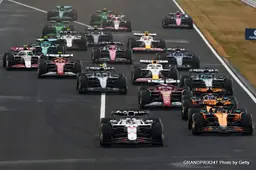
How Digital Platforms Are Changing Fan Engagement in Formula 1
F1 NewsWednesday, 04 March 2026 at 06:39
In the past ten years, Formula 1 has been digitally transformed, a change that was undoubtedly sped up since its acquisition by Liberty Media in 2017. As a result, the company started to focus on the digital expansion, integration of data, and direct interactions with the fans.
This development is in line with the tendencies of other entertainment and competitive sectors, which have embraced technology in an attempt to develop custom experiences. You can look at a website called realgambling and find in-depth guides, unbiased online casino reviews, and bonuses comparison specifically to Canadian readers. This way, players can resolve complicated choices safely and responsibly.
Of course, such changes are practically a necessity in any sport that wants to maintain its fan base. The official Formula 1 Global Fan Survey estimates that there are around 750 million active followers, while viewership numbers exceeded 1.5 billion throughout the 2023 season. Let’s unpack this transformation and figure out how F1 claimed more than 70 million subscribers on big social media, with a double-digit annual growth.
From Traditional Media to Digital Ecosystems
The main point of entry into Formula 1 for decades was television. Distribution was controlled by broadcasters like Sky Sports and ESPN. The fans did not have a lot of options to watch. Coverage was linear, and interaction was minimal.
Nowadays, streaming has replaced traditional broadcasting in most of the markets and constitutes more than half of the total viewing time among the young population. The same is true for Formula 1.
Additionally, content is shared on various platforms at the same time. Fans watch live races on TV and use mobile applications for live timing. They react on social media. This is a multi-platform model that represents a mobile-first audience. Reports by F1 Media have indicated that more than 60% of the digital traffic going to Formula 1 is on mobile devices.
This change to frictionless, on-demand access is also part of the overall digital shifts in other sectors, like gambling. In the past few years, more and more players have actively searched for no verification casinos Canada because they simplify the registration process, and simply feel less invasive. There are no upfront ID checks and KYC verification, and if players don’t request cashouts, they don’t even have to submit these docs.
At the same time, they describe the possible security aspects and regulatory peculiarities. On the same note, Formula 1 has minimized the distance between the sport and the fans. Fans do not have to wait for the scheduled broadcast. They have immediate content, mobile integration, and a level of control over the way they interact.
Social Media
Social media is now the focus of the Formula 1 fan campaign. The sport has an active presence on:
- X (formerly Twitter)
- TikTok
- YouTube
These are platforms that provide direct access to television for those who cannot afford it.
Racers such as Lewis Hamilton and Max Verstappen address their millions of fans. Like Scuderia Ferrari and Mercedes-AMG Petronas Formula One Team teams, they publish the behind-the-scenes shots, garage reactions, and team radio clips in minutes. However, this interaction is not always positive. Some players, like Jack Doohan see lots of hate online, which even had police involved.
Engagement is evoked by short-form video. Younger audiences have been drawn to TikTok. Formula 1 reported over 10 billion views on platforms in 2023. Race starts, crashes, overtakes, and radio messages are shared around the world within hours as viral clips.
Notably, distance is minimized by social media. Fans reply to drivers. Teams host live Q&A sessions. Polls and comment boards provide instant feedback. The overall participation is no longer passive.
Streaming Content
The other significant change is the introduction of direct-to-consumer streaming on F1 TV. The platform, which started in 2018, covers live races in more than 80 territories. It has onboard cameras, team radio, live telemetry, and archive footage.
This multi-camera system can make the viewing interactive. The fans are able to alternate drivers. In real time, they are able to track strategy battles. On demand, they can get historical races.
Furthermore, data overlays facilitate comprehension. Live speed, tire strategy, and DRS activation are shown. Official Formula 1 statistics show that F1 TV subscriptions have risen every year, particularly in the United States, where F1 viewers increased by over 40% in 2021-22.
Interactive Features
Image Source: Pixabay
Digital interaction also implies participation. Formula 1 has also launched gamified games, such as F1 Fantasy and race prediction games.
Teams and drivers are chosen by fans. The scoring is done on actual race performance. This provides greater statistical involvement. Strategy matters. So, it is significant that performance is analyzed.
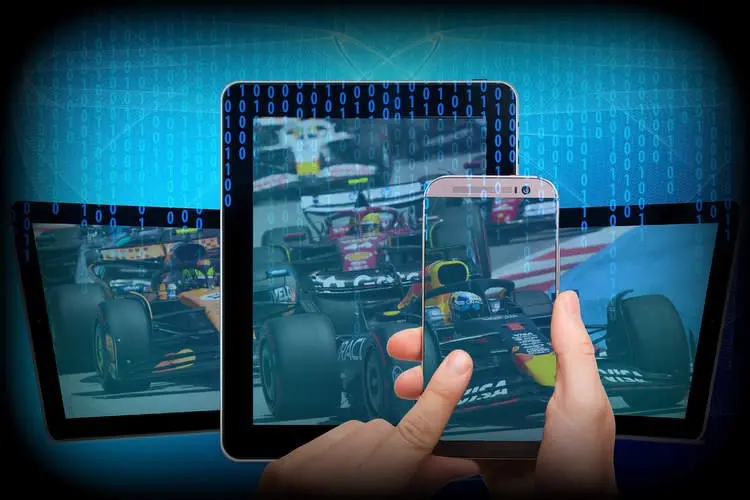
Meanwhile, the official app is combined with live statistics and analytics tools. On race weekends, most of the spectators engage in second-screen behavior. They are following the race on TV but are using a smartphone or tablet to follow the real-time timing, comparison of drivers, and commentary on the race.
Esports and Virtual Racing
The development of sim racing has also expanded the digital world. The official F1 Esports Series, which was released in 2017, pairs professional drivers and high-level gamers. The events are broadcast worldwide and have millions of online audiences.
There has been a rise in the sim racing communities on websites such as Twitch and Discord. This trend was boosted by the COVID-19 pandemic. In the 2020 lockdowns, a number of Formula 1 drivers have competed in virtual Grands Prix. This created millions of YouTube and Twitch views.
Esports appeal to the young generation. In fact, more than 60% of the viewers of esports are Gen Z. This is in line with the goal of Formula 1 to modernise its viewer base.
Digital racing is not independent of the sport anymore. It complements it.
Global Accessibility
Online markets eliminate geographical boundaries. In Southeast Asia, South America, and the Middle East, fans are able to receive the same content in real-time. Localized feeds, subtitles, and regional social accounts enhance growth at the international level.
Reddit forums, Discord groups, and fan networks ensure that there is 24/7 discussion in the world. A race in Monaco makes people talk in different parts of the world in a matter of seconds.
In addition to this, streaming doesn’t rely on national broadcasters. Through mobile, fans can view races without cable subscriptions, as would be the case.
Commercial Impact and Sponsorship
Online development has transformed business policy. Advertisement-based data has taken a pivotal role. Sponsors have access to audience analysis, including age, location, and how much time they spend.
Brands that are digital-native have entered the sport, along with firms like Crypto.com and Salesforce. They, together with partner influencers, further promote brand visibility.
The revenue from F1 TV subscriptions and digital rights deals helps Formula 1 to grow its finances. In fact, Formula 1 had revenues of over 3.2 billion in 2023. Digital impressions and international coverage made sponsorship revenue a significant portion of total revenue.
It is no longer the case that monetization involves trackside branding. It goes further to streams, applications, and data partnerships.
The Problems of Digital Expansion
Nevertheless, there are challenges in the digital growth.
- First, information overload. Fans are subjected to continuous updates, information flow, and communications. In most cases, they will lose focus.
- Second, the attention economy puts pressure on viral content. More often than not, clips that go viral are entertaining.
- Third, there exists the risk of shallow involvement. Short-form content favors big moments instead of sporting intricacy.
Lastly, there are still data privacy issues. Transparency is necessary since platforms learn about player behavior. Digital fatigue is also real. The likelihood of long-term loyalty is diminished when continuous engagement occurs without proper management.
Latest News


Loading