Formula of Probability: How Formula 1 and Digital Platforms Speak the Same Language
F1 NewsFriday, 22 May 2026 at 03:06
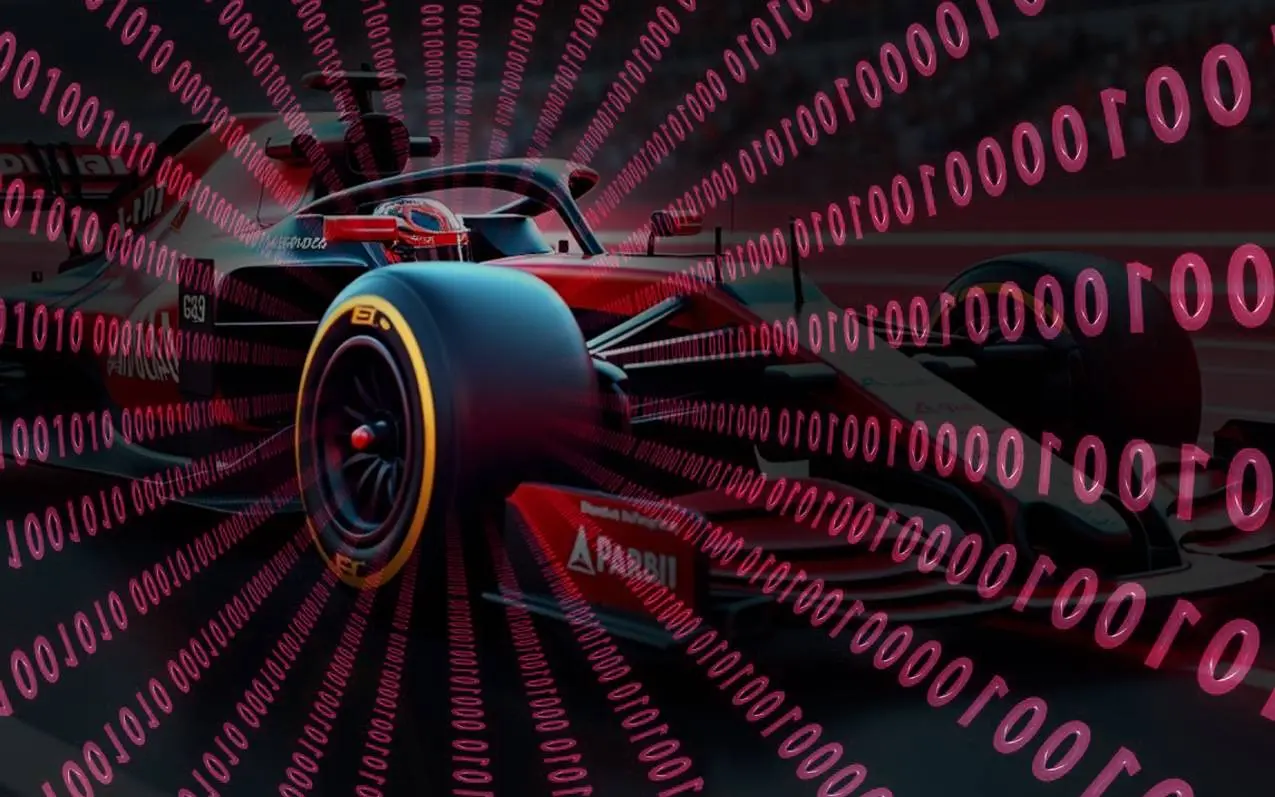
There is a moment, somewhere between a safety car deployment on lap 34 and the frantic radio exchange between a driver and his race engineer, when Formula 1 stops being a sport and becomes something closer to applied mathematics in real time.
The decision to pit or stay out is
not a gut feeling dressed in racing overalls — it is the output of a
probabilistic model built from thousands of prior data points, updated lap by
lap, tyre compound by tyre compound.
What is striking is that an almost
identical process governs how modern digital platforms — from streaming
services to online gaming — make decisions about what to show you, when, and
why. The underlying machinery is the same. The vocabulary is the same. Only the
surface differs.
Monte Carlo and the Race That Never Was
Monte Carlo simulation — the process of
running tens of thousands of possible race scenarios to find a probability
distribution of outcomes — has been standard practice at the top F1 teams since
at least the early 2000s. Mercedes, Red Bull, and Ferrari do not send a car
into a race weekend without having modelled the circuit thousands of times
across variables they cannot fully control: safety car probability, degradation
curves, rival strategy responses, weather shifts.
The same technique underpins the random
number generation at the core of most digital gaming platforms. When a slot
reel stops, it is not the result of physical momentum — it is a sampled output
from a Monte Carlo-style process, one that has been calibrated to produce a
defined return-to-player rate over millions of iterations. Neither an F1
strategy engineer nor a platform architect can tell you the outcome of any
single event. Both can tell you, with precision, what the distribution of
outcomes looks like across a large enough sample.
Why Expected Value Runs Everything
In race strategy, expected value is the
engine behind every pit call. When a team decides to undercut a rival on lap
28, they are not acting on instinct — they are weighing the
probability-adjusted benefit of track position against the cost of tyre degradation
over the remaining laps. Expected value thinking means that a decision can be
correct even if the result is bad. If the numbers justified the call, the call
was right. The outcome is a separate variable.
This is precisely how session management
works in online gaming. Choosing a slot with a higher RTP does not guarantee a
winning session — but over a large number of spins, the expected value of that
choice is provably better. The quality of the decision is independent of the
immediate outcome. Both disciplines demand the same cognitive discipline:
detachment from a single result, commitment to what the numbers say across the
full distribution.
Bayesian Thinking: Updating as You Go
Bayesian inference — the practice of
updating a probability estimate as new information arrives — is perhaps the
deepest structural link between these two worlds. In F1, a team's prior
estimate of tyre life gets revised every lap as live telemetry flows in. The
model is never static. It absorbs new data and produces a revised probability,
continuously, until the chequered flag.
Digital platforms that take this
seriously do not set an algorithm once and walk away. The most sophisticated
operators run adaptive models that revise user behaviour profiles in real time
— adjusting session pacing, game volatility presentation, and bonus trigger
logic based on live input. This is not coincidence; it is the same Bayesian
architecture wearing different clothes. Platforms like Boom Radio
Bingo Casino operate within this framework — where the relationship
between RTP calibration, live player data, and the timing of reward mechanisms
reflects a genuine probabilistic logic, not arbitrary design. The connection to
F1 strategy is not metaphorical. Both disciplines treat every new data point as
a reason to update, not to ignore.
The Margin That Wins Championships
Jenson Button won the 2009 World
Championship not by being fastest, but by being most efficient. Brawn GP
extracted more from less — tyre management, energy recovery, and pit strategy
gave them a margin that raw pace could not have delivered. The lesson was not
about speed; it was about variance reduction. Eliminating unnecessary risk
across a long season compounds into championship points.
The same principle governs platform
design in competitive digital entertainment. Boom Radio Bingo Casino —
operating in a market where player retention, session length, and
deposit-to-wager conversion are measured in decimal points — cannot afford to
treat volatility as decoration. The mathematics of player lifetime value is
structurally identical to the mathematics of tyre degradation modelling: both
reward the operator or engineer who minimises unnecessary variance while
preserving upside.
One Language, Many Surfaces
What connects a race engineer at
Silverstone and a platform architect working through session data at midnight
is not the technology — it is the epistemology. Both work in domains where
certainty is never available, where the quality of a decision cannot be judged
by its outcome alone, and where the discipline to act on probability rather
than emotion separates those who last from those who do not.
Formula 1 did not invent probabilistic
thinking. Neither did digital gaming. But both have taken it further than
almost any other industry — one lap at a time, one data point at a time.



Latest News



Loading