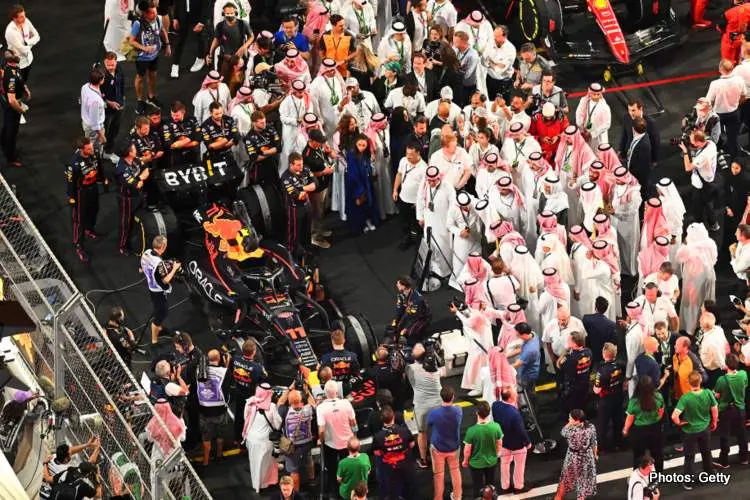
The Middle East has become a major part of the global Formula 1 calendar. Organisers stage races annually in Abu Dhabi, Saudi Arabia, Qatar and Bahrain, and they have agreed long-term deals to keep F1 there for the foreseeable future.
F1 provides the region with a vehicle to generate massive revenues, which feeds into the wider narrative about pivoting the local economy away from the energy sector.
While football has also been making waves in the Middle East, Formula 1 is undoubtedly one of the biggest contributors to the economic growth of the region as a whole.
Chief executive officer Stefano Domenicali has previously said that ‘the Middle East has become integral to the future of Formula 1’.
Abu Dhabi’s contract with Formula 1 runs until 2030, the same as Saudi Arabia's. Qatar will continue to host F1 events until 2032, while Bahrain will be in the mix until 2036.
Bahrain was the first Middle Eastern country to host an Formula 1 Grand Prix (GP). It was a move that put the nation on the map and strengthened its growing reputation as a global destination.
The partnership between Formula 1 and Bahrain has only grown stronger, and other nations have capitalised on the sport’s interest in the Middle East to become key players.
The Cream of the Crop

Abu Dhabi has been F1’s curtain dropper since 2014, and it was rubber-stamped by the sport’s organising body as the final race on the calendar until 2030.
Qatar’s Losail International Circuit has also been a popular venue since making its debut four years ago. However, no country has made a more transformative foray into the sport than Saudi Arabia.
Investing in sports is a key piece of the nation’s Vision 2030 initiative, which was developed to diversify the economy away from oil and present a more modern face to the world.
Saudi Arabia made its F1 debut on a temporary street circuit in Jeddah in 2021. The country subsequently built a track in Qiddiya dedicated to hosting F1 events in the long term.
It has taken to F1 like a duck to water, and the success of the partnership has the potential to shift the nation’s stance on betting.
Betting in Saudi Arabia is strictly prohibited, but that has not stopped Arab bettors from wagering on F1 on the sportsbooks featured on the www.arabswin-saudi.com/en/.
These platforms are regulated by foreign jurisdictions, which means the Saudi government does not get a piece of the vast amount of revenue they generate.
F1’s Impact on the Middle East’s Tourism Sector

F1 already garners plenty of interest from fans and bettors in Saudi Arabia. Just last year, there was an 11 percent increase in fans compared to the 2023 season.
As the nation continues to build its tourism and entertainment sectors, it may eventually be forced to revise its outdated gambling laws.
F1 is one of the biggest contributors to the economic and tourism boom in the Middle East, with each race attracting thousands of international visitors.
Those visitors fill up hotels, restaurants, bars, shopping districts and tourism centres across the region, which is a massive boost to the local economy.
During the Abu Dhabi GP last year, hotels increased their rates by a mind-boggling 170% compared to the previous week, with flights from Europe also jumping by nearly 30%.
Many of the visitors were from the United Kingdom, Germany and Italy, who treated the F1 weekend as a mini-holiday. They accounted for around 15% of the total attendees.
During Abu Dhabi’s race week, arrivals from the UK increased by 28%. Italy also made it into the top rankings of source markets, reflecting strong demand from Europe.
The United Arab Emirates (UAE) and Qatar have also capitalised on F1’s glamour by serving as airline hubs through Emirates, Qatar Airways and Etihad.
Latest News

Loading

