Ford insists F1 engines should remain electrified in the future
F1 NewsTuesday, 10 June 2025 at 17:12
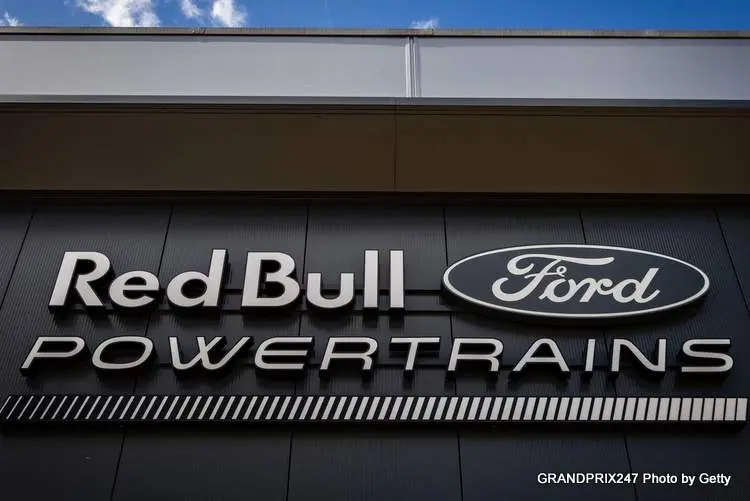
Red Bull Racing have joined forces with US giant Ford to build their first-ever Formula 1 power unit developed in-house based on the 2026 regulations.
Ford was Red Bull Racing's choice after a brief flirtation with Porsche, who were looking to join F1 but could not agree to the terms of their involvement with the Milton Keynes outfit.
But the road to 2026 has been a rough one so far, with questions raised about the ability of the new cars to deliver proper racing with their active aerodynamics and power units delivering power from Internal Combustion Engines (ICE) and an electrical components with a ratio of 50-50. These units may not be able to deliver power on the straights on power-sensitive tracks.
Another concern is that one manufacturer will produce a dominant power unit in 2026 and then enjoy a lasting advantage over its rivals, as was the case with Mercedes back in 2014. Renault, for example, who will stop producing power units in 2026, have not been able to catch up after 12 years of the current regulations.
Over the course of the Bahrain Grand Prix, this point in particular was discussed, and a mechanism was agreed to allow manufacturers who find themselves on the back foot to recover.
There is a risk of performance disparities

Global director of Ford Performance, Mark Rushbrook, commented on the matter; he said: "I think anytime there are new rules, especially with the power unit and the chassis together, there is, I don't want to say a fear, but there's a known risk for the sport that people can come in at different levels.
"We've got to see how it balances out after that. The most important thing is how we react as a sport," he added.
"Well, that remains to be seen," Rushbrook responded when asked whether the aforementioned measure will be enough to avoid huge performance gaps. "But it’s certainly part of the discussions we’re having right now, and I’m happy with how those talks are going so far."
Regarding the quality of racing, there has been a suggestion floated recently that changes the power output ratio between the ICE and the electrical component from 50-50 to 60-40 in some races to make sure the batteries have enough power to propel the cars at the ends of the straights.
Rushbrook said: "That’s also part of the current process with all manufacturers. Everyone has their own simulations, but we need to ask ourselves: What does this mean for the racing and for the show we provide to fans?
“For the sport to be successful, we've got to work together to make sure that the show is still a good show. The teams are here to win, but we also need to put on a good race."
However, with all the concerns raised ahead of 2026, the Ford performance boss insisted there is no need to panic, saying: "I don't know if I see it as a fear. I see it as something that we need to watch and react to accordingly.”
The V10 Bombshell

At one point, ahead of the Bahrain meeting on power units, FIA president Mohammed Ben Sulayem floated an option of returning to naturally aspirated V10 engines running on sustainable fuels. Formula One CEO Stefano Domenicali earlier hinted that naturally aspirated engines could be an option in the future.
However, Audi, who will join as a works team in 2026, staunchly refused, with Mercedes also not in favor, while Red Bull and Ferrari showed some flexibility.
But Rushbrook maintained that suggestion came too late and insisted Ford will be interested in F1 only if future engines are electrified.
He said: "It was quite late for something like that to come up. But it’s good that after that everyone came together—manufacturers, teams, the FIA, and F1.
“Everyone agreed that 2026 is very important, so now we just have to deliver together," he added, referring to the meeting in Bahrain.
"For Ford Motor Company, we believe there should be some form of electrification in there. That's part of what attracted us to the 2026 rules. It's all about that balance between the ICE and electrification. Does it need to be 50-50? No, not necessarily.
“As long as we have the opportunity to contribute, to learn and to bring knowledge to our road cars, then that's ideally what we're looking for.
“There’s been a lot of discussion, but it’s too simplistic to just say V10 or V8," he went on, discussing options of future engines. "There are so many ways to implement something like that. You really have to get into the details to see whether something can work or not.
Ford's long-term commitment based on how regs evolve

“There may be a sort of framework, but whether it aligns with what Ford Motor Company wants, I can’t answer until I know all the details.
"But we’re talking really long-term here. There are already some aspects that we all agree on, but also some areas where opinions still differ.”
And while Ford is committed to the upcoming F1 regulation cycle, they will base decisions on further commitment based on how the regulations evolve.
“Of course, but that's true for every form of motorsport that we take part in,” Rushbrook pointed out. “Ultimately the health of the sport, the other manufacturers that are participating, the technical regulations and the ability to have some form of tech transfer are all important to us.
"That is definitely our intent," Rushbrook added, confirming Ford's plans to be in F1 in the long term. "We're committed to working with all the other stakeholders for what is the right thing for the future of this sport.
“Is it going to be exactly what any single manufacturer wants? No. But that's part of the process, because at the end of the day, if that discussion is exactly what we want and every other manufacturer leaves, then it's not a healthy sport either.
“We know that and the other manufacturers know that as well. So you've got to work together for the good of the sport, the health of the sport and that basically means being partners off the track.
"You want to race each other fiercely on the track, but you need to work together off the track," Rushbrook concluded.
Latest News

Loading