If you race a car, Formula 1 or any other series, there is always a declaration that needs to be signed: motor racing is dangerous, and you take part at your own risk. The inference, of course, is that you could be injured or killed.
However, these days, it’s statistically accepted that you are more likely to meet this fate while driving on the streets not while taking part in motorsport activities.
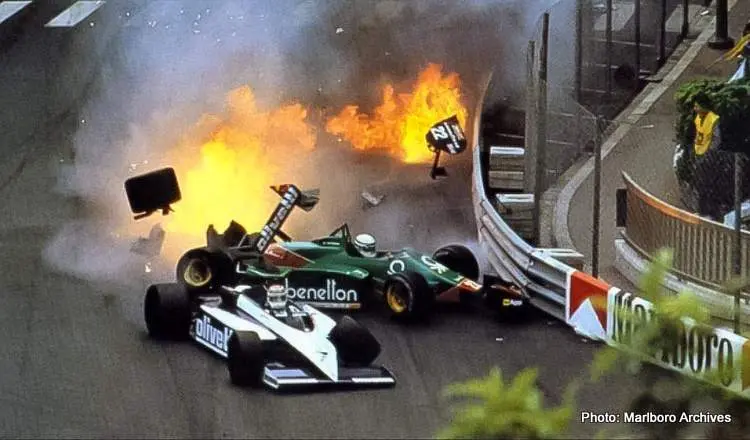
Up until the late 1980s, a sudden, violent death was a realistic prospect for racing drivers, something Facebook is constantly reminding me of.
There are repeated memorials to drivers who have passed in the pursuit of their passion: Jochen Rindt, Stefan Bellof, and François Cevert, to name but a few.
However, the faded colour photos or black-and-white images tell me that this is predominantly a thing of the past.
Motor racing today (excluding bikes, of course) is one of the safer sports. You are more likely to meet your maker riding a horse than racing a car nowadays.
RIP
The pursuit of safety in motorsports has been relentless over the years, albeit more often written in blood. Many drivers can thank the actions of Sir Jackie Stewart for their lives today.
It was his stand that forced the authorities to adopt the most basic of safety regulations, like medical facilities and seat belts. These improvements seem farcical today, but back in the 60s and 70s, they were significant developments.
Stewart was also aware that the circuits themselves were as much responsible for driver attrition as the flimsy motorised petrol tanks they were racing. Here, he lobbied and organised driver protests at certain tracks to have barriers added and run-off areas increased.
Missing something…

Consequently, the authorities now take a keen interest in these matters, and the risk element in F1 is almost negligible.
Whilst Parc Ferme applauds this situation, it also feels something has been lost. There are many sports activities where, at pivotal moments, you can get injured, but only motor racing seemed to offer that prospect as a constant.
However, that’s all changed. Such is the official’s fear of presiding over a fatality, we barely even race in the wet.
The very essence of what it meant to be a race driver – someone who was prepared to roll life’s dice for glory - has been gradually erased.
Money risk
In modern F1, the primary threat borne by the teams and drivers is to their wallets. In short, they and Formula One Management are “dining out” on the risks taken by the drivers of the past.
Maybe our sport needs to worry a little less about safety and dare to start a race in the wet. As Fangio said, “no one dies before their time,” and he’d know.
He managed to win five F1 World Championships in a time, where many drivers preferred to jump out of the car at 140 km/h rather than stay in it and hit the trees. In relative terms, motor racing seems quite tame these days.
Latest News
Loading