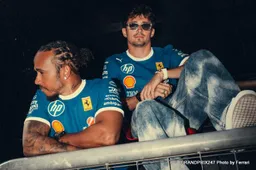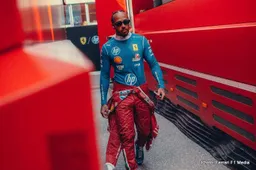
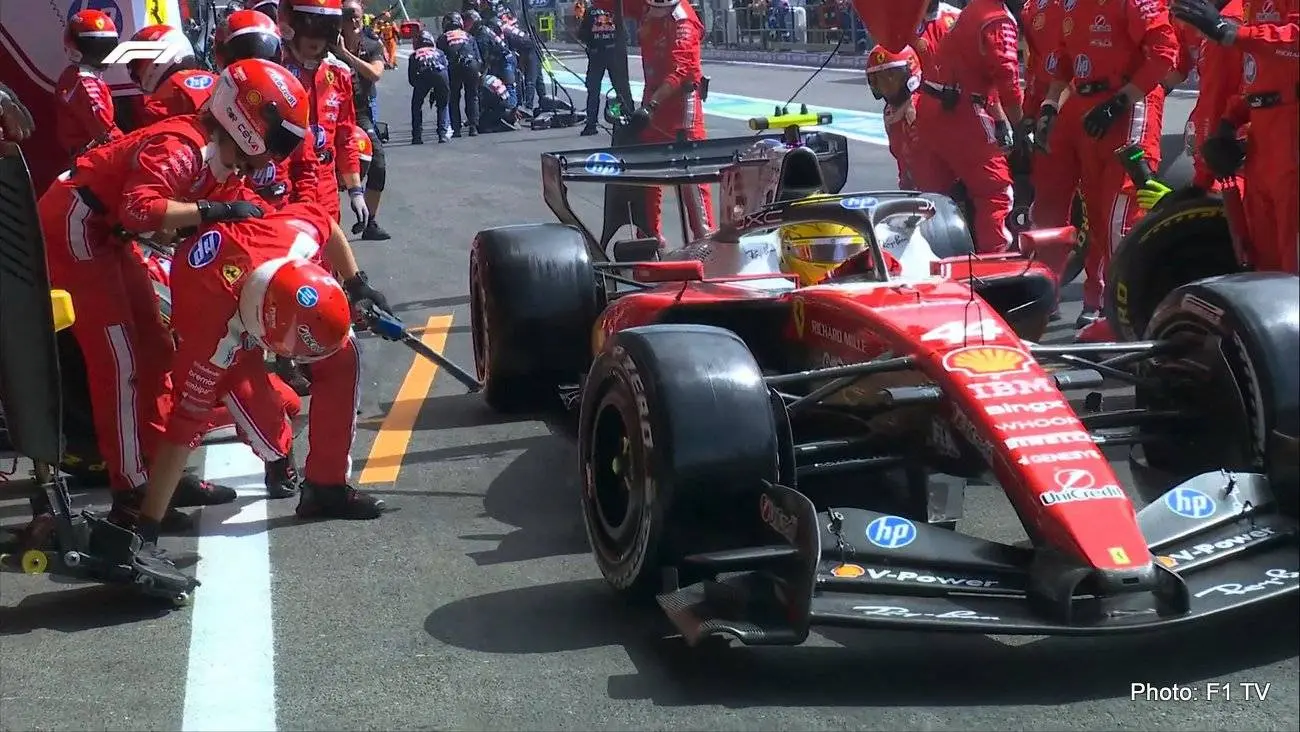
Ferrari are enduring one of their toughest Formula 1 seasons in recent memory. After the fanfare of Lewis Hamilton’s signing over the winter, the Scuderia remain winless with a car far from championship contention.
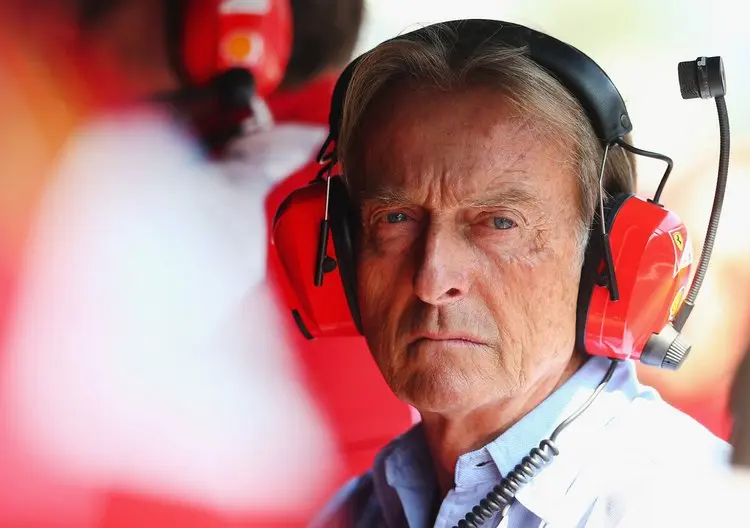
At the world premiere of Luca: Seeing Red, a new documentary about his life, former Ferrari president Luca Cordero di Montezemolo weighed in on the team’s crisis. Now a board member of McLaren Automotive, Montezemolo admitted his heart is still with the Maranello marque.
Montezemolo said: “It’s sad to see a Ferrari without a leader. It lacks a strong, determined soul. One of the things I learned at Ferrari, and that I’ve always tried to apply, is that when you win, you have to work even harder. Today, when we are not winning, this is even more true. It is crucial to choose the right people: in my day, I had highly valuable collaborators, number ones and number twos.”
Montezemolo pointed to the 2022–2023 era under Mattia Binotto as a lost opportunity: “If Binotto could have continued, it would have been better. Constant change means losing one of the most important elements: a team’s stability.
"Every time you change, you have to start from scratch, and there’s a lot of work to do. Announcements are often made that create excessive expectations: you should achieve results first and then communicate them," added the 78-year-old Italian.
Ferrari hired Fred Vasseur after Binotto, but his leadership has been slow off the blocks. Contract extension delays caused turmoil and suggested the big bosses at Maranello were not convinced. But they did give the Frenchman a new deal, suggesting they have belief in his title-winning abilities.
Montezemolo: For too long, Ferrari hasn’t even been able to fight for the title

Referencing the tifosi’s passion during last weekend’s Italian Grand Prix, Montezemolo said: “I saw the beautiful images of the fans at Monza and, at the same time, a team that, despite the many pre-race announcements, has yet to win a race.
"And even if they had won one, the fact remains that Ferrari hasn’t won the world championship for years. I myself have experienced some very difficult times, because I think we lost nine or ten championships in a final race.”
Montezemolo closed with a warning: “For too long, Ferrari hasn’t even been able to fight for the title at the last race with a driver in contention. I hope things change, first and foremost for those who were at Monza and who continue to show unwavering faith. Ferrari today has even more responsibility towards them.”
History shows that Montezemolo is one of the most influential figures in Ferrari’s modern era, guiding the Scuderia through both glory and turbulence. He first joined Ferrari in the 1970s, working closely with Enzo Ferrari and Niki Lauda, and later returned as president in 1991 to rebuild a team in crisis.
The great Schumacher Golden Era for Maranello

Montezemolo's leadership at Ferrari brought in Jean Todt, Ross Brawn, Rory Byrne and Michael Schumacher, forming the legendary group that delivered five consecutive Formula 1 drivers’ titles from 2000 to 2004 and six constructors’ crowns in total.
Montezemolo was not only a racing boss but also a visionary who expanded Ferrari’s road car business, turning the brand into a global luxury powerhouse. Known for his charisma and political skill, he defended Ferrari’s interests fiercely within Formula 1, often clashing with governing bodies and rivals.
His tenure ended in 2014 after disagreements with Fiat leadership under the late Sergio Marchionne, but his legacy remains: Montezemolo rebuilt Ferrari into both a dominant force on track and a symbol of Italian excellence worldwide.
Under Montezemolo's watch, he persuaded Enzo in the mid-seventies not to ditch Formula 1 in favour of endurance sports car and GT racing. With Lauda, the Italian team enjoyed four world titles (Drivers & Constructors) before their greatest era. The Schumacher era in which the team won 11 F1 titles, five of them by Michael.
This remains Formula 1's template for success for big teams: Focus on one great driver. A formula repeated by Red Bull with great success when their main man was Sebastian Vettel and more recently, with Max Verstappen. Mercedes did the same for Lewis Hamilton.
Latest News
Loading