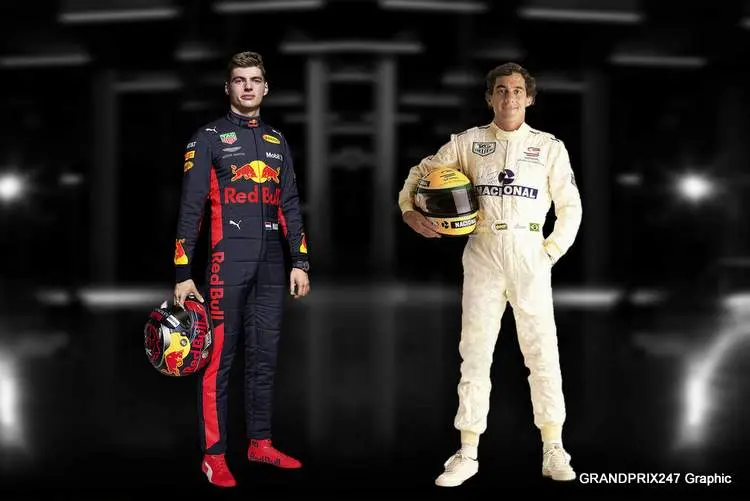
Inevitably when interviewing Red Bull's veteran motorsport and Formula 1 consultant Doctor Helmut Marko one has to ask him to share his thoughts on Max Verstappen and Ayrton Senna, two drivers he knows well.
Two drivers considered among the GOATs of their respective eras, that have been part of Dr. Marko's captivating journey from 24 Hours of Le Mans winner, to F1 driver, an owner of racing teams and a driver manager since he put fellow Austrian Gerhard Berger on the map.
Since Red Bull got super serious about F1, first buying Jaguar to start Red Bull Racing in 2005 and a year later transforming Minardi into their junior team, aka Scuderia Toro Rosso, since then Marko has been the man in charge of who drives where.
Marko famously signed teenager Verstappen to race for Toro Rosso in 2015 despite a massive outcry to keep the kid out of the car. Now, nearly a decade later, the wisdom of that call is plain for all to see as the Dutchman is now on the brink of his fourth F1 world title.
Here are relevant Verstappen-Senna memories Dr. Marko shared with me during my hour-long, one-on-one conversation with him in Graz.
Nasir Hameed: I understand Max's performance in a Formula 3 race in the rain convinced you he was a special talent. Tell us what you saw that weekend...

Helmut Marko: "It was at Norisring street circuit with basically four corners. So it's not a real racetrack and it was raining, drying, raining again. And Max was a second to two seconds faster than anyone else. Where they were breaking he was shifting up and he had such amazing car control.
"At that time, we had already been in negotiations about the future. It was mainly to put him into Formula 2. There was competition from Mercedes and after Norisring I rang Jos the next morning and said forget all our discussions and we will go straight to Formula 1.
"On the phone, Jos was silent 'Jos you're still here?' It took a while before he answered and that was that was the moment when I decided Max was a guy who could do it. I had a call with Mr. Mateschitz and explained to him all the risks because he was at a time 16 years old.
"There was some criticism but I said okay, we feel we set out to make stars not to buy stars. You know that was his philosophy about and we knew we had with Franz Tost a very experienced team principal. He prepared a program for Max yet. At that time testing was easier.
"Then came the day when we put Max on a Friday drive at Suzuka, one of the fastest and most difficult circuits we have in the whole F1 calendar. Some of our critics thought we were criminals. Max got in the car and went flat around R130 at Suzuka, the flat-out one after only four laps or so. He did a very competitive time and didn't do anything wrong. And then from there on, the critics didn't stop, but it was much less.
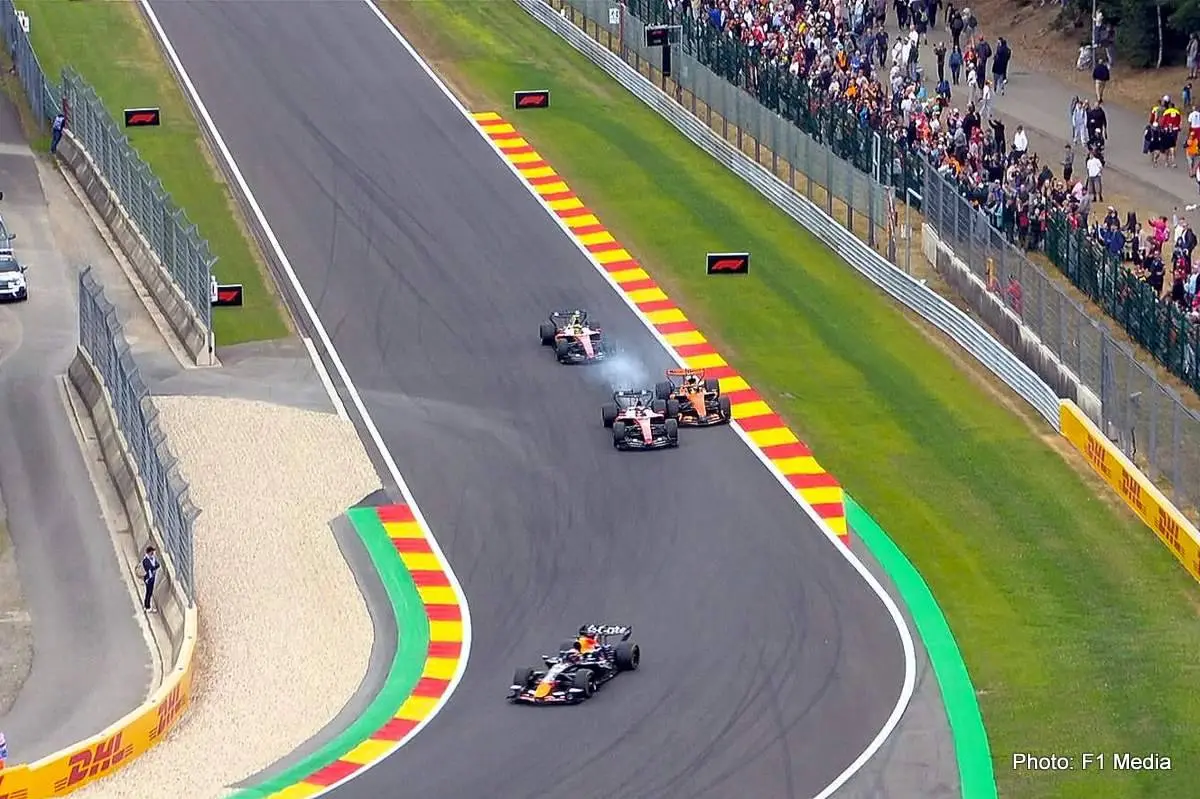
"And then of course in the first year, there had been some mistakes he made. He also made one crazy thing. He overtook, like, I don't know whom, but the on the outside of Blanchemont [Spa-Francorchamps] that's a really fast corner. So I said don't do that again because that's something which is it's, it's just too dangerous.
"He did what we expected from him. Verstappen learned much quicker than we thought and then when Daniil Kvyat was struggling, he had a very good first season at Red Bull Racing, but the second year he was really struggling.
"We then we decided to make a change which again, was not supported by many people. Max okay, he had luck because the two Mercedes guys crashed but Verstappen was holding off Kimi Raikkonen I think for 30 laps. He drove a fantastic smart first race with Red Bull Racing he slowed down where Raikkonen could not overtake and pushed through the last two corners to the straight to avoid DRS and win his first race."
NH: When Max first came into Formula 1 you were quoted as saying only driver you can compare Max to is Ayrton Senna. Did you ever meet him? Can you please elaborate

HM: "I met Ayrton quite often. I can't remember the year [1990] when Berger was with McLaren, as well. He got the feeling that he didn't get to the same material. I would go to the GPs and observe. After two races Berger was better most of the time in the first session. Faster than Senna, but by the end, it was Senna who dominated.
"I learned how Senna was working. For example, Imola at that time, there were 30 cars on the grid and on the first lap of free practice, there were about 10 Italians, you know, so they were more than enthusiastic and he was going through them attacking them like it would be the last lap of Grand Prix.
"So I said, 'What is he doing?' And it was on purpose. It was teaching them if Senna is coming, you will then move, you have to move. And in the races, you saw when you were being lapped and you saw that yellow helmet, everybody would move to the side.
"So that was one thing. And then another thing was I was sitting in Suzuka in the third corner Grandstand, very high and Burger was fastest in the first session, and then the second session again faster than Senna.
"And when I came back to the paddock, having had some dinner or whatsoever Senna came to me and said, what I'm doing wrong here. So you know, I was sitting up on one of the last rows and he spotted me and recognised it was me. So you see this wide picture he had?
"Another example. I just once noted he was arguing with a Japanese engineer [Honda] about fuel consumption but it was not about the litre, he was on about a tenth of a gram. He made them check and check again.
"The engineer asked, 'Why are you like this? Senna said in the end, it's maybe three or four kilos. And that's maybe two seconds or three seconds. So in each detail, he wanted to get the maximum driving, performance engine, setup and so on. He was very committed with a very charismatic personality," recalled Marko.
[This is an extract from an extensive exclusive interview conducted by GRANDPRIX247 roving correspondent Nasir Hameed with Dr. Helmut Marko in Graz, Austria.]
[This is an extract from an extensive exclusive interview conducted by GRANDPRIX247 roving correspondent Nasir Hameed with Dr. Helmut Marko in Graz, Austria.]
Latest News
Loading

