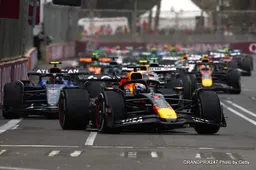
Early Adapters: How Mercedes Have Innovated Once Again to Thrive in a New Formula 1 Era
F1 Teams NewsMonday, 16 March 2026 at 06:33
Formula 1 fans with long memories may just recall the 2014 season. Sweeping rule changes allowed manufacturers to essentially craft bigger and faster cars, a move designed to make the sport more entertaining for fans.
In retrospect, it had the opposite effect: Mercedes won the next four
drivers’ championships, courtesy of Lewis Hamilton, as well as five consecutive
editions of the constructors’ trophy.
The German firm has a habit of adapting quickest to new regulations…
and the early signs in 2026 are that they are best-placed to thrive amidst
another fresh update of the Formula One rulebook.
Two races, two wins. Mercedes have already matched their win tally from the
entirety of the 2025 campaign.
It’s no wonder that the online
betting markets have reacted by making the German manufacturer as short as
1/5 already to win the Constructors’ Championship, ahead of Ferrari (7/2) and
defending champions McLaren (12/1).
An online odds
calculator, meanwhile, confirms that a £10 bet on George Russell to win the
Drivers’ Championship would return £15.33, so already it’s possible to see how
well-favoured Mercedes are by the price compilers.
And on the evidence of the races in Australia and China, can you really
blame them?
P1 in Melbourne, YES!! 🏆 pic.twitter.com/n6kOePbXLM
— George Russell (@GeorgeRussell63) March 8, 2026
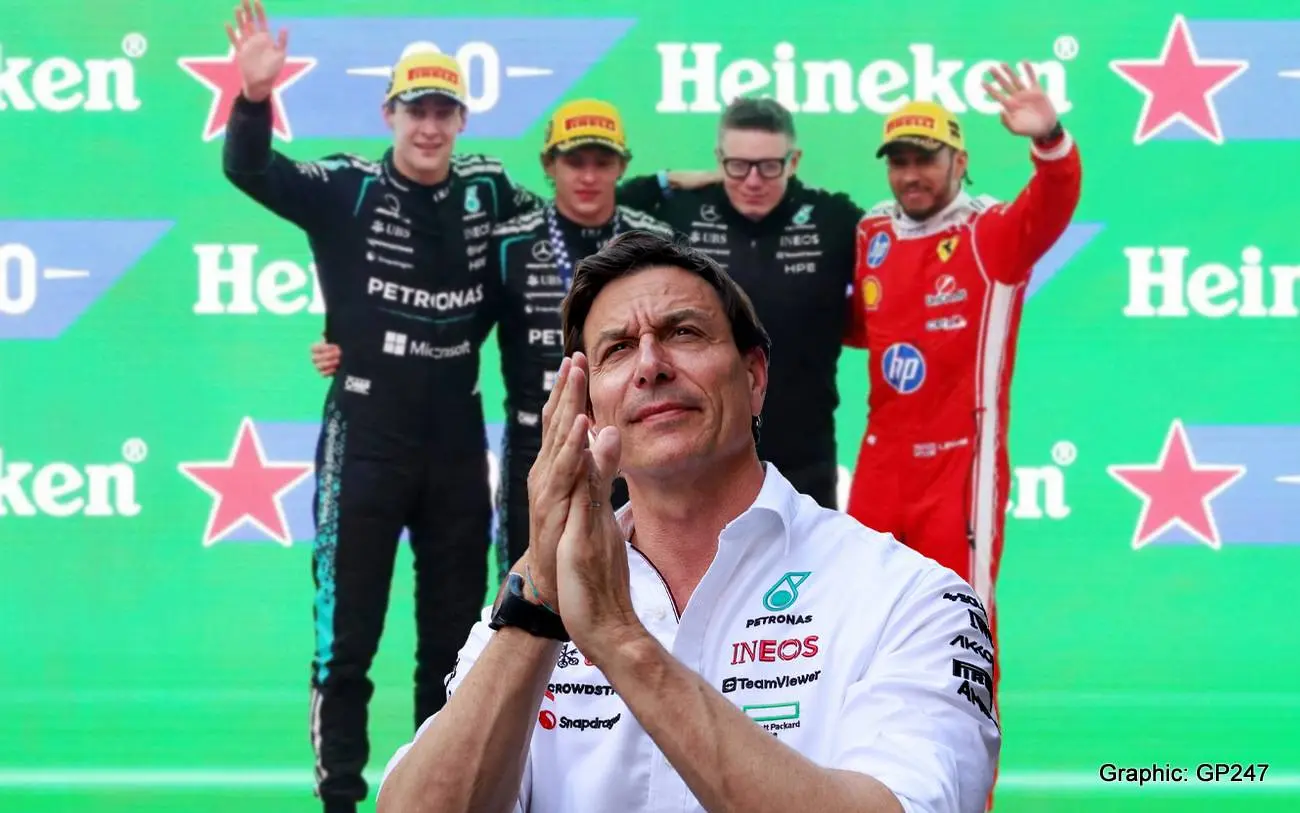
Both have been won by the Mercedes drivers from pole position, with the
Australian GP marking
their first 1-2 since the Las Vegas Grand Prix in 2024. And in China, they
were streets clear of Hamilton in third.
Only time will tell if this is a sign of things to come during the 2026
season, but as omens go, Mercedes are laying down a marker to some tune in the
early going.
Feeling the Energy

F1 fans are happy to debate for hours as to who the most technically
proficient drivers are in the sport, but it’s all rather moot: the only thing
that really matters in Formula One is the car they have at their disposal.
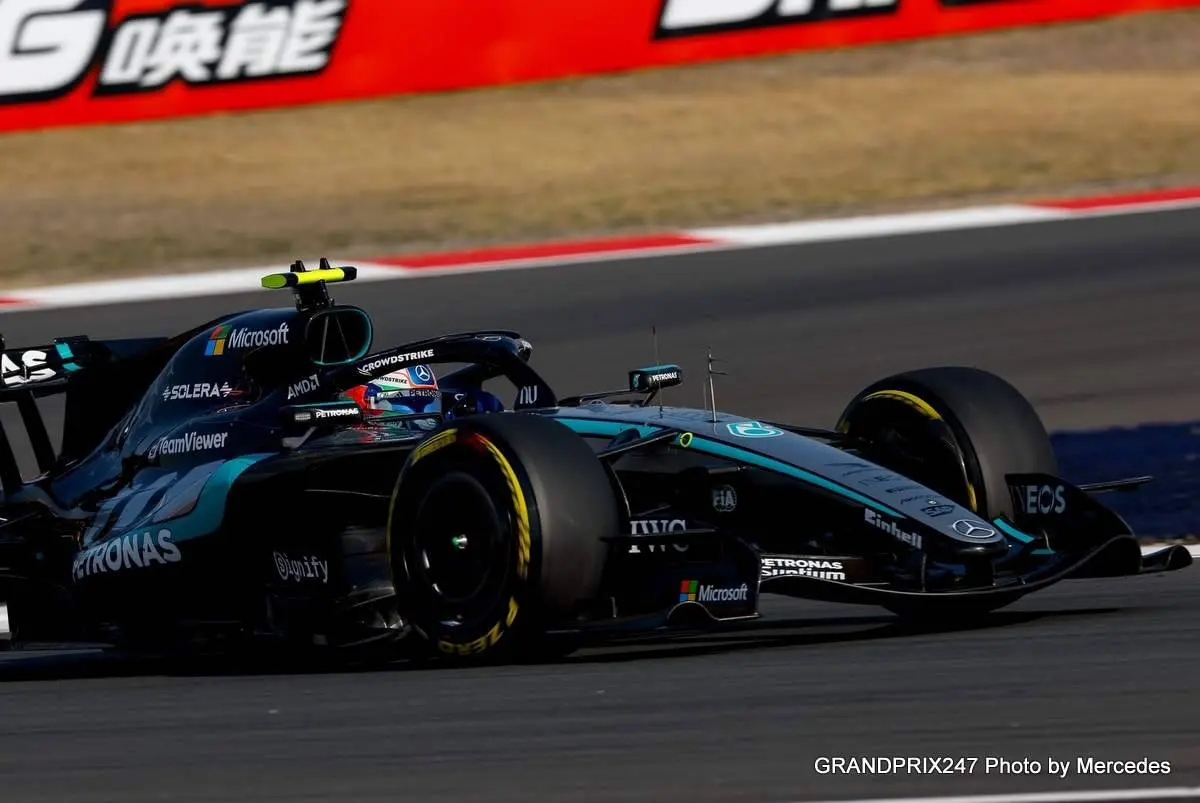
And Mercedes have already lapped their rivals when it comes to adapting to
the new rules for 2026 – particularly in the sphere of energy management.
Like it or not, maximising the efficiency of the hybrid engine is now a key
performance indicator in F1. How drivers utilise the electrical element of
their power unit is vital to delivering higher speeds for longer, which in a
sport of milliseconds can be the difference between winning and not.
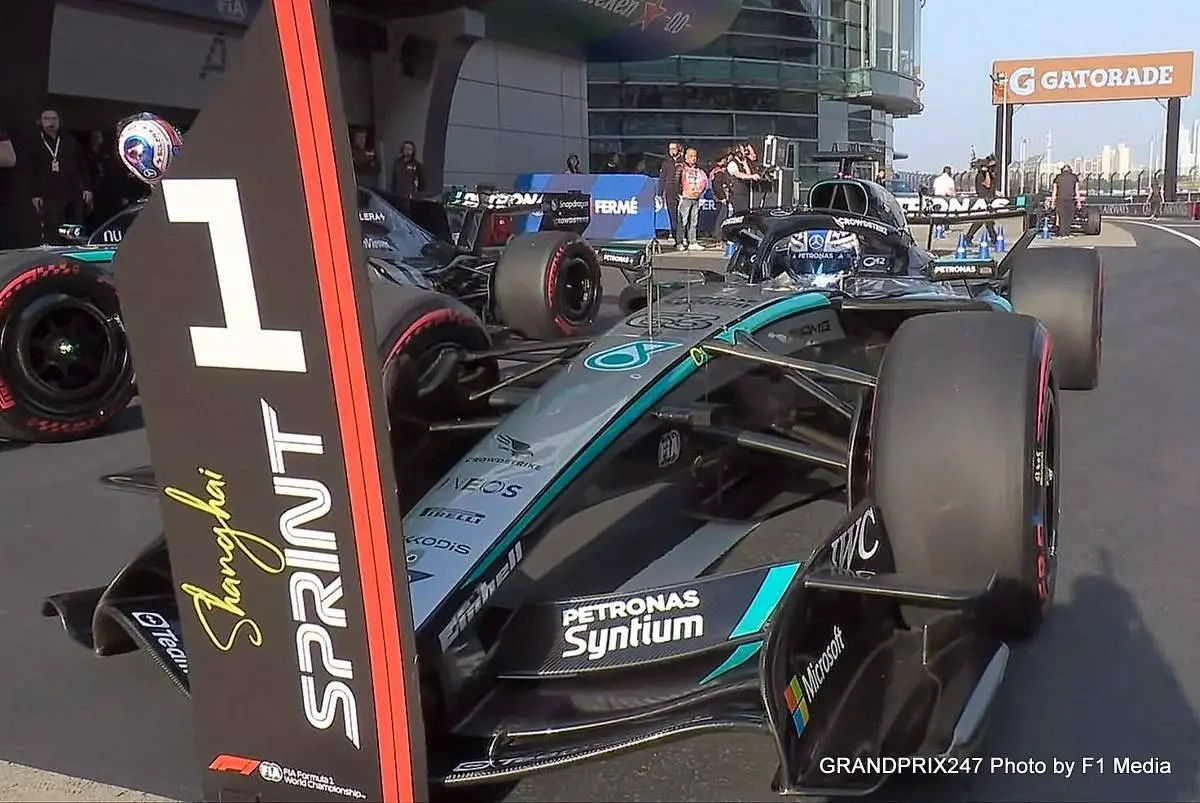
SPRINT SUCCESS IN SHANGHAI FOR GEORGE! 🥇 pic.twitter.com/uLUxx4PxVD
— Mercedes-AMG PETRONAS F1 Team (@MercedesAMGF1) March 14, 2026
Right now, Mercedes’ tech team are simply better placed than any other to
exploit the software that defines the energy
management system within the car’s battery. Of course, the specifics of how
they’re doing so will remain a closely guarded secret.
Lest we forget that McLaren have the same Mercedes engine as the ‘parent’
team, as well as two drivers considered by many to be the standout on the grid.
But the reigning constructors’ champion hasn’t laid a glove on the German
outfit as yet, which is confirmation of just how well Mercedes have tested and
rolled out some of the other specifications of their cars.
Will that competitive advantage last for the whole campaign? We’ll have to
wait and see. But it might just be enough of an edge for Mercedes to be crowned
champions before their opposition have even got to grips with the new specs.
Latest News




Loading