Cadillac Odds as They Enter Formula 1 in 2026 Amid Growing U.S. Interest
F1 Teams NewsFriday, 30 January 2026 at 05:15
Cadillac’s 2026 Formula 1 debut arrives at a moment of sweeping regulation change, where established teams dominate the odds and betting markets are pricing in long-term ambition against the realities of building a new team from the ground up.
Formula 1’s American profile is already higher than it has ever been, with three U.S. races on the calendar and a growing domestic audience that now understands teams, technology and long-term projects.
That backdrop is not insignificant as the sport heads into its 2026 reset, a season defined by bold bets, real uncertainty and a rare newcomer with genuine manufacturing weight behind it. Cadillac’s arrival is not a publicity exercise; it is a full-scale attempt to build a Formula 1 team under the most sweeping rules overhaul the sport has seen, and the betting markets are responding in kind.
How betting odds frame ambition versus probability
It is important to note that betting odds do not function as predictions of performance in the traditional sense. Instead, they reflect how markets price probability based on available information, perceived risk and historical precedent.
For a new Formula 1 entrant, long odds are less a judgment on capability and more a recognition of the structural challenges involved in competing immediately against established teams.
This distinction matters, particularly in seasons shaped by regulatory resets, where uncertainty is high and early assumptions can shift rapidly as technical realities emerge.
A new team enters at a moment of maximum disruption
When Cadillac lines up in Melbourne in March 2026, it will be the first new entry since Haas joined a decade earlier. The timing is unforgiving. New chassis regulations, new power units and sustainable fuels all land at once. Established teams have spent years preparing. Cadillac has had months, at least officially.
Behind the scenes, the work began much earlier. Long before final approval, the project pressed on with design studies, recruitment and supplier relationships. By the time the green light arrived, the car concept was already well advanced, the Silverstone base was active and senior technical leadership was in place. That urgency has defined the program from the start.
The scale is striking. Cadillac attracted more than 140,000 job applications as it built its workforce, ultimately hiring just over 500 people before the end of 2025.
That number is expected to rise toward 600 as the first season approaches. It is a reminder that starting an F1 team is not about buying parts. It is about assembling systems, processes and people at speed.
Proof of life at Silverstone
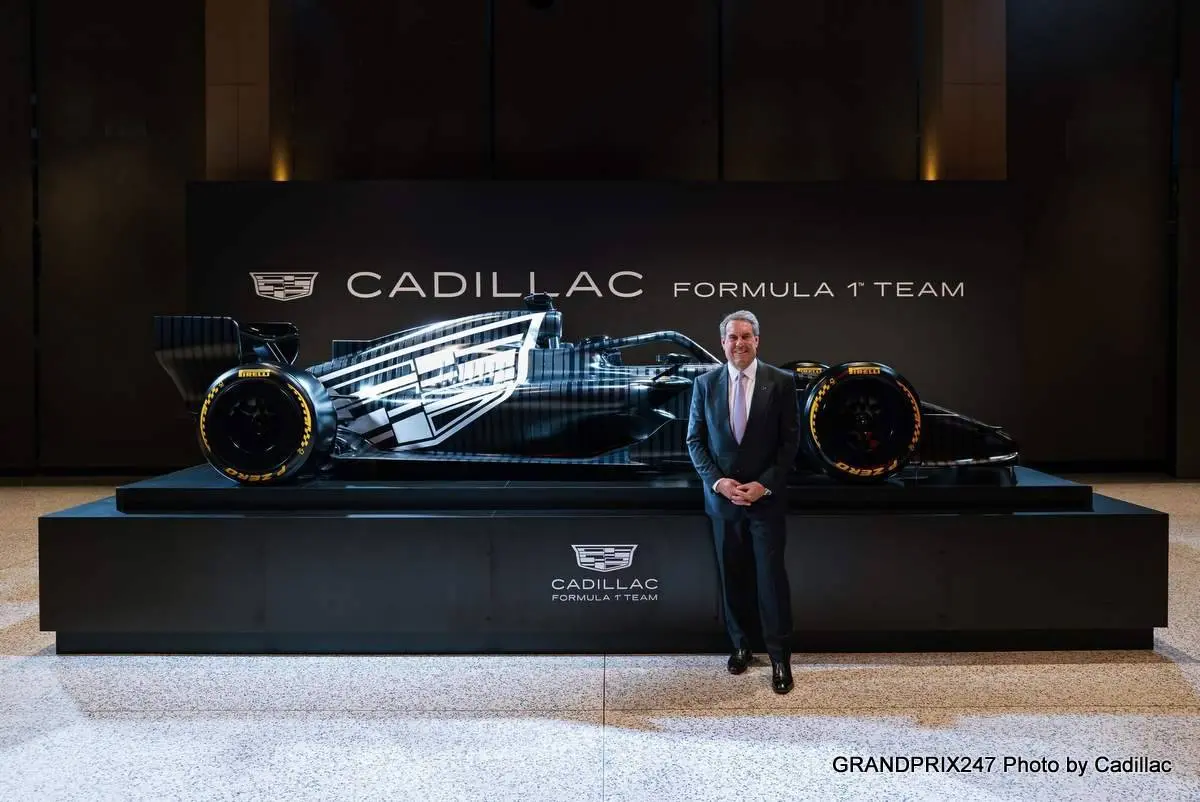
The first public sign of progress came in January when the Cadillac car ran at Silverstone during a promotional filming day. Sergio Perez completed the initial laps as part of a systems shakedown that verified core functions ahead of pre-season testing. The car ran in a muted black finish, with the final livery scheduled to debut during a Super Bowl broadcast in February.
That moment carried weight beyond the lap count as it showed the project had moved from planning to execution. It also gave betting markets something tangible to react to. Futures prices are rarely influenced by ambition alone; they respond to evidence.
You can read more about that milestone in Sergio Perez gives Cadillac’s 2026 Formula 1 car a shakedown at Silverstone, which details how the day was used to confirm systems and bring the team together in a live garage environment for the first time.
Why the front of the market looks crowded
At the top of the Constructors’ Championship board, bookmakers are clustering around familiar names. Mercedes and McLaren sit close together, reflecting confidence that both have interpreted the new rules effectively. Ferrari, Red Bull and Aston Martin form the next tier, more expensive but still capable of capitalizing if early technical calls land.
That belief in Mercedes has been reinforced by early signs around its 2026 car and power-unit approach. The team has already revealed its new machine and will run it at Silverstone before heading to private testing in Barcelona, prompting rival teams to study every detail closely.
The uncertainty does not stop there. Concerns about engine interpretation, particularly around compression ratios at running temperatures, have already prompted discussions with the FIA. The reality is that early technical advantages could prove decisive and difficult to erase. For betting markets, that level of regulatory risk is enough to push prices apart quickly.
How to think about the markets before Melbourne
Ahead of Melbourne, betting markets are functioning less as short-term speculation and more as a reflection of how the sport is assessing risk under the 2026 regulations. Futures boards show a clear divide between established teams with proven development pipelines and new projects that still carry unknowns.
On major U.S. sportsbooks like BetMGM, the Constructors’ Championship pricing highlights that divide clearly. Front-running teams are grouped tightly, suggesting confidence in their ability to interpret the new rules quickly, while new entrants like Cadillac are priced at long odds that reflect uncertainty rather than dismissal.
Readers who want to see how these futures markets are structured can explore them directly by signing up for BetMGM and even taking advantage of the ongoing BetMGM promo.
For readers, this framing matters because it shows how markets translate incomplete information into probability. Cadillac’s position on the board is not a verdict on ambition or investment, but a signal that execution, integration and early reliability remain untested.
In that sense, futures pricing offers a useful lens for understanding how much patience the market expects will be required before meaningful results appear.
Where Cadillac sits in the numbers
Markets historically price new Formula 1 teams conservatively, regardless of manufacturer backing. The reasons are consistent: limited baseline data, unproven integration between chassis and power unit, and the difficulty of optimizing performance under a cost cap from day one.
Even small early inefficiencies can compound over a season, particularly when rivals already operate at peak organizational efficiency.
This historical context explains why Cadillac’s odds look distant even as its preparation appears robust.
Against that backdrop, Cadillac’s price tells a clear story. The team is listed at around +20000 to win the Constructors’ Championship in its first season. That figure is not a judgment on ambition or backing as much as it reflects how difficult it is to compete immediately when everything is new.
The same logic applies in the Drivers’ Championship market. Sergio Perez is priced at roughly +20000, with Valtteri Bottas slightly shorter at +15000. Markets are recognizing experience and reliability while accounting for the realities of a first-year car operating in an unfamiliar environment.
Those numbers align with how Cadillac itself has framed the challenge. Team leadership has consistently emphasized learning curves, validation, and building a platform rather than immediate outcomes. In a cost-capped era, direction and stability carry real value.
Building the car before the clock ran out
One reason markets remain cautious is the sheer complexity of the task Cadillac has taken on. Unlike Haas, which leaned heavily on listed parts, Cadillac is manufacturing its car in-house while running a Ferrari power unit as a bridge to its own engine program, planned for 2029.
The first race-intent chassis has already been built and scheduled for homologation and crash testing. Prototype work allowed the team to understand safety requirements even before final engine installation details were known.
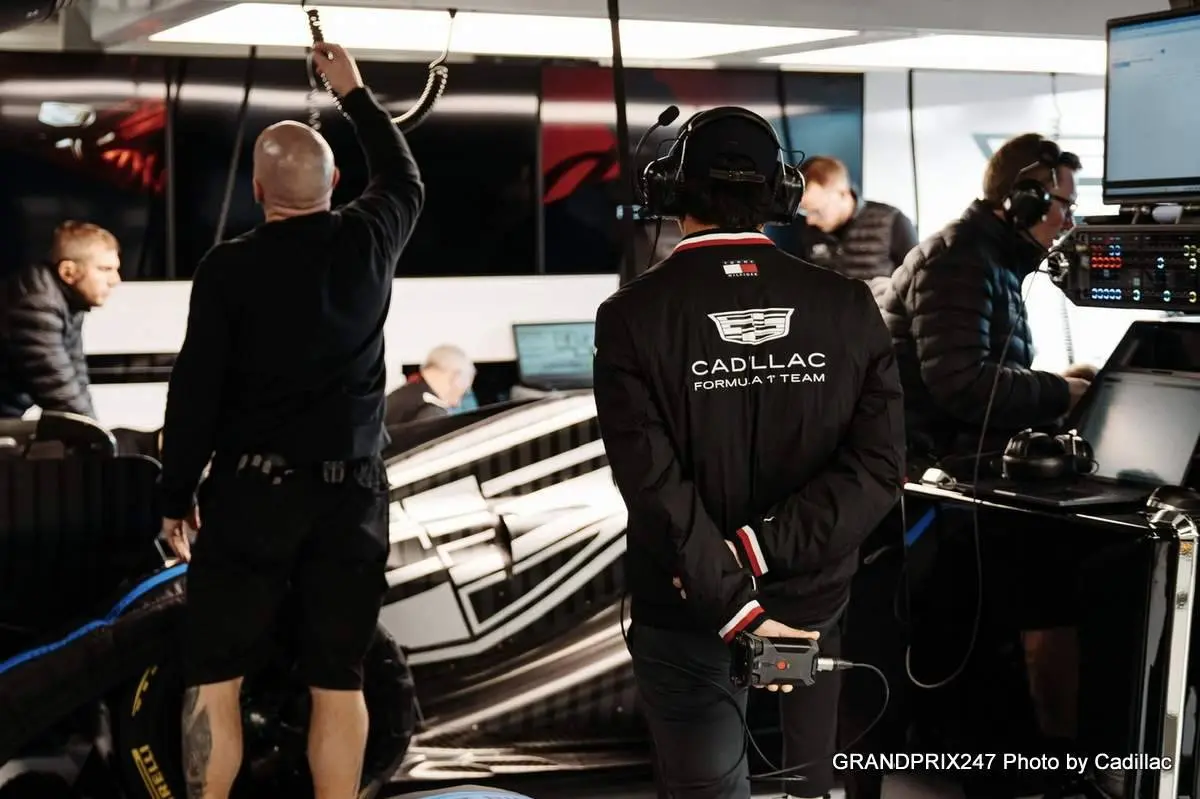
Live race simulations have been carried out using General Motors’ technical facilities, with full pit-wall operations rehearsed as if it were a grand prix weekend.
That preparation reduces uncertainty, but it does not remove it. Even well-established teams have been caught out by regulation resets in the past. Cadillac has chosen to confront that reality directly rather than delay and hope.
History offers a warning and a guide
There is precedent for restraint. Toyota spent heavily across eight seasons without winning a race. The lesson was not about budget, but about integration and understanding how Formula 1 operates at every level.
Cadillac’s think tank has been open about learning from that example, focusing on smart allocation and clarity of purpose.
That perspective is explored further in Audi and Cadillac should avoid Toyota’s approach to Formula 1, which places the new entrants in the wider context of manufacturer efforts and the demands of the modern cost-cap era.
Taken together, the odds around Cadillac are not dismissive. They reflect the scale of the task and the patience required. In a season where established teams are still trying to interpret the same rulebook, Cadillac’s entry stands as one of 2026’s most compelling subplots.
The numbers tell you the markets expect a long view, and that expectation feels grounded rather than cynical.
Latest News






Loading