Hungarian Grand Prix 2025: Celebrating 40 Years of Formula 1 at Hungaroring
F1 HistoryTuesday, 29 July 2025 at 02:59
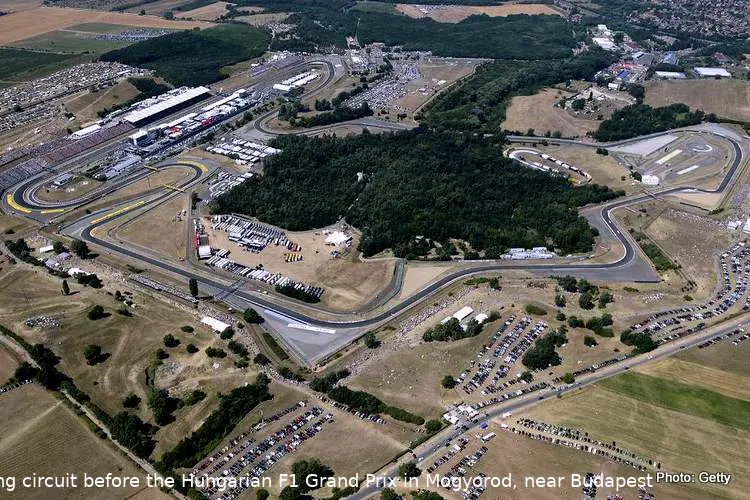
Held annually at the Hungaroring in Mogyoród since 1986, the Hungarian Grand Prix has been a fixture of the Formula 1 calendar for nearly four decades.
Notably, the Hungarian GP is one of the few races to have been held uninterrupted since its inception and is considered one of the traditional events still on the modern calendar.
This year, 2025, marks the 40th running of the race at the Hungaroring, making it a special occasion for fans and teams alike. Let’s revisit the venue’s rich history, its defining moments, and the upcoming race in August.
While the Hungaroring is the modern home of the race, the Hungarian Grand Prix itself dates back further. The very first event was held in June 1936 on a 5.0 km (3.1-mile) street circuit in Népliget Park, Budapest.
Top teams of the day—Mercedes, Auto Union, and Alfa Romeo—sent their cars, and the race attracted a crowd estimated at over 100,000. However, due to rising political tensions and the onset of World War II, Grand Prix racing would not return to Hungary for another 50 years.
A Cold War Breakthrough

In 1986, Formula 1 finally made its return to Hungary. It was a landmark moment—engineered by Bernie Ecclestone—as the Hungarian Grand Prix became the first F1 race to be held behind the Iron Curtain. Construction of the new Hungaroring began in October 1985 near Budapest and was completed in just nine months, thanks to full state backing.
The inaugural 1986 race was a massive success. Over 200,000 fans attended, despite high ticket prices, highlighting the sport’s appeal behind the Iron Curtain. Hungary’s investment paid off both economically and politically.
As Adam Schmidt, Hungary’s State Secretary for Sport, recently noted, the Hungarian Grand Prix has consistently been the country’s most attended annual sporting event, with an estimated 80% of visitors arriving from abroad.
Originally envisioned as a Monaco-style layout, the Hungaroring remains tight and technical, with few overtaking opportunities. Its narrow, twisting layout often results in processional races, putting extra emphasis on pit stop strategy. Still, its unpredictable weather, dusty surface, and technical demands have produced plenty of memorable moments.
Hungaroring’s Evolution: 1986 to 2025

Since 1986, the Hungaroring’s core layout has remained largely unchanged. Small updates have included the tightening of Turn 12 in 2003 and resurfacing work. But heading into its 40th edition, the circuit is undergoing its most significant upgrade yet.
Major renovations—planned over the past decade—are now underway. These include a new pit building with 36 race garages and four technical garages, a VIP hospitality area for 2,000 people, private boxes, a rooftop terrace, and an expanded paddock.
The development has stayed within the HUF 78 billion budget, with officials claiming that each event recoups 1.5 times the investment in economic return.
Further work includes resurfacing of the start/finish straight and redesigns of Turn 14 to accommodate motorcycle racing. The 13,000-square-metre hospitality building and new covered grandstands for 10,000 fans are still under construction. Additionally, media parking areas will be upgraded and standardised.
Iconic Moments at the Hungarian Grand Prix

Despite its reputation as a tough overtaking venue, the Hungaroring has delivered countless unforgettable moments:
- 1986: Nelson Piquet outdueled Ayrton Senna in a titanic battle to win the inaugural race.
- 1992: Nigel Mansell sealed the World Championship with a second-place finish, securing his only title.
- 1997: Damon Hill, driving for the underdog Arrows team, nearly pulled off a shock win before a hydraulic failure allowed Jacques Villeneuve to snatch victory on the final lap.
- 2003: Fernando Alonso claimed his maiden F1 win, although the weekend was marred by Ralph Firman’s huge crash in practice.
- 2006: Jenson Button took his first career win from 14th on the grid in wet-dry conditions. It was also Honda’s first win as a constructor since 1967.
- 2009: Lewis Hamilton took the first F1 win for a car using KERS hybrid technology. This race also saw Felipe Massa suffer a life-threatening head injury during qualifying.
- 2011: In his 200th race, Button again triumphed at the Hungaroring in mixed conditions.
- 2021: Chaos in the wet saw Esteban Ocon take his first F1 win, with Alonso heroically holding off Hamilton in a crucial late-race defensive display.
Hamilton holds the record for most Hungarian GP wins with eight. He also holds the official lap record of 1:16.627, set during qualifying in 2020. Though not high in absolute elevation, the Hungaroring’s 270m altitude adds to its microclimatic unpredictability.
Looking Ahead to 2025

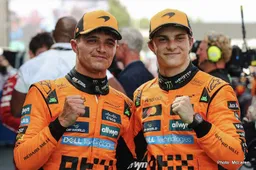
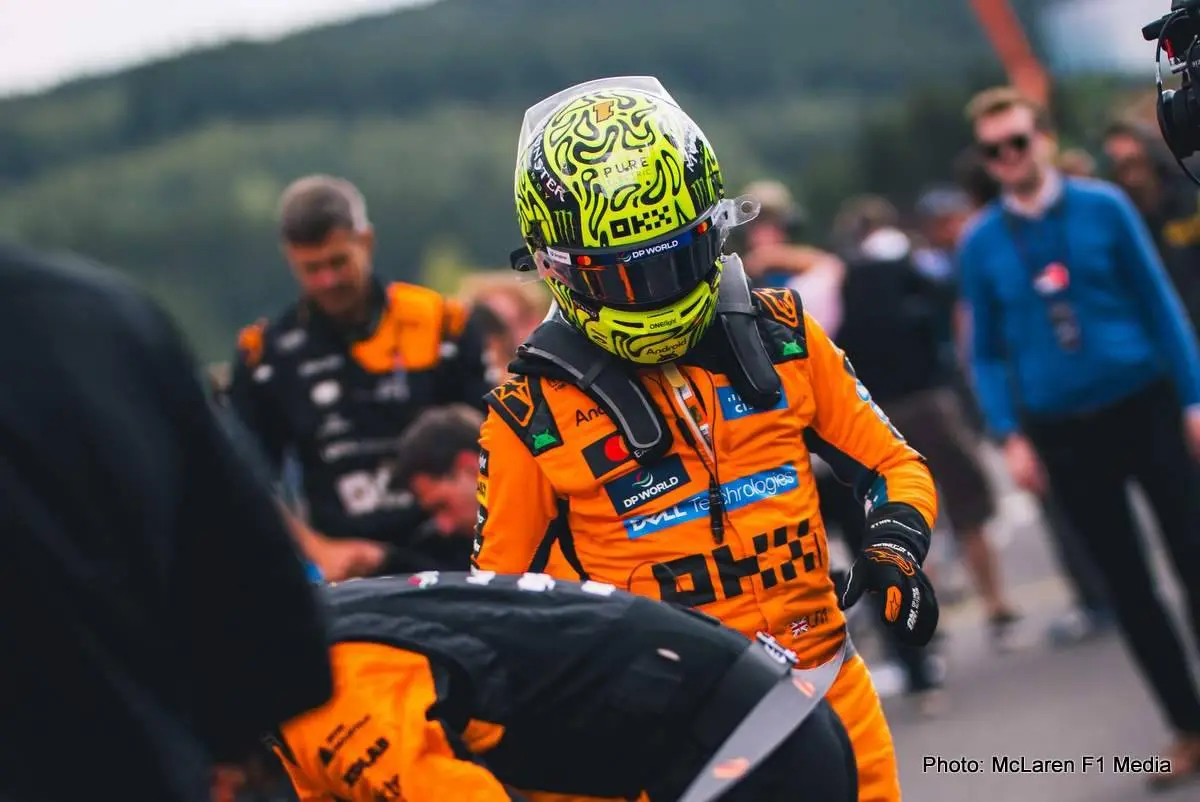
With the race fast-approaching this weekend, there’s a lot of buzz and anticipation to be had especially if you like to bet on Formula 1, anticipation is high. Last year, McLaren locked out the front row and converted it into a 1–2 finish, with Oscar Piastri taking victory ahead of Lando Norris. With Piastri currently ahead on points, he may have the edge again—though Norris, always strong in qualifying, could mount a challenge.
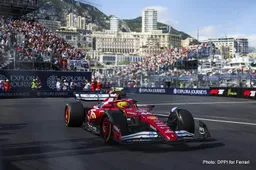
Ferrari are resurgent too. With Lewis Hamilton and Charles Leclerc fighting for podiums, the Scuderia remains a threat. Red Bull’s Max Verstappen is still a formidable force, and Mercedes’ George Russell and rookie Kimi Antonelli are both showing promising pace.
Also drawing attention is Stake F1 Team KICK Sauber’s Nico Hülkenberg. Reflecting on his podium at Silverstone, he said: “Standing on the podium in Silverstone was a surreal and incredibly proud moment… it had been thirteen years since the team’s last top-three finish.” With strong form and renewed confidence, Hülkenberg could deliver another upset at the Hungaroring.
The Hungaroring’s layout rewards technical skill more than outright power. Turn 2 and Turn 3 require delicate throttle control, while Turn 4’s blind crest tests driver commitment. Turn 12, a sharp left-hander, often sees mistakes under braking.
With temperatures typically soaring in August, tyre management will again be key. Make sure you check out Formula 1 Expert Picks and Predictions before placing any bets as this race can change instantly.
Fan Culture and Atmosphere

Better still, it’s also looking at hosting motorcycle sports, meaning the track will see additional usage throughout each calendar year with additional betting options on Stake.com available.
For betting enthusiasts, the 2025 edition promises intrigue—so consult your expert picks carefully.
The Hungaroring is built in a natural bowl, offering excellent visibility for fans. This makes it one of the most spectator-friendly venues in F1. A vibrant off-track experience adds to the appeal, with fan zones behind the Super Gold and Apex grandstands offering entertainment, simulators, pit stop challenges, live DJ sets, and driver meet-and-greets.
Visitors can also walk the pit lane, snap a photo with the World Championship trophy, and explore interactive displays—all part of the festival-like atmosphere that makes the Hungarian Grand Prix a fan favourite.
The future of the Hungarian Grand Prix is secure, with a contract extension confirmed through 2032. As renovations progress and the circuit prepares to host motorcycle racing in the future, Hungary’s place on the calendar looks set for years to come. The upgrades ensure the venue remains fit for modern F1 demands while retaining its classic challenge.
Latest News
Loading