Are Formula 1 Teams Becoming Too Dependent on Simulators?
F1 HistoryFriday, 20 February 2026 at 06:26
Formula 1 has always been a sport driven by innovation, where fractions of a second define success or failure. In today’s highly digital era, even industries like nationalbet mirror this obsession with precision and prediction.
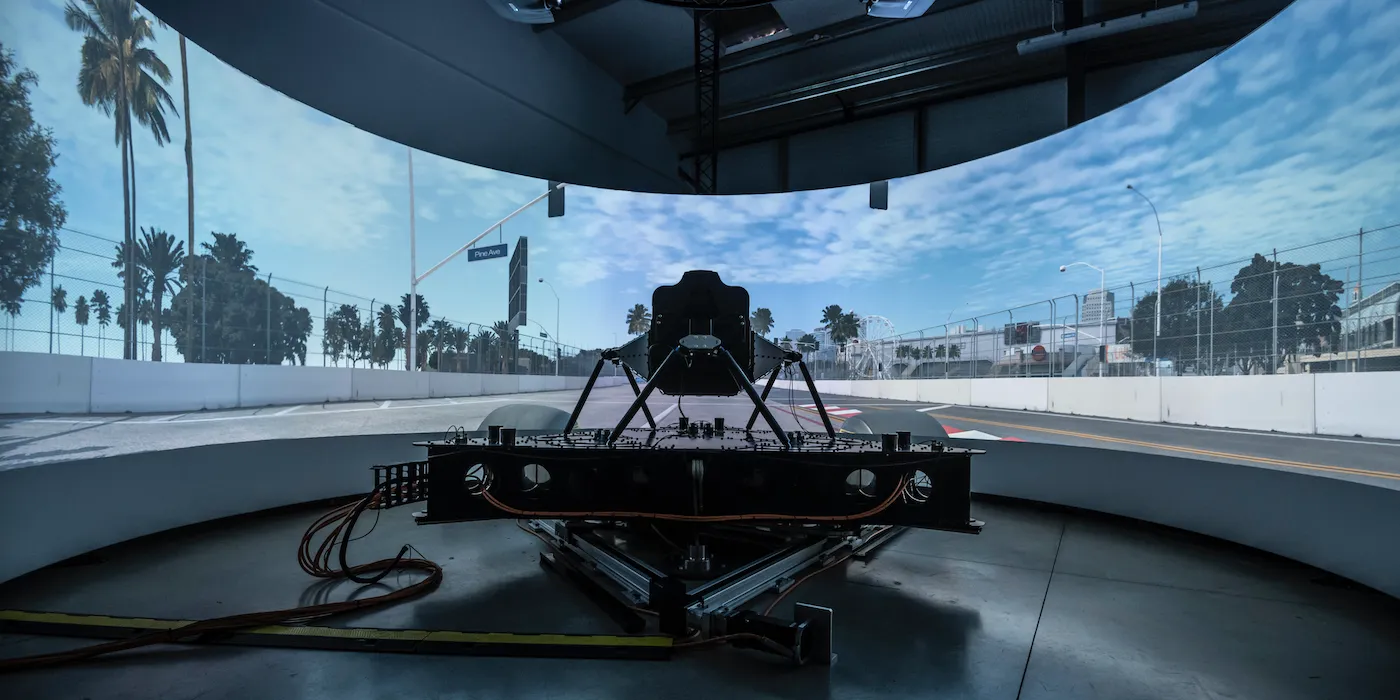
Modern teams now spend countless hours in sophisticated simulators, refining car setups, race strategies, and driver preparation long before the cars hit the circuit. But as virtual tools become more central to performance, an uncomfortable question emerges: are teams leaning too heavily on simulated perfection at the expense of real-world adaptability?
Simulators were once considered supplementary tools, primarily used for basic driver familiarization or limited aerodynamic correlation. Over the past decade, however, their role has transformed dramatically. With testing restrictions tightening and budgets increasingly regulated, simulators have become essential for car development and race preparation.
Today’s simulation environments are astonishingly advanced. They replicate tire behavior, track conditions, energy deployment systems, and even subtle chassis responses. Engineers can evaluate countless scenarios in a controlled setting, while drivers rehearse laps with near-photographic accuracy.
This shift has undeniably improved efficiency, reducing costs and accelerating development cycles. Yet efficiency and realism are not synonymous.
The Promise of Virtual Precision
Simulators offer teams something incredibly valuable: repeatability. Variables can be isolated, adjustments tested instantly, and data collected without logistical constraints. This allows for rapid iteration, a critical advantage in a sport where development races occur continuously throughout the season.
For drivers, the benefits are equally compelling. They can learn new circuits, rehearse qualifying laps, and experiment with driving techniques in a risk-free environment. Mistakes carry no physical consequences, encouraging aggressive exploration of performance limits.
However, this controlled perfection can also mask a fundamental weakness.
When Data Replaces Instinct
One subtle consequence of simulator reliance is the potential erosion of instinctive decision-making. Real-world racing is inherently chaotic, filled with unpredictable grip levels, shifting weather, and evolving tire performance. Simulators attempt to model these factors, but they cannot perfectly reproduce the randomness of reality.
Drivers accustomed to predictable virtual feedback may struggle when conditions deviate from expectations. A car that feels stable in simulation might behave differently on track, where temperature fluctuations, wind patterns, and surface irregularities introduce complexity beyond digital approximation.
In essence, precision can create fragility.
The Correlation Challenge
Perhaps the most significant technical issue surrounding simulators is correlation — the alignment between virtual predictions and real-world outcomes. Despite continuous refinement, discrepancies remain inevitable.
Even minor mismatches can lead teams down misleading development paths. An aerodynamic upgrade validated in simulation might deliver less benefit on track. Tire degradation models may fail to capture nuanced thermal effects. Suspension responses might diverge under real mechanical loads.
These inconsistencies are not failures of technology but reflections of reality’s complexity. The physical world resists perfect modeling.
The Illusion of Confidence
Simulators can inadvertently generate overconfidence. When virtual results consistently validate assumptions, teams may grow more certain in their decisions. Yet if the underlying models contain hidden inaccuracies, this confidence becomes precarious.
Unexpected race weekends occasionally expose such gaps. Cars optimized through simulation sometimes underperform, forcing teams into reactive adjustments. In these moments, adaptability — not prediction — becomes the decisive skill.
The Human Factor
Beyond engineering challenges, simulator dependence reshapes the human dimension of Formula 1. Racing drivers historically developed through visceral feedback: the feel of tire slip, the vibration of the chassis, the sensory cues of mechanical behavior.
While simulators replicate many sensations, they cannot fully emulate physical forces or psychological pressure. The absence of real danger subtly alters perception and decision-making. Risk assessment, emotional regulation, and spatial awareness operate differently when consequences are virtual.
This distinction matters profoundly in high-speed competition.
Why Teams Still Need Real-World Exposure
Despite their limitations, simulators remain indispensable. The question is not whether teams should use them, but how they balance virtual tools with real-world learning.
Track time, even when limited, provides irreplaceable insights. Real circuits introduce variability no algorithm can perfectly anticipate. Drivers recalibrate sensory responses, engineers validate assumptions, and unexpected behaviors surface naturally.
Importantly, real-world exposure fosters resilience. When performance depends solely on modeled environments, deviations become disruptive. When teams regularly confront unpredictability, adaptability strengthens.
Adaptation as Competitive Advantage
In modern Formula 1, races are often decided by how quickly teams interpret evolving conditions. Tire performance shifts, weather transitions, and strategic uncertainties reward flexible thinking.
Excessive reliance on simulation risks narrowing this flexibility. Teams may become exceptionally precise within predicted scenarios yet slower to respond outside them. The competitive edge increasingly lies not just in preparation, but in reaction.
Striking the Right Balance
The simulator revolution has unquestionably elevated Formula 1’s technical sophistication. Development cycles are faster, data richer, and preparation more comprehensive than ever before. However, virtual mastery must not overshadow the sport’s fundamental truth: racing unfolds in an imperfect, unpredictable world.
Simulators excel at refining possibilities, but they cannot replace the lessons of reality. The most successful teams recognize this distinction, using simulation as a guide rather than a substitute. In a championship defined by margins, the ability to reconcile digital precision with real-world complexity may prove more valuable than either alone.
Ultimately, the future of performance may depend not on abandoning simulators, but on resisting the temptation to trust them too completely. The Australian Grand Prix kick starts the 2026 F1 season.
Latest News

Loading