Formula 1 Drivers in Monaco: Real Reason Half the Grid Lives in the Same Postcode
F1 Drivers NewsSaturday, 20 June 2026 at 06:47
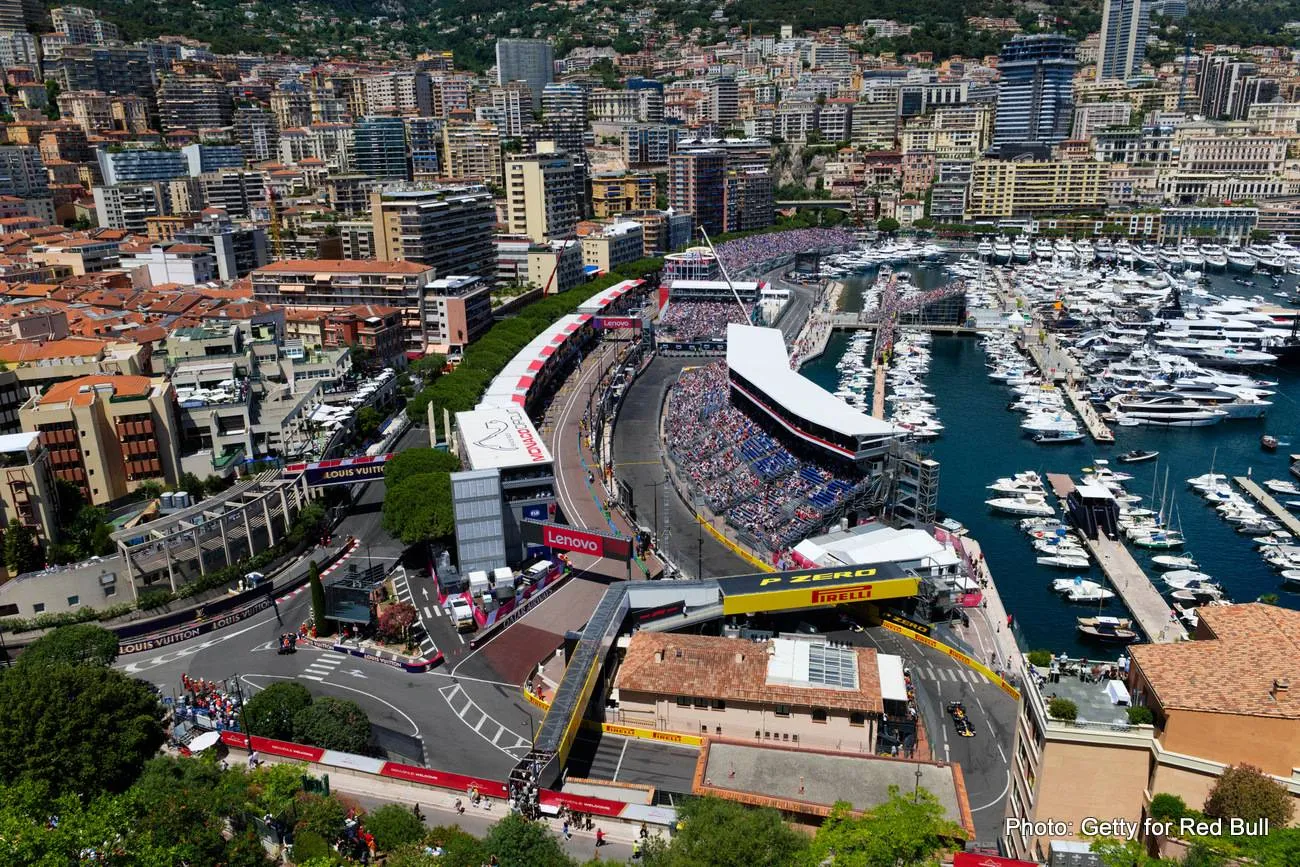
There's a stretch of road above Port Hercule that might be the most famous few kilometers in motorsport.
On one weekend a year, it becomes a Grand Prix circuit. On every other day of the year, it's where some of the fastest drivers in the world go for their morning run.
Monaco has quietly become the default home for a remarkable share of the Formula 1 grid. Not because the principality markets itself as a driver hotspot — it doesn't need to — but because the financial and lifestyle logic is almost impossible to argue with once you're earning at the top of the sport.
This is the full picture: who lives there, why they chose it, what Monaco residency actually involves, and how it compares to the alternatives that wealthy athletes and professionals are weighing up right now.
Which F1 Drivers Actually Live in Monaco?
The honest answer is: a lot of them, though rosters and residencies shift every season and some drivers split time between Monaco and their home countries. With that caveat in place, the commonly cited Monaco-based names from the 2024–2026 grid read like a who's who of the sport.
Max Verstappen has been Monaco-based since his early Red Bull years. Charles Leclerc is a native Monegasque — no relocation needed. Lando Norris made the move around 2021–2022 as his McLaren earnings scaled up. Lewis Hamilton established a Monaco base during his dominant Mercedes championship years. George Russell, Alex Albon, and Valtteri Bottas are all regularly listed as Monaco residents, alongside Sergio Pérez, Daniel Ricciardo, and Nico Hülkenberg.
Rough estimates from motorsport coverage suggest somewhere between one-third and one-half of the modern grid maintains a Monaco tax base or spends significant time there. The trend has been building for decades.
The History Behind the Address Book
Monaco's pull on F1 drivers didn't start with Verstappen's first apartment. Ayrton Senna moved his tax residence to the principality during his McLaren years. Michael Schumacher lived there at the height of his Ferrari dominance. Nico Rosberg grew up there and spent much of his racing career in the same postcode where he once played as a child.
The pattern has a clear arc. In the 1980s and 1990s, the initial wave of relocations was driven almost entirely by tax planning as driver salaries began to reach serious numbers. Through the 2000s and 2010s, as sponsorship deals and endorsement income ballooned, Monaco became the default rather than the exception. Today, multiple rookies move within a season or two of signing their first major contract. It has become normalised.
The Tax Case — Explained Simply
Monaco levies no personal income tax on non-French residents. No capital gains tax. No wealth tax. No inheritance tax for direct heirs. Property itself is not taxed, though certain business income and rental activities carry specific levies.
French nationals are the notable exception — a bilateral arrangement means they remain subject to French tax rules regardless of where they live in the principality.
For everyone else, including the British, Dutch, Finnish, and Australian drivers who make up much of the grid, the savings on a salary in the tens of millions — before bonuses and endorsement deals are counted — are substantial enough to justify property costs that would look extreme almost anywhere else in the world.
It's Not Just the Tax Rate
The financial case is obvious. But drivers who have spoken publicly about the move tend to mention other things too: the safety record, the discretion, the convenience of Nice Côte d'Azur Airport thirty minutes away, the density of high-quality private healthcare and services within a few square kilometres.
And then there's the motorsport culture. The Monaco Grand Prix is one of the most prestigious events on the F1 calendar, and living in the principality gives drivers a home-race environment unlike anywhere else. Training routes trace the actual circuit barriers. Rival drivers cross paths socially at the harbour or in local gyms. The professional and personal worlds overlap in a way that works unusually well for people whose careers require constant travel and a stable base to return to.
How Monaco Residency Actually Works
Monaco doesn't operate a traditional golden visa with fixed investment tranches. What it offers instead is a residence permit for foreign nationals who can demonstrate adequate accommodation, sufficient financial means, a clean criminal record, and — for non-EU/EEA/Swiss nationals — the appropriate French long-stay visa as a prerequisite.
In practice, private banks in Monaco typically require a minimum deposit of around €500,000 to issue the financial reference letter that immigration authorities expect. The actual statutory cost of issuing residence cards is measured in hundreds of euros, not hundreds of thousands. The real gateway expense is property: even a modest Monaco apartment runs into the millions.
The step-by-step process broadly looks like this:
- Secure a French Type-D long-stay visa if required, applied for via a French consulate in your current country of residence.
- Arrange Monaco accommodation — owned, leased, or formally hosted — and open a bank account with sufficient deposited funds.
From there, applicants prepare their documentation bundle: passport, civil status records, criminal background checks from each country lived in over the past five years, proof of funds, health insurance, a CV, and a written statement explaining the source of wealth and the intention to genuinely reside. An in-person interview follows, and the first card — a temporary Carte de Séjour — is issued for one year.
After three annual renewals, residents become eligible for a three-year ordinary card. After around ten years of continuous, genuine residence, the ten-year privileged card becomes available. Citizenship is a discretionary option beyond that — not a guaranteed pathway, and best understood as a long-term relationship with the principality rather than a commercial transaction.
Physical presence expectations are real but not rigidly codified. Residents are generally expected to demonstrate genuine ties — roughly at least three months per year in-country — to support renewals. For F1 drivers whose calendars take them across the world, this is worth factoring into planning from the start.
Monaco vs the Alternatives: Where Else Do F1 Drivers Live?
Monaco dominates the conversation, but it isn't the only option on the grid. Switzerland appeals to some drivers for its privacy and the availability of lump-sum cantonal tax arrangements for high-net-worth individuals. The UK retains a cohort of drivers who prioritise proximity to their teams and simulator facilities. The UAE — particularly Dubai and Abu Dhabi — has grown significantly as a base for athletes seeking zero income tax combined with modern infrastructure.
Fernando Alonso, to take a prominent example, has spent extended periods in Spain, citing family ties alongside professional considerations. Not every champion optimises purely for tax — sometimes geography and personal roots win the argument.
Spain's golden visa property route was abolished in April 2025, which removes one of the historically popular European entry points for investment-based residency. Portugal's Golden Visa remains active but has shifted focus to fund investments and productive capital deployment, away from residential real estate. Greece's program continues to attract attention with thresholds ranging from €250,000 up to €800,000 depending on location, and no minimum stay requirement for permit holders.
Residency Options for HNWIs: A Comparative Overview
| Jurisdiction | Minimum Financial Requirement | Stay Requirement | Path to Citizenship | Key Tax Attribute |
| Monaco | €500k+ bank deposit plus property | Genuine presence (~3 months/yr) | 10+ years, discretionary | Zero income, CGT, wealth tax for non-French residents |
| Portugal | €250k–€500k (funds/research) | ~7 days/year | 5–10 years | Moderate, with planning options |
| Greece | €250k–€800k (property/funds) | Minimal or none for permit | ~7 years | Standard Greek tax, planning possible |
| Spain | Golden Visa ended April 2025 | Higher for ordinary residence | 10 years | Beckham law for qualifying expats |
| UAE | Varies by visa category | Varies | Not generally available | Zero personal income tax |
The table illustrates the trade-off clearly. Monaco's entry costs are genuinely high — but for someone earning at F1's top tier, the annual tax differential against a high-rate EU jurisdiction can cover those costs many times over within a single season.
The Financial Planning Dimension
Residency decisions for athletes and HNWIs are rarely made on a single metric. The total cost of ownership — property, banking minimums, ongoing cost of living, and any capital locked into the arrangement — has to be modelled against realistic tax savings across an expected career window.
F1 careers are concentrated in their earning peak. Relocating early maximises the lifetime benefit. Waiting until the final years of a contract to move captures only a fraction of the potential savings. The flip side is that Monaco's residency model requires ongoing engagement: a real relationship with Monaco private banking, genuine physical ties, and continued evidence of financial means.
For those who want EU integration alongside a low-tax base, combining Monaco residency with a Portuguese or Greek golden visa as a structural backstop is one approach worth exploring. Scenarios like these — "Monaco now, EU access secured separately" — are exactly the kind of planning that specialist investment migration advisory firms help clients model.
If residency planning of this kind is relevant to your situation, you may want to see this site — Global Residence Index is a specialist consultancy that has helped athletes, entrepreneurs, and families navigate Monaco-style residency alongside alternative programs in Portugal, Greece, and beyond, comparing real costs and timelines across jurisdictions.
Frequently Asked Questions
Do all F1 drivers live in Monaco?
No. Roughly a third to a half of the current grid maintains a Monaco tax base, but Switzerland, the UK, the UAE, and Spain also host significant numbers. Residencies change season to season, and some drivers split time between Monaco and their home country.
Is there a Monaco golden visa?
Monaco doesn't operate a classic golden visa with fixed investment tiers. It offers a residence permit to foreign nationals who can demonstrate accommodation, financial means, and clean character records. The €500,000 banking threshold is a practical norm, not a statutory requirement.
How much do you need to live in Monaco?
Property is the real gateway cost — even modest apartments run several million euros. Add a €500,000+ private banking relationship and ongoing cost-of-living, and Monaco is realistically a destination for those with assets well into the seven figures.
Can Monaco residency lead to citizenship?
Yes, but it's a long and discretionary path. After around ten years of continuous, genuine residence, a privileged ten-year card becomes available. Citizenship applications can follow, subject to strict criteria and processing timelines that have no guaranteed outcome.
What are the most affordable European alternatives?
Greece's golden visa currently offers one of the lower entry points in Western Europe, with thresholds from €250,000 for certain property types. Portugal starts at a similar level for fund investments. Both offer EU residence rights and eventual citizenship pathways, at a fraction of Monaco's property costs.

Latest News




Loading