AI, Simulators and Smart Odds: Tech Redefining Formula 1 Betting
Special FeatureTuesday, 18 November 2025 at 02:33

Formula 1 has always been the ultimate fusion of engineering, precision, and strategy. Every Grand Prix weekend is a data-driven battle fought in thousandths of a second.
Yet in 2026 and beyond, the technological revolution shaping the sport is no longer confined to the garages and pit walls. It is reshaping how fans interact with the championship — particularly in the world of Formula 1 betting, where AI, advanced simulators, and smart odds models have begun to redefine prediction, analysis, and the very concept of wagering itself.
What once relied on intuition or simple lap-time comparisons has transformed into a sophisticated ecosystem powered by computational intelligence. Bettors and analysts now operate with a level of insight once reserved only for strategy teams — especially those who leverage tools such as the bet365 bonus code colorado to deepen their understanding of odds and predictive models.
In other words, as Formula 1 becomes more technologically advanced, betting has followed the same trajectory.
The Perfect Sporting Environment for Tech Innovation

Few sports generate as much structured and high-resolution data as Formula 1. A modern F1 car creates over a million data points per second, covering everything from tire temperature and brake wear to energy deployment and micro-sector performance. Add weather telemetry, track evolution data, long-run fuel modelling, and driver-input profiling, and the sport becomes a goldmine for computational analysis.
This abundance of data has created fertile ground for AI-powered prediction systems. While many of the insights used by teams remain confidential, betting technologies have begun to mimic their logic — running virtual race scenarios, identifying performance trends, and adjusting expectations as new information arrives. In essence, betting has become a parallel form of strategy analysis.
More importantly, the rapid progression of machine learning allows predictive models to improve after each session. A computer can detect patterns — like a driver’s precision on a specific type of corner, or a team’s tendency to improve pace during race stints — long before a human analyst would notice.
AI: The New Architect of Race Predictions

The influence of artificial intelligence in Formula 1 betting is no longer subtle; it is foundational. Machine-learning models now act like virtual race engineers, processing data inputs from previous seasons, live timing screens, practice runs, tire simulations, weather projections, and pit strategy histories.
The result is a predictive engine that continuously refines its accuracy. Instead of viewing odds as static interpretations, modern platforms generate dynamic probability curves. When a driver shows unexpected pace in FP2, or a team introduces a major upgrade, the model doesn't simply adjust — it recalculates the entire competitive landscape.
One of the most powerful uses of AI is its ability to analyze driver behaviour across multiple conditions. By studying aggression under braking, tire conservation, race-start consistency, or overtaking efficiency, AI can anticipate whether a driver is likely to fade during a long stint or thrive in late-race battles. This behavioural modelling, once impossible to quantify, has become normalised in intelligent betting ecosystems.
Another transformative aspect is AI’s capacity to evaluate technical risk. Hybrid power unit reliability can be inferred using indicators such as engine mileage, energy recovery patterns, or gearbox usage cycles. On tracks known for mechanical attrition, these models become particularly impactful.
In short, AI has introduced a level of nuance that shifts betting from guesswork toward genuine analytical forecasting.
Simulators: From Training Tools to Prediction Engines

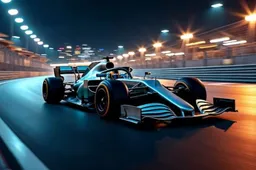
If AI is the brain of modern F1 betting, simulators are the sensory system feeding it. Formula 1 teams have long used Driver-in-the-Loop simulators to replicate entire race weekends, but the technology available to consumers and betting analysts has advanced dramatically as well.
Platforms such as rFactor Pro or high-fidelity esports simulators now incorporate detailed laser-scanned circuits, aero models, and tire physics informed by real-world data. While not identical to team-grade systems, they are sufficiently accurate to offer meaningful insight into race characteristics.
This has created a new form of analysis: virtual race modelling. Analysts can recreate the expected race conditions — from fuel loads to tire selection — and simulate full stints to study potential strategy outcomes. A circuit like Barcelona, for instance, may show strong undercut potential in simulated environments, while tracks such as Suzuka highlight the difficulty of overtaking even with pace advantages.
Additionally, esports data has become a surprisingly valuable layer. Professional virtual drivers operate at theoretical limits, showing the fastest possible lines and providing hints about which sectors may be decisive. While not a perfect mirror of real car behaviour, these insights feed into betting models seeking to understand where race pace advantages might emerge.
More broadly, simulators allow for a deeper reading of a Grand Prix weekend. Track evolution, wind sensitivity, or tire degradation patterns can all be explored virtually before cars even touch the circuit.
Smart Odds: The Evolution of Betting Logic

The rise of AI and simulation modelling has led to the development of smart odds, a concept that moves beyond traditional bookmakers’ static numbers. Modern F1 betting platforms now rely on real-time data interpretation, dynamically adjusting odds as new information enters the system.
The change is dramatic: odds no longer reflect pre-race expectations alone, but living predictive models responding to each lap of practice and qualifying. A sudden drop in sector time consistency, an unexpected long-run pace improvement, or a weather shift on the radar can all cause immediate recalibration.
This intelligence also benefits users directly. Many platforms now personalise odds based on past activity or prediction profiles — offering tailored risk assessments, alert systems when probabilities shift, and more interactive forecasting tools.
The outcome is an environment where betting feels less like gambling and more like strategic analysis.
In-Play Betting: A New Level of Immersion

Formula 1 naturally lends itself to in-play betting because the competitive order can change every few laps. Safety Cars, pit windows, tire strategy divergence, and weather transitions create a constantly shifting landscape. Intelligent algorithms can detect these inflection points faster than manual bookmakers ever could.
If AI identifies that a car is extending its stint with minimal pace drop, or that tire degradation is less severe than predicted, bettors can act before the field reshuffles. In-play betting has therefore become one of the most thrilling — and technologically advanced — areas of motorsport wagering.
In many ways, it mirrors live race strategy. Both rely on anticipation, timing, and the correct reading of small but meaningful data fluctuations.
Tech Has Launched Formula 1 Betting Into a New Era

Formula 1 is accelerating toward an era where neural networks, large-scale digital twins, and real-time telemetry access could reshape how both fans and analysts interpret racing. We may soon see:
Predictive upgrade modelling, capable of forecasting how new parts will impact performance
Driver-confidence analytics, based on micro-inputs and form cycles
Crowd-sourced simulation pools, merging thousands of fan-run simulations into a unified probability engine
Driver-confidence analytics, based on micro-inputs and form cycles
Crowd-sourced simulation pools, merging thousands of fan-run simulations into a unified probability engine
As the sport evolves technologically, so will the systems designed to understand it.
Artificial intelligence, advanced simulators and smart odds systems have pushed Formula 1 betting into what can only be described as a tech renaissance. The sport’s immense data output has created perfect conditions for sophisticated forecasting, while simulators and in-play analytics enable a level of precision previously unimaginable.
Betting is no longer a parallel activity — it mirrors the strategic complexity of Formula 1 itself. And as technology continues to evolve, so too will the ways fans engage with the world’s fastest motorsport.
Latest News








Loading