Why Formula 1 Is Really a Game of Timing, Data and Split-Second Decisions
F1 NewsTuesday, 24 March 2026 at 03:26
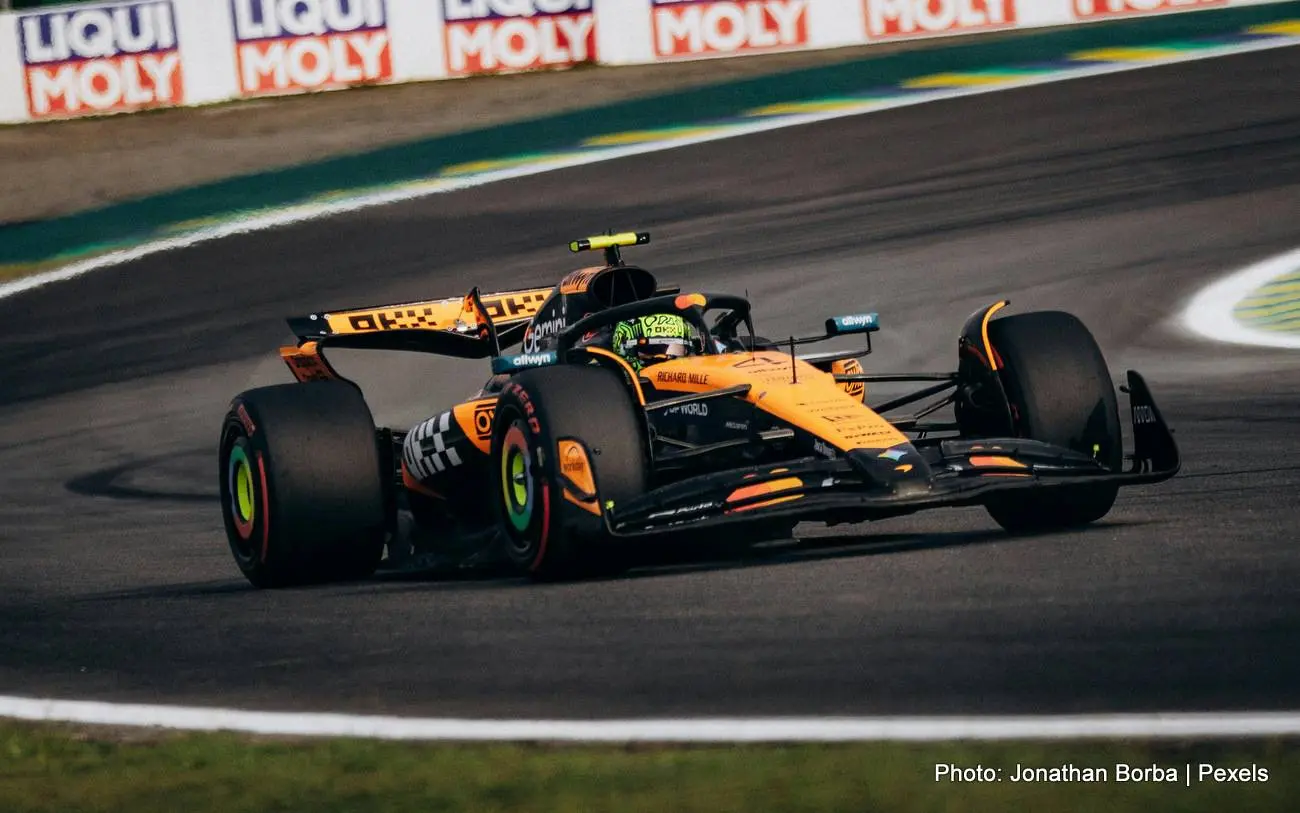
From the outside, Formula 1 can still look like a simple contest of speed. The fastest car wins, the bravest driver takes the biggest risks, and the chequered flag settles everything.
But modern F1 is far more layered than that. Teams now work with dense streams of telemetry, predictive models, live timing, tyre data, and constant radio feedback, while official F1 data systems pull information from hundreds of sensors on each car.
What fans see as a two-hour race is really a rolling decision-making exercise in which timing often matters just as much as outright pace.
The race begins long before lights out
By the time the grid forms on Sunday, much of the strategic work will already be done. Teams arrive with simulations for tyre life, likely stint lengths, traffic windows, overtaking difficulty, and possible Safety Car scenarios. Even then, those plans are provisional. The initial strategy is built before the weekend, but the final result still depends on how quickly teams respond to changing conditions and real-time pressure.
That mix of structure, probability, and split-second judgment is part of what makes Formula 1 so compelling to watch. Outside motorsport, the same appetite for rule-based formats and fast outcomes can also be seen in other kinds of digital entertainment, including Royal Vegas' NZ online casino, where clearly defined systems and immediate results shape the experience in a very different setting.
This is also why Formula 1 has become such a rich technical sport to follow. Each race is shaped not only by driver skill, but by predictive models, live feedback, and constant recalculation. The sport still rewards instinct, but instinct now works alongside simulation, forecasting, and data-led strategy.
Tyres are the real clock on Sunday
No part of the F1 strategy is more visible than tyre management. Pirelli’s current F1 range runs from the hardest compounds to the softest, with each selection designed for different track surfaces, temperatures, and energy loads. Those choices shape not only grip, but also degradation, overheating, and stint length.
In practical terms, tyres act like the race’s hidden clock: once performance begins to drop away, every option on the pit wall changes with it.
Formula 1’s own strategy analysis has explained why the undercut is so powerful at many circuits. When old tyres have lost performance and a new set can be switched on quickly, pitting first can create enough lap-time gain to jump a rival.
But that is not universal.
At lower-grip venues or races where it takes longer to bring fresh tyres into the right window, the overcut can become just as effective. This is why tyre strategy is never only about choosing a compound. It is about understanding when performance drops, how traffic will interfere, and whether track position is worth more than pure pace.
The regulations add another layer. In dry conditions, drivers must generally use at least two different dry-weather tyre specifications during the race, with at least one mandatory race compound, unless they have used intermediate or wet tyres. That means strategy is not just a competitive choice; it is shaped by fixed sporting rules before the first pit stop.
Pit stops are about information as much as execution
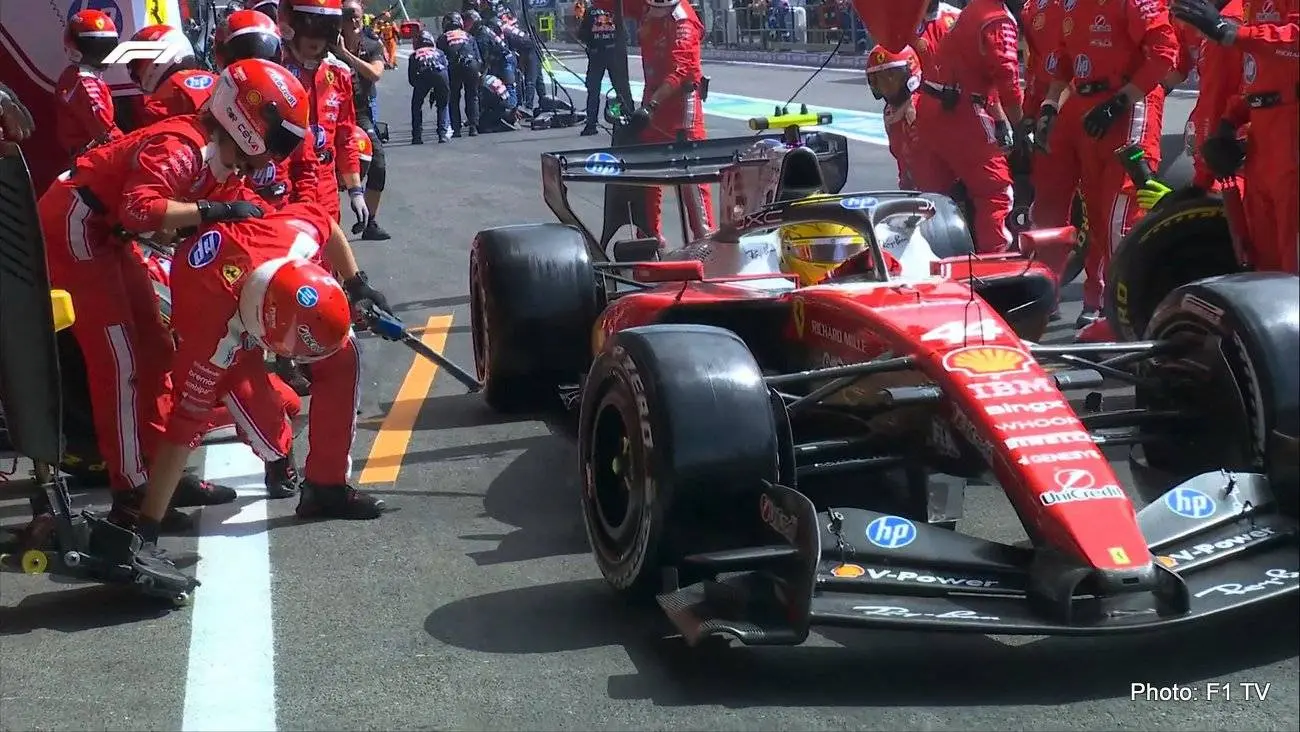
Fans naturally focus on pit-stop speed because the numbers are so dramatic. A stop can be over in less than two seconds, and that alone can swing position. But the official F1 pit-stop explainer makes clear that operations are run from the pit wall, with teams monitoring traffic, tyre windows, rival behaviour, and Safety Car alerts.
There are even “box-to-overtake” calls, where a team asks a driver to do the opposite of a nearby rival in order to create a strategic opening. In other words, the stop itself is only the visible end of a much larger chain of decisions.
That is why a perfect stop can still be the wrong stop. Pit too early, and a driver may rejoin traffic, destroying the value of fresh tyres. Pit too late and the undercut opportunity disappears. Stay out too long, and tyre degradation takes over. Pit too soon under neutralised conditions and you may gain track position, or you may hand away flexibility for the final stint.
The stopwatch matters, but so does context. In Formula 1, raw speed only counts if it arrives at the right moment.
Safety Cars and VSCs can rewrite the whole race
Few things transform a Grand Prix as quickly as neutralisation. Under the FIA Sporting Regulations, the Safety Car gathers the field and sharply changes the strategic cost of making a pit stop, while the Virtual Safety Car is used when track conditions require caution but not a full Safety Car deployment.
Official F1 guidance also notes that strategists can gain an advantage when a Safety Car is deployed, which is why teams monitor these moments so closely. A cheap stop under VSC or Safety Car can turn a compromised race into a strong result within a lap or two.
This is one of the reasons F1 remains so compelling even when overtaking is difficult. The race is never purely linear. A driver can lose time protecting tyres, regain it with clean air, then gain more through a neutralisation window that did not exist ten minutes earlier. Strategy in Formula 1 is not static. It is a live response to changing probabilities.
Data helps, but the driver still closes the loop
For all the talk of analytics, the driver remains central. Teams can model tyre loss, compare sector times, and estimate time lost to degradation with increasingly sophisticated tools, including the broadcast tyre-performance graphics used by F1. But a driver is still the one feeling rear traction disappear, sensing front grain build-up, or judging whether the balance is stable enough to extend a stint. Strategy works best when data and human feedback agree, and breaks down when they do not.
That is why the best strategists are not simply number crunchers. They are interpreters. They need to know when a model is robust, when track evolution has changed the picture, and when a driver’s feedback should override the expected plan. In a sport obsessed with precision, some of the most important calls still come down to judgment under pressure.
Why this makes Formula 1 more than a speed contest
F1 is not just fast; it is layered. It combines regulation, engineering, probability, tyre science, human judgment, and timing in a way few sports can match. Grand Prix results still reward great drivers and great cars, but they also reward the team that reads the race most clearly, reacts most calmly, and makes the right call a few seconds before everyone else. In that sense,
Formula 1 is not only a race. It is one of sport’s purest decision-making contests.
Latest News
Loading