Why Fernando Alonso is not the driver to save Aston Martin from Formula 1 failure
F1 NewsSaturday, 21 March 2026 at 10:27
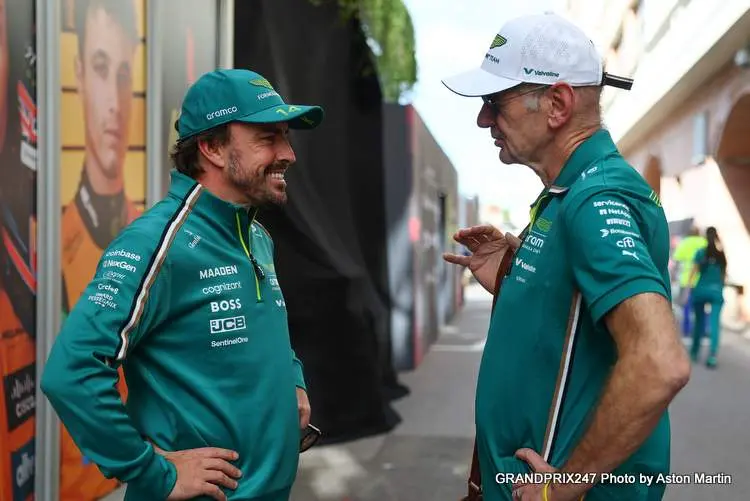
Aston Martin’s struggles this 2026 Formula 1 season will take time to be resolved, with former Formula 1 engineer Jock Clear warning that a turnaround is unlikely before next year while questioning Fernando Alonso’s role in leading that recovery.
The scale of Aston Martin’s problems has surprised many across the paddock, with the Adrian Newey led project failing to deliver early performance. Clear said: “Absolutely not and I don't think anybody is enjoying Aston Martin being where they are. We're all very surprised but unless you're inside Aston, you don't really know where the issues are.”
Despite hopes of a rapid fix, the reality appears more complex, with development timelines pointing towards a longer-term rebuild, according to Clear: “If we're just looking at development, then it's going to take a while; we're looking at next year. I do find it difficult to understand why they're that far off the pace.”
He added that only a breakthrough solution could accelerate progress: “If they have a particular issue which they can resolve and which will suddenly deliver another 100 horsepower, then that’s a better scenario. I hope that is the case.”
Is Alonso the right driver for recovery?

Alonso’s talent remains beyond doubt, but his suitability for guiding a team out of a deep technical crisis has been questioned. Clear explained: “Alonso has done some things in cars that are unbelievable so clearly, he is still a huge talent in a car.”
However, the current situation at Aston Martin may require a different profile, Clear suggested: “If you had to choose a driver to help you fight your way out of this deep hole, Alonso isn’t going to be the one you're going to choose. That's my fear. This really doesn't play to his skill set.”
Clear also acknowledged limited insight into the team’s internal workings: “I'm the least qualified person to answer this really, because I actually don't know anything about the Aston set-up.”
The broader context of the 2026 regulations presents a significant engineering challenge, with Clear confident that solutions will emerge over time: “Over time, they will iron out all of the issues because at the end of the day, an issue is anything that somebody wants to groan and moan about really.”
He added that the sport will adapt as it always does: “That's what Formula 1 does. It just finds ways to get optimum performance. Give them any set of engineering challenges and F1 teams will come up with a performance solution very quickly.”
Drivers need to buy into the recovery ethos

Clear also backed the new regulations to deliver competitive racing once fully understood: “My overall view is the regulation change has created some very good racing that we can all enjoy. They're all going to arrive at the point where they're like, actually, these are quite fun cars to drive.”
In a data-driven environment, the role of the driver remains critical in unlocking performance, particularly when it comes to understanding grip and balance. Clear noted: “For all the best data in the world, we don't actually have any measure of grip. There are no sensors on the tyres telling you how much grip there is on each tyre.”
That places greater emphasis on driver feedback within the development cycle, Clear explained: “The drivers that buy into the ethos that their job is to help this team get this car sorted are the drivers that are really going to see the benefits.”
For Aston Martin, the message is clear. The solution will not be immediate, and the path back to competitiveness may extend well beyond the current season. (Quotes supplied by Ignition Casino)
Latest News
Loading