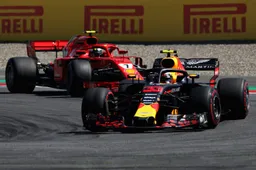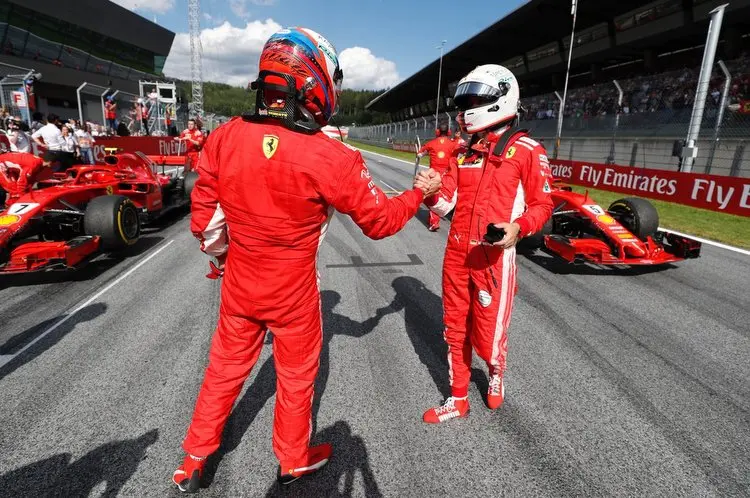
Sebastian Vettel said that his Ferrari team were correct not to impose team orders in the Austrian Grand Prix even if it meant he ended up with a slimmer overall championship points lead than would otherwise have been the case if teammate Kimi Raikkonen had allowed him to pass to claim second.
Vettel finished third, behind Raikkonen, to oust Mercedes rival Lewis Hamilton from the top of the Formula 1 world championship standings by a single point. Ferrari also returned to the top of the constructors’ standings.
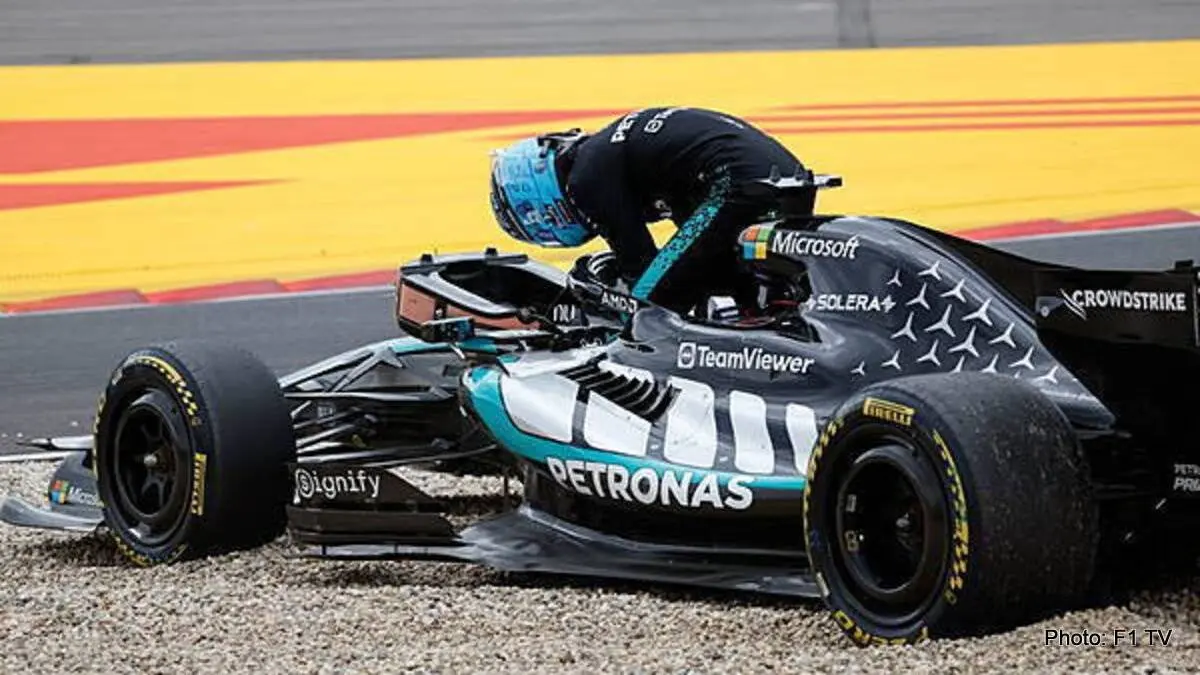
Red Bull's Max Verstappen won the race. while Ferrari's archrivals Mercedes suffered a very rare double DNF after starting the race from the front row.
Had Raikkonen ceded position, at a track famous for a 2002 race incident that saw Ferrari’s Brazilian Rubens Barrichello ordered to let teammate Michael Schumacher win, Vettel would have left Austria with a four-point lead.
“No, why?” Vettel told television reporters when asked whether he felt team orders should have been called.
“Max won the race because he deserved it and he didn’t make any mistakes, so that’s a strong performance from him. And Kimi did everything he could.
“I was trying to hunt both of them down. Kimi was pushing as hard as he could and I was pushing as hard as I could. Both of us were closing but it wasn’t enough.”
Raikkonen was pushing so hard that he set the fastest lap of the race on the last lap, finishing a mere 1.504 seconds behind the Dutch winner.
Vettel, who had started in sixth place after a grid penalty, was a further 1.677 seconds adrift with no danger from the rest of the field who were a lap down on the top three.
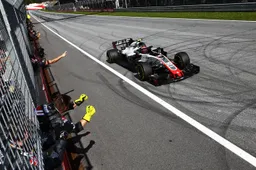
Four of the top five finishers were Ferrari-powered, with Haas drivers Romain Grosjean and Kevin Magnussen fourth and fifth.
In 2002, Formula One endured a major controversy at Spielberg when Barrichello, who had led the race from pole position, was forced to cede to Schumacher who was leading the championship.
The Brazilian did so but only on the last few metres of the final lap, triggering uproar among the crowd. Barrichello had also ceded second place to the German at the same circuit and on the last lap in 2001.
Austria was a race that Schumacher had never previously won but there was far less justification for team orders than might have been argued on Sunday, with the German ending up winning the 2002 title with six races to spare.
Team orders were banned for a while after the 2002 furore but are now legal again.
Big Question: Should Ferraro have made the call for Kimi to let Seb past into second place in Austria?
loading
Latest News
Loading