Max Verstappen claims that as the teams learn more about the current Formula 1 regulations, and add down force to their cars, it's becoming harder to follow.
Formula 1 introduced the current aero regulations where the cars generate downforce through ground effect back in 2022, the main target making the F1 cars better to race and able to follow each other without losing performance and downforce.
In simple terms, the current F1 machines do not rely on their top surfaces to generate downforce, but on their floors that feature Venturi tunnels the air flows through sucking the cars to the track, while the rear wings are designed to direct the wake - dirty air - higher up so they don't affect the chasing cars, reducing their downforce and consequently overheating the tyres.
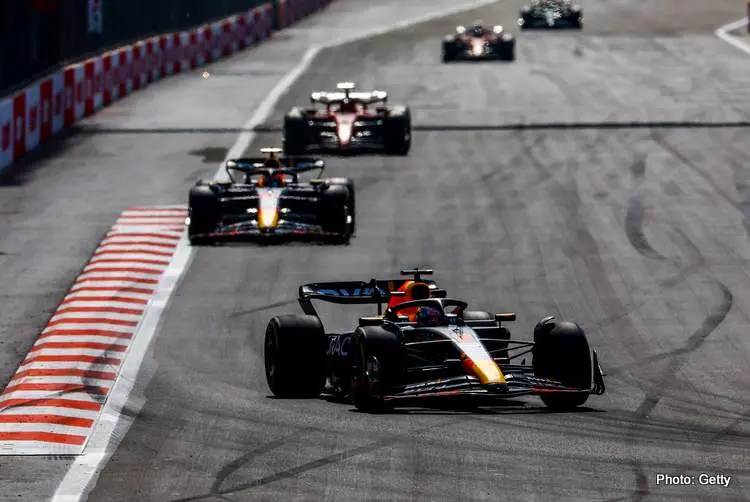
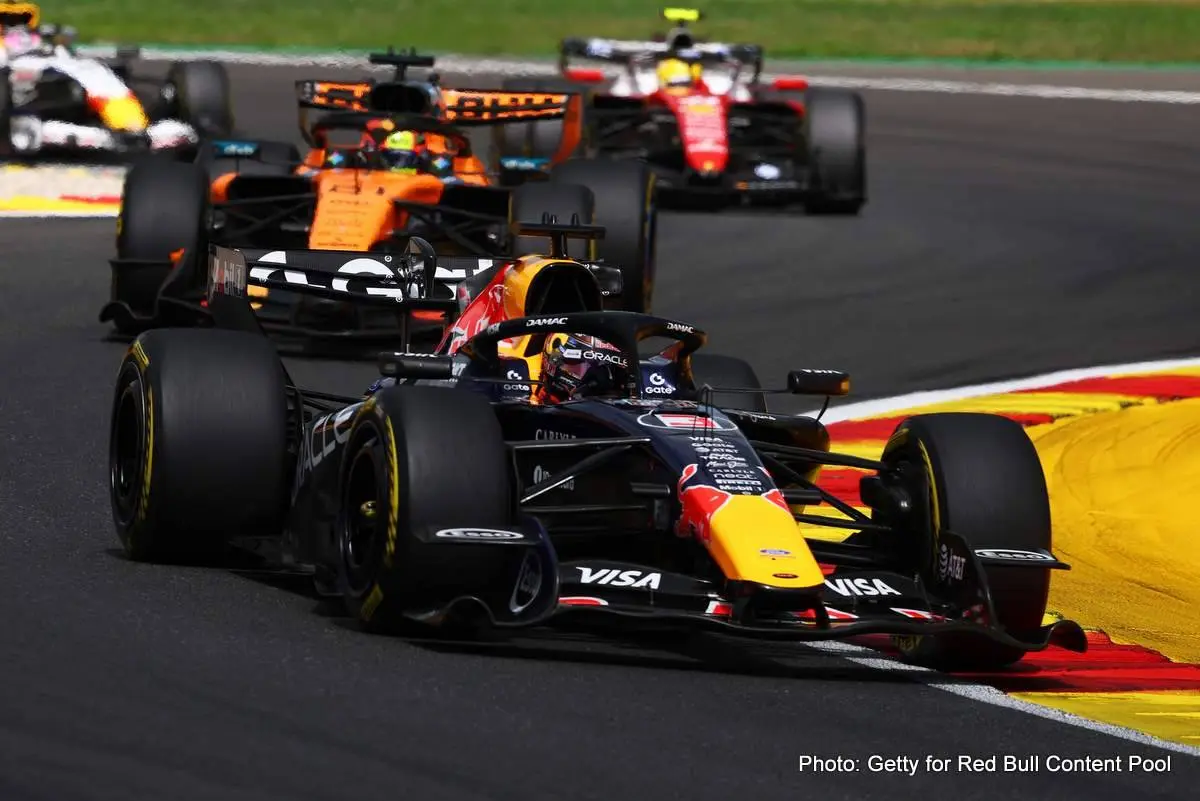
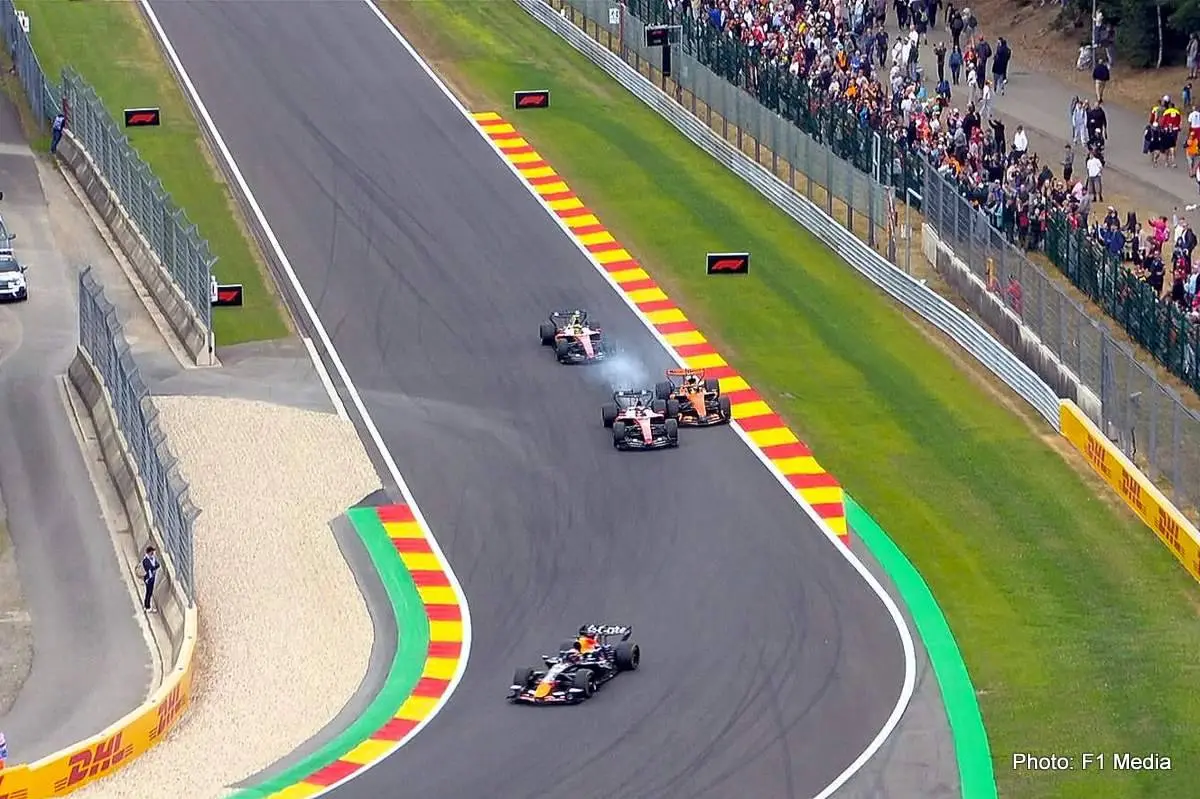
The changes aimed to help drivers follow each other more closely promoting more on-track battles, but the DRS was left to aid in overtaking, while slip streaming has lesser effect with the current F1 cars, and while the first year of the new regulations (2022) showed considerable improvement, but there are some worrying signs - as recent as Baku last week - that the cars this year are struggling more to follow and overtake, a fact that was exacerbated by the FIA shortening the DRS zone in Baku, which meant the formation of DRS trains as cars follow each other, unable to overtake a slower car if the performance difference is not considerable.
F1 drivers were quizzed about the matter of the shorter DRS zone in Baku, and the state of affairs in the sport today in terms of following and overtaking.
Drivers use similar racing lines these days

Max Verstappen said: "I would prefer of course that we could race without DRS but that's not possible. I think for us, of course, it's a little bit different. I mean, if the car is faster than the one... let's say when you have to come to the field from the back, it doesn't really matter how long the zone is, you will get the car ahead.
"But when the pace is within a tenth, or two-tenths, you could see that in Baku, I think, once you're in a bit of a DRS train, there's no chance and even when the leading car of the train... the DRS zone is just not big enough to have a run.
"Is the DRS zone too short? Are the cars not good enough to follow closely?" Verstappen speculated. "I think it's a bit of a combination of both, with the cars are probably too heavy, they're too stiff, so you can't really run a kerb to try to find a bit of a different line because it's all quite.
"Everyone is driving more or less the same line nowadays because of just how the cars work, and how stiff the suspension is. And, probably now, with people finding more and more downforce in the cars, it probably becomes a bit harder to follow as well," the double F1 Champion maintained.
When asked of this year's F1 cars struggle to follow compared to 2022; George Russell said: "I think it is. I don't know exactly why that is.
Teams developed current regulations away from initial intentions

"I think obviously, you know, F1 created these regulations to help overtaking and following, and since they were introduced every single team has sort of developed naturally away from their initial intentions, as you sort of develop the car.
"So every car on the grid is very different compared to what, let's say, they were intended to look like 18 months ago or two years ago now or whenever it was.
"I think the overtaking is slowly getting more difficult but also because the slipstream isn't as large as well with these new cars so it's slowly going in the wrong direction for overtaking," the Briton explained.
Charles Leclerc agreed with Russell's analysis and pointed out to the slow corner where he feels this year's F1 cars struggle to follow.
"I felt like this year it's a bit more difficult to follow in the low-speed corners," Leclerc said, "especially compared to the high-speed. So that's where we struggle a little bit more.
Back to the drawing board for F1?

Historically, F1 teams and their engineers have always been good at finding loopholes in the regulations and employ them to make their cars go faster, as that is the name of the game, and this is something that Russell touched on in his aforementioned statement.
Ross Brawn - F1's former Managing Director of Motorsport - and his technical team, who developed the current aero regulations have tried their best to make them as prescriptive and restrictive as possible to eradicate loopholes and prevent teams from interpreting them in a manner that doesn't serve their [the rules] purpose - easier following and closer racing.
But such is the level of talent and technical know-how in F1 these days that teams and their engineers have started finding ways to gain performance and downforce with the current generation F1 machines, and in just the second year of application of these rules.
And as Verstappen and Russell pointed out, it could be that this development curve of the current F1 cars that is making the 2023 versions of them struggle to follow and overtake to the extent that reducing the DRS zone in Baku made it very difficult for drivers to make passes.
We have to be realistic here and not rush onto sounding the alarms, but it would be good to listen to the drivers have to say about their current cars, and with the sport heading towards another major technical overhaul in 2026, covering both the cars and their power units, now is the time to take note in order to have time to react in time.
Latest News
Loading