Despite an upturn in form over recent Formula 1 races, Ferrari remain a team few are praising heading into the Spanish Grand Prix, largely due to the tendency to be their own worst enemy.
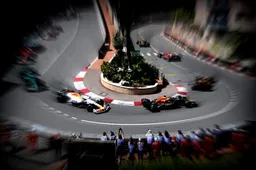
The streets of Monaco once again offered an opportunity for Charles Leclerc to deliver a home victory, and while the pace was there, the result was not. He lacked the decisive edge that had previously defined his one-lap magic in Monte Carlo. Had he started his Ferrari from P1, the Monaco Kid felt he would've won on Sunday. In the end, the 'ifs' and 'buts' do not score points. But Ferrari team principal Fred Vasseur remains optimistic.
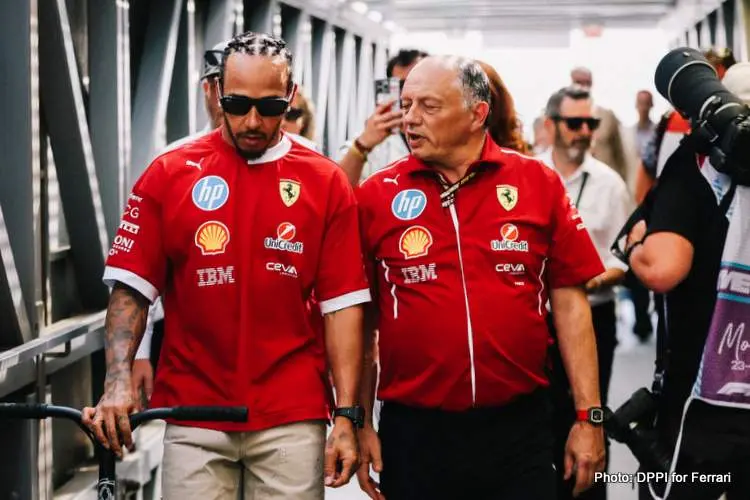
While Leclerc did not claim pole in Monaco, Vasseur saw encouraging signs in the team’s performance across the weekend and believes the long-standing Saturday struggles may be easing: "With the first third of the season now behind us, it’s time for the Spanish Grand Prix at a track that is very familiar to all drivers and teams.
"We come to Barcelona off the back of two positive races, while at the last one in Monaco, we also made progress in terms of our qualifying performance. Therefore, this weekend our goal is to keep the momentum going. The stricter static tests on the flexibility of the front wing come into force at this round and that too is something that will have to be taken into account," added Vasseur.
The Spanish Grand Prix marks round nine of the 2025 Formula 1 World Championship and concludes the European triple-header. The event takes place at the Circuit de Barcelona-Catalunya, a technical and familiar venue for teams and drivers alike.
Formula 1 pecking order changes as new wing restrictions come into play?

This weekend also introduces updated FIA regulations requiring more severe static tests on the flexibility of front wings. The new rules are expected to impact several teams, and setup compromises may be necessary as a result.
The circuit is a traditional barometer of all-round car performance, featuring a mix of high, medium, and low-speed corners, along with a long main straight. Overtaking, however, remains difficult. As ever, there are two DRS zones: one on the main straight into the opening complex, and the other following Turn 9 leading into Turn 10. A less common overtaking opportunity exists into Turn 5, but it demands precise corner preparation.
Over recent years, Barcelona has undergone several key changes. In 2021, Turns 10 and 11 were remodelled into a longer hairpin that closely resembles the original 1991 configuration. In 2023, the unpopular final chicane was finally removed, restoring two high-speed corners to complete the lap and improving the flow onto the main straight.
The nearby sea also adds complexity. Shifting wind conditions can have a significant impact on balance, especially for cars running medium to high downforce setups, as most will do this weekend.
For Ferrari, the task is clear. They must convert potential into points, avoid unforced errors, and prove they are capable of consistently challenging McLaren and Red Bull at the front. Leclerc and Carlos Sainz will have the crowd’s support, but only execution will determine whether Ferrari’s resurgence continues or falters again in Barcelona.
Latest News




Loading