Cricket may rule TV screens across Bangladesh today, but step away from urban centers during festival season and you'll discover sporting traditions that tell a deeper story about this riverine nation.
Lathi Khela and Nouka Baich aren't just games—they're living museums of Bangladeshi culture. Cricket fever has undeniably swept Bangladesh. Fans eagerly follow matches on cricket betting sites online and debate team selections in tea stalls across the country.
Yet beneath this modern obsession runs a current of traditional sports that have shaped community life for centuries. This is a special report for our Formula 1 fans interested in traditional sports and betting responsibly.
These ancient games didn't develop in stadiums or through organized leagues. They emerged from the rhythms of rural life—from the need for self-defense, from the practical skills of river navigation, and from communities seeking entertainment during harvest festivals.
Lathi Khela: Stick Fighting with Style

Visit rural Bangladesh during certain festivals and you might witness men wielding bamboo sticks in combat that blurs the line between martial art and dance. This is Lathi Khela, one of the oldest sports of Bangladesh still practiced today.
The lathi itself—a bamboo stick roughly 6-8 feet long—becomes almost an extension of the fighter's body. Sometimes reinforced with iron rings, these sticks create distinctive cracking sounds when they connect during combat. The sport demands remarkable skill: fighters must demonstrate both offensive power and defensive agility while maintaining control to avoid serious injury.
What makes Lathi Khela fascinating isn't just the combat but the surrounding culture. Villages once took immense pride in their lathials (stick fighters). These men weren't just athletes but protectors—in times before organized police forces, skilled lathials helped maintain local security. During British colonial rule, these fighting skills occasionally served resistance efforts.
Regional styles have evolved over centuries. Sylhet's approach features flowing, dance-like movements. Chattogram fighters prefer direct, powerful techniques. Mymensingh practitioners incorporate elaborate rituals before combat begins. These variations reflect how diverse cultural influences shaped different parts of Bangladesh.
Today, while young people might be creating a dbbet login to follow international sports, rural communities still organize Lathi Khela exhibitions during major festivals. The tradition adapts to modern times while preserving core techniques passed through generations.
Nouka Baich: Racing on Liquid Highways

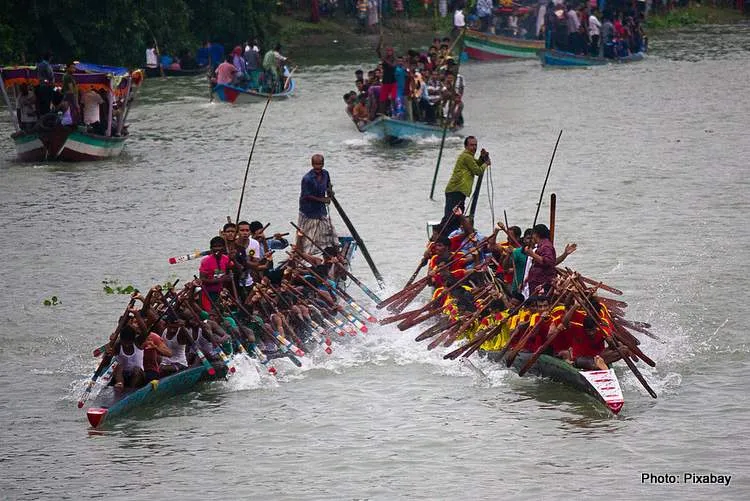
With nearly 700 rivers crisscrossing Bangladesh, boats aren't just transportation—they're racing vessels in one of the most popular sports in Bangladesh. Nouka Baich (boat racing) transforms waterways into thrilling competition venues that showcase both athletic prowess and cultural identity.
Racing boats aren't ordinary fishing vessels. They're specialized craft built for speed and teamwork. Smaller Kosha Noukas carry 10-15 rowers for sprint races. The impressive Sarangi boats stretch up to 100 feet with 30+ rowers working in synchronized harmony. These boats receive elaborate decoration—bright paint patterns, fabric streamers, often eyes painted on the bow to "see" the racing course ahead.
On race day, river banks transform into impromptu festivals. Spectators arrive hours early to claim prime viewing spots. Food vendors set up makeshift stalls selling traditional snacks. Musicians play folk tunes that blend with the growing excitement as teams make final preparations.
When racing begins, drummers set intense rhythms that rowers match with their strokes. A caller chants encouragements that carry across the water. The synchronized splash of dozens of oars creates hypnotic patterns as boats surge forward against river currents and each other.
Victory brings enormous prestige to a village or community. Winning teams become local celebrities, their boat's name entering local folklore. These races preserve practical knowledge about boat construction, river navigation, and teamwork that remains relevant in a country where waterways still serve as crucial transportation during monsoon seasons.
Other Games Shaping Bangladesh's Sporting Identity

The national games of Bangladesh, apart from cricket, include several other traditional sports worth mentioning:
Kabaddi (locally known as Ha-du-du) holds official status as Bangladesh's national sport. Players take turns crossing into enemy territory to tag opponents before returning to safety—all while holding their breath and chanting "kabaddi-kabaddi" to prove it. What makes Kabaddi remarkable is its accessibility: no equipment needed beyond an open space, making it perfect for resource-limited communities.
Boli Khela combines wrestling with ritual in competitions particularly popular around Chattogram. Annual tournaments draw massive crowds with winners gaining significant social standing. Unlike western wrestling, Boli Khela incorporates traditional training methods and ceremonial elements that connect it to Bengali cultural heritage.
Danguli uses a small stick to hit a larger one, sending it flying for points. The game tests precision, reflexes, and strategic thinking—all with minimal equipment costs.
Kite Fighting turns the skies into battlegrounds as competitors use glass-powder-coated strings to cut their rivals' kite lines. During certain seasons, rural skies fill with colorful kites as competitors demonstrate both artistic and tactical skills.
Keeping Traditions Alive

These sports face real challenges today. Young Bangladeshis increasingly favor football and cricket. Media coverage focuses overwhelmingly on international competitions. Urbanization pulls people away from villages where these games thrive. Even environmental changes affect traditional venues, particularly for river sports.
Yet encouraging signs have emerged. Cultural organizations now actively document these games before knowledge is lost. Some schools include traditional sports in physical education programs. The government occasionally sponsors competitions recognizing their heritage value.
Most importantly, these games continue adapting. While keeping their essential character, they find new relevance in each generation. They remind Bangladeshis that sports aren't just about competition but about community identity, cultural expression, and connection to place.
For visitors seeking authentic experiences beyond tourist brochures, witnessing these traditional sports offers unparalleled insights into Bangladesh's living heritage. They reveal a Bangladesh where community bonds still matter deeply, where practical skills become art forms, and where ancient traditions find new life in the 21st century.
Latest News







Loading