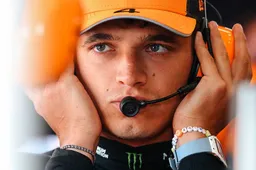
Tombazis: We haven’t finalised the 2026 Formula 1 rules yet
F1 NewsWednesday, 13 August 2025 at 16:21
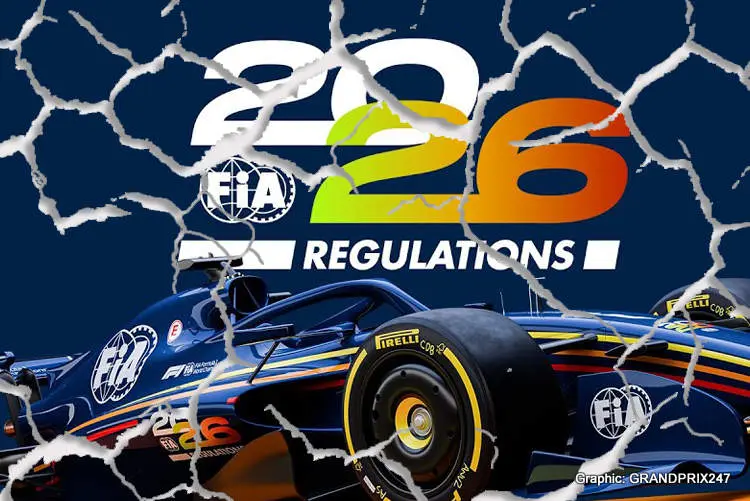
With sweeping changes to both aerodynamic and power unit regulations coming in 2026, many Formula 1 fans, pundits and several drivers have voiced concerns that the sport’s next-generation cars will be a step backwards.
Many fear the new Formula 1 cars could flop before they even turn a wheel with the new regulations. However, FIA Sport Director Nikolas Tombazis insists such criticism is premature. Speaking to German publication Auto Motor und Sport, he shed light on the status of the new rules and stressed that the process is still ongoing.
Tombazis told reporter Michael Schmidt: “As the electric component of power increases relative to the combustion engine, and batteries have limited charging and discharging capacities, energy management becomes a major challenge. A large portion of the energy will still come from fuel, but it must be sustainable.
"This means that we will see some innovations on the electric side of the powertrain. That’s a good thing. We haven’t finalised the rules yet. They will be adjusted step by step, depending on the experiences the teams have and report back to us.
"We’ve known about the problems from day one and have gradually addressed and resolved them. The more intensively the teams and engine manufacturers get involved in development, and the more often the drivers test the 2026 cars in the simulator, the more feedback we’ll receive from them.
"I expect that between now and the start of the season next year, we’ll implement a few more measures to improve energy flow and ensure that the cars don’t suddenly decelerate on the straights or do anything else unnatural. Therefore, many of the comments about how the cars behave are premature. The product isn’t finished yet.”
Tombazis: Not all teams and engine manufacturers are equally transparent

Tombazis revealed that cooperation levels among Formula 1 teams vary; he said: “Not all teams and engine manufacturers are equally transparent with their data. Some are quite secretive about what they do. Others are very open and support us with suggestions. We create our own simulations based on this.
"And in certain areas, we have good leverage to intervene if something gets out of hand. This affects maximum power, how much power can be reduced during charging on the straights, or the energy that can be recuperated.”
He added that the FIA cannot simply make overnight changes: “We have to go through a coordination process with the manufacturers. That means we can’t change anything overnight. But overall, there’s agreement on how to solve problems. Likewise, there will be several evolutionary stages between now and the beginning of next year.
"The drivers sitting in the simulator often don’t know what’s being implemented or what we’re discussing with the teams. They often only see a snapshot in time. But that’s also the reason why we let them drive in the simulator early. That way, we learn about problems early on.”
Formula 1 teams always have two agendas

While some Formula 1 teams have suggested easing into the new era by initially reducing battery output, Tombazis confirmed that the base power split will remain; he added: “It’s never easy to get everyone on the same page when it comes to fundamental issues.
"Teams always have two agendas: what’s good for the sport, what’s good for me. Naturally, this leads to different opinions. But the fundamentals of the drive are set in stone. Nothing will change that.”
Tombazis also rejected fears that races will be dominated by complex energy-saving tactics and said: “We’re working on a good mix. There’s no interest in turning Formula 1 into a chess game of the best energy strategies. Nor should the accelerator and brakes be the sole deciding factors.
"We’re talking about the best drivers in the world. They have a certain intellectual bandwidth to solve specific problems alongside driving. They already do so to a certain extent. What we don’t want is for them to deliberately ease off the accelerator while driving to store energy.
"In the future, however, a certain level of understanding of the parameters that are important for energy management will be required. A top driver must be able to do that. The main task, however, will definitely remain braking at the right point, cornering as quickly as possible, and accelerating optimally.”
Tombazis: We’re not sinking to Formula 2 level

According to Tombazis, driver involvement will increase; he explained: “We’re currently working on this question: how much do we relieve the driver of? What do they have to do themselves? We don’t want to overload them, so they’re too distracted from driving.
"They’ll have greater freedom in attack and defence than they have today. Some of the automated processes will be transparently displayed in the car, so they always know where they stand. Intelligent drivers have always had an advantage. The difference is made by the capacity a driver has in their mind to gain advantages beyond pure driving.
"When I was younger, I had the opportunity to work with Michael Schumacher, and that became clear. He obviously had incredible talent. But he also had the ability to see and understand many other aspects of the car and use them to his advantage. There are such exceptional talents among today’s drivers as well," explained Tombazis.
The new rules 2026 Formula 1 cars are projected to be slower initially, but Tombazis believes it will be temporary. He said: “According to our simulations, the cars are getting between one and two and a half seconds slower per lap. But that’s just the beginning. The teams will develop the cars quickly. Soon, no one will complain that the cars are too slow. We’re not sinking to Formula 2 level.”
A new “boost button” will replace DRS, with parameters fine-tuned for each track: “We don’t want to make overtaking too easy or too difficult. We’re still working on the fine-tuning. The parameters won’t be the same for every track.”
Safeguards against domination

Tombazis ruled out another 2014-style dominance: “I don’t think we’ll ever see such a dominant engine manufacturer again as we did in 2014. Back then, the powertrain became much more complex than its predecessor. This time, we’re doing the opposite.
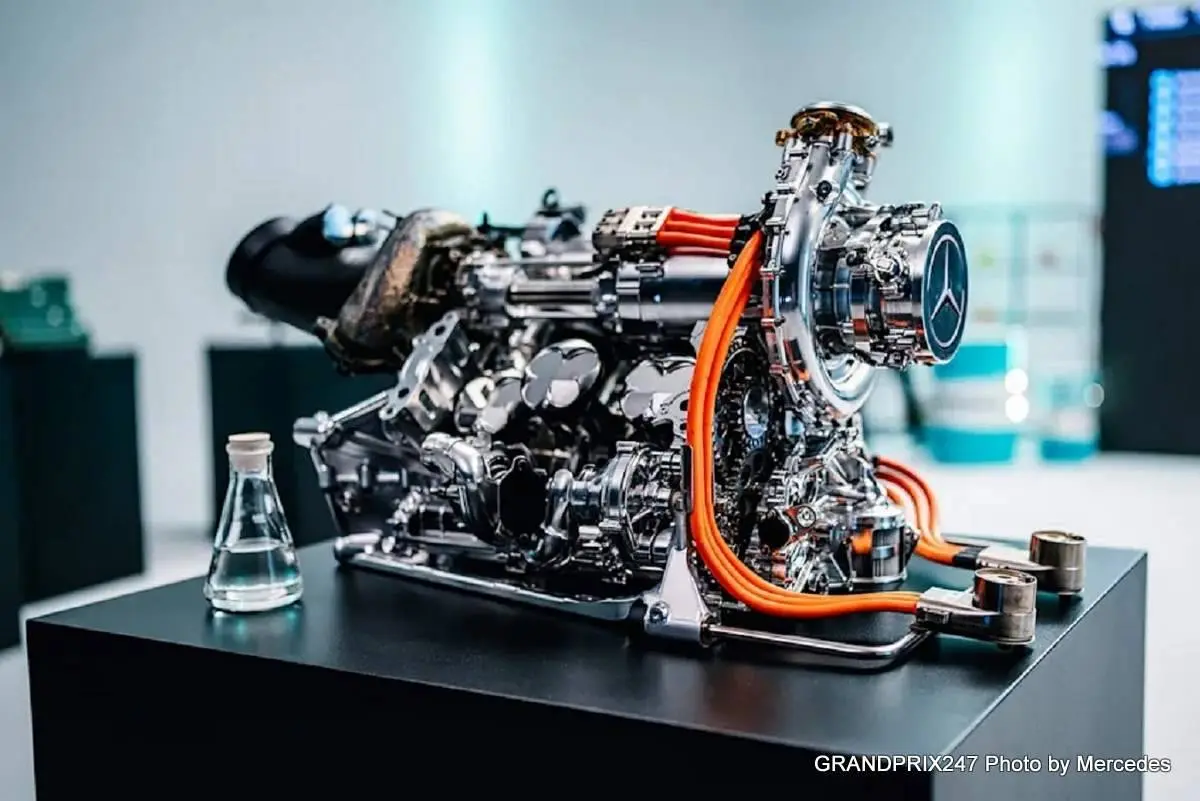
"The new powertrains are simpler. They no longer have MGU-H, and there are stricter limits in some areas. On the other hand, we have newcomers among the manufacturers, and of course, there’s always the risk that one of them will miss the mark with the first attempt.”
To prevent anyone from falling permanently behind, a performance gap system is built into the rules: “We’ll measure the average performance for each manufacturer every six races. For those below a certain level, there will be an upgrade option depending on how far behind. This can mean more money for development, more dyno hours, or more time for specification homologation.
"Those who are behind have a chance to catch up. That’s not a balance of performance. The rules remain the same for everyone. No one gets more displacement or more fuel. With a cost cap, there’s a risk that you’ll never be able to catch up. And no one wants to be humiliated forever.”
Tombazis said all fuels will be tested by an independent company to ensure they are sustainable and non-fossil: “The rules governing the chemical composition, energy content, and evaporation properties of these fuels are very strict. And they are very close to what is used in production cars.
"Nevertheless, it won’t be the case that Formula 1 fuel will be poured directly into a road car a year later. One problem is the price. Our goal here is to reduce production costs. But Formula 1 is also just a driver of innovation.
“Fuel costs are adjusted for everyone through a nominal value in the budget cap. The actual price is outside the recorded costs. Of course, the money they have to spend on fuel still hurts," Tombazis added.
Latest News
Loading