Most casual Formula 1 viewers watch the racing. The serious ones watch the pit wall. Because in modern Formula 1, races are frequently won and lost not on the track but in the garage.
In exchanges that last between two and four seconds and involve a choreography
so precise that a single misplaced hand can undo an entire afternoon's work.
The pit stop is one of motorsport's most compelling spectacles — part athletic
event, part logistical puzzle, part high-stakes gamble — and understanding it
transforms how you experience a Grand Prix from start to finish.
This guide breaks
down exactly how pit stops work, why the strategy surrounding them is so
complex, and what separates the teams that consistently get them right from the
ones that hand away victories in the pitlane.
What Actually Happens During a Formula 1 Pit Stop?
A modern Formula 1
pit stop is the product of thousands of hours of practice and engineering
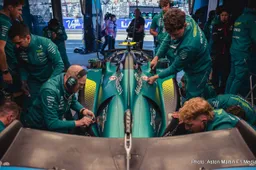
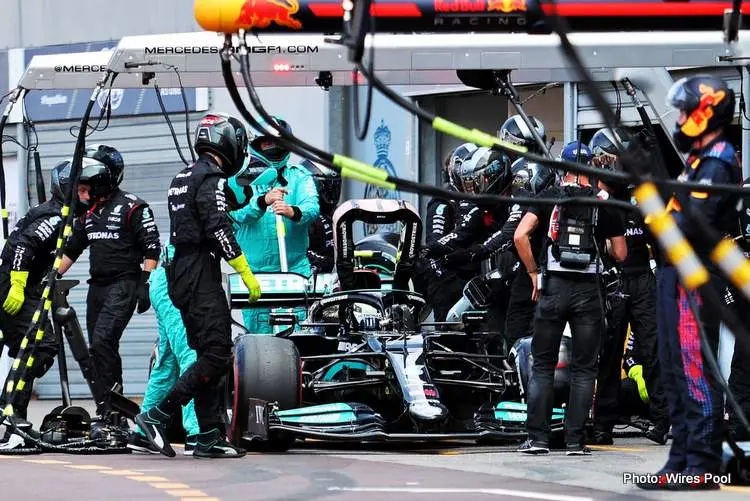
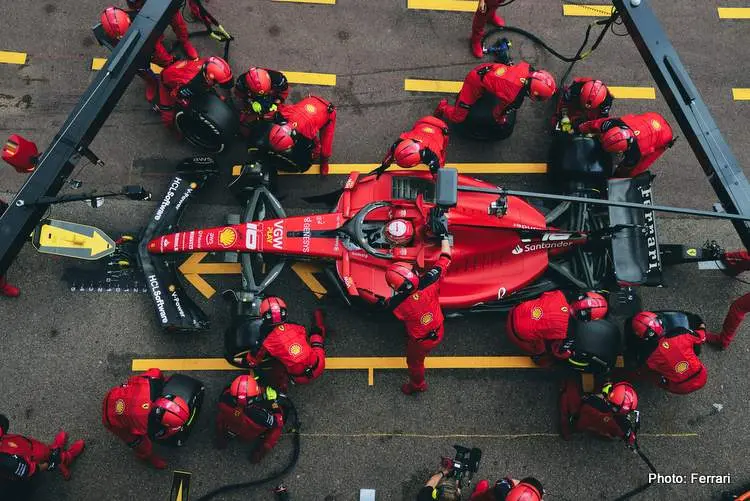
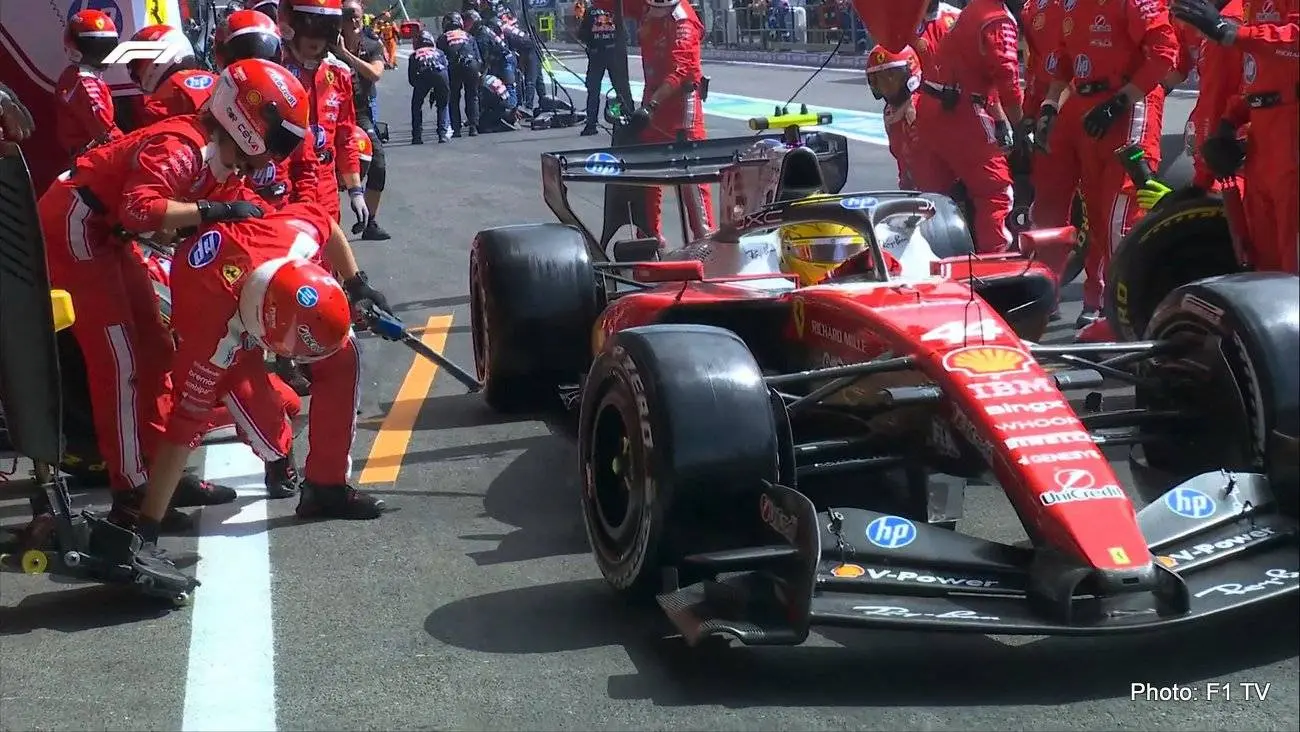
refinement. When a car enters the pitlane, a crew of roughly twenty mechanics
is already in position, each with a single defined role. Three mechanics per
wheel — one on the nut, one stabilizing the tyre, one ready to fit the new
rubber. A lollipop operator or traffic light system controls the release. A
separate team manages the front and rear wing adjustments if required.
The car arrives, the
wheel gun fires, the old tyre comes off, the new one goes on, and the car
leaves. In the best cases, that entire sequence takes less than two and a half
seconds. Red Bull Racing set the current world record at 1.82 seconds during
the 2023 season — a figure that, when you consider it involves changing four
tyres on a stationary vehicle, borders on the extraordinary.
Every role is
drilled to the point of muscle memory. Mechanics practice their specific task
hundreds of times before a race weekend. The margin for error is measured not
in seconds but in tenths, and the consequences of getting it wrong range from a
slow stop to a dangerous release, a wheel coming loose on track, or a collision
in the pitlane. In that sense, the entire process leaves no room for
distraction — unlike something casual you might associate with a Fair Crown login,
where attention can drift without immediate consequences. In Formula 1,
absolute precision is everything, and even the smallest lapse can undo an
otherwise perfect race.
Why Pit Stop Timing Is a Strategic Weapon

The decision of when
to pit is where race strategy becomes genuinely fascinating. Teams use tyre
degradation models — complex predictive systems built from live telemetry,
historical data, and real-time weather monitoring — to calculate the optimal
window for each stop. Pit too early and you emerge on fresh tyres but with too
many laps remaining, risking another degradation cliff before the finish. Pit
too late and you lose lap time on worn rubber that you may never fully recover.
The undercut and
overcut are the two primary strategic tools built around timing. An undercut
means pitting before your direct rival, gaining track position through the
speed advantage of fresh tyres before they can respond. An overcut means
staying out longer, maintaining position while your competitor pits and loses
time in the pitlane, then pitting yourself once the strategic window has
shifted in your favor. Both approaches require precise calculation and nerves,
because the decision is usually made with incomplete information and cannot be
undone.
The 2021 Abu Dhabi
Grand Prix remains one of the most discussed examples of late-race pit stop
strategy in recent memory, demonstrating how a single stop decision under
pressure can alter the entire narrative of a championship. Teams study these
moments not as history but as case studies in decision-making under
uncertainty.
Tyre Compounds: The Variable That Drives Everything
No discussion of pit
stop strategy is complete without understanding tyre compounds, because they
are the variable that makes every strategic calculation unique. Pirelli,
Formula 1's official tyre supplier, provides three dry-weather compounds per
race weekend — designated soft, medium, and hard — with each offering a
different balance between grip and durability.
Soft tyres provide
maximum grip and are fastest over a single lap, but they degrade quickly under
the stresses of racing. Hard tyres last significantly longer but generate less
heat and therefore less immediate performance. Medium compounds sit between the
two extremes. The FIA requires drivers to use at least two different compounds
during a dry race, which means every driver must pit at least once regardless
of circumstance.
The art of strategy
lies in deciding which compounds to run, in which order, and for how long. A
one-stop strategy on medium and hard tyres might be optimal in theory but
requires defending track position during a long middle stint on degrading
rubber. A two-stop strategy offers fresher tyres more often but costs
additional time in the pitlane and requires navigating traffic after each stop.
Teams model dozens of scenarios before the race and rebuild their calculations
in real time as conditions evolve.
The Human Element: Where Pit Stops Are Won and Lost

For all the data and
engineering precision surrounding pit stop strategy, the human element remains
decisive. The mechanics who perform the stop are athletes in their own right —
their reaction times, consistency under pressure, and physical coordination are
trained and measured with the same seriousness applied to the drivers
themselves. A wheel gun operator who fumbles a nut under the pressure of a
race-defining stop, or a mechanic who steps into the pitlane at the wrong
moment, can undo everything the strategy team built over a race weekend.
The team principal
and strategy engineers on the pit wall face their own version of this pressure.
They are making irreversible decisions in real time, with radio communication
to a driver who may disagree, against rival teams doing the same calculation simultaneously
with the same data. The psychological dimension of that environment — the need
to commit clearly and quickly to a course of action when every option carries
risk — is one of the aspects of Formula 1 that television broadcasts rarely
convey adequately.
Errors in this
environment are public and permanent. A slow stop drops a driver from the lead
to third. A premature release sends a car out with an unsecured wheel. A
strategy call made half a lap too late surrenders a position that cannot be
recovered. The margin between excellence and disaster is genuinely small, which
is what makes the pitlane one of the most compelling places in motorsport.
How Pit Stop Performance Differs Across Teams
The gap between
Formula 1's fastest and slowest pit stop teams is larger than casual viewers
might assume, and it is not purely a function of budget. Elite pit stop
performance requires organizational culture, repetition, and a commitment to
marginal improvement that some teams consistently demonstrate and others do
not.
Red Bull Racing has
dominated pit stop performance metrics for the better part of a decade,
regularly producing stops in the two-second range and setting multiple world
records. Mercedes, Ferrari, and McLaren have all made significant improvements
in recent years, recognizing that consistent sub-2.5-second stops represent a
meaningful competitive advantage across a season of twenty-plus races. Even a
tenth of a second's improvement per stop, compounded across multiple stops per
race and multiple races per season, translates into measurable championship
points.
Smaller teams face
structural disadvantages — fewer mechanics available, less investment in
pitlane equipment and training — but the principles of good pit stop execution
are universal. Clarity of role, repetition of practice, and psychological
composure under race conditions are things any team can work toward regardless
of resources.
The Future of Pit Stops: Technology Pushing the Limits

The two-second
barrier, once considered unreachable, has been broken. The one-second stop
remains theoretical but no longer unimaginable. Advances in wheel gun
technology, tyre fitting mechanics, and coordination systems continue to
compress the time window, and teams invest heavily in marginal improvements
that outsiders might consider trivial.
Automated systems
and artificial intelligence are beginning to influence the strategic side of
pit stop decision-making, with machine learning models processing real-time
data at speeds no human analyst can match. The human judgment on the pit wall
is increasingly informed — though not yet replaced — by algorithmic
recommendation.
A Few Seconds That Change Everything
The pit stop is
where Formula 1's engineering precision, human athleticism, and strategic
intelligence converge in a moment that lasts less time than it takes to read
this sentence. Understanding what happens in that window — the physical
choreography, the tyre calculations, the timing gambles, the irreversible
decisions — transforms a Grand Prix from a series of laps into a deeply layered
strategic contest.
If this breakdown
changed how you see pit stops, share it with a fellow fan before the next race
weekend. And drop a comment below: which pit stop moment from recent seasons do
you think was the most strategically decisive?
Latest News
Loading