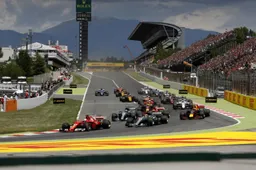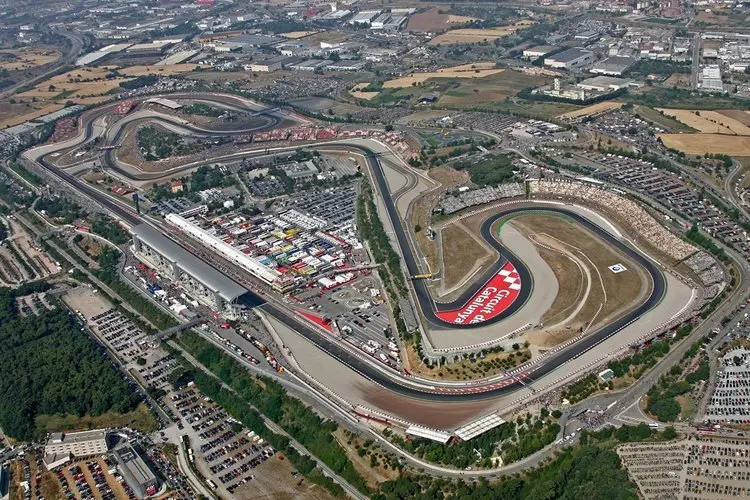
The Formula 1 teams are no strangers to the Circuit de Barcelona-Catalunya, not only have they raced there every year since 1991, they also conduct extensive testing at the venue.
Familiarity does not, however, lessen the challenge for car or driver. Barcelona's mix of high- and low-speed corners, plus its abrasive and rather bumpy track surface, makes for a physically and mechanically taxing race.
Tyre wear is particularly high and the varying winds that cut across the circuit mean an optimum set-up can be hard to find.
The essentials
Focus points Gaining a quick understanding of the car and the conditions. The teams had eight days of winter testing at the Circuit de Catalunya, but the weather was unrepresentative. Snow, rain and single-digit temperatures resulted in little meaningful performance testing, which gives the teams little relevant data going into this weekend.
Most demanding section Turns One, Two and Three. Turns One and Two are deceptively fast, taken at 180km/h (112mph), and many drivers hit the inside kerbs to help rotate the car and aid direction change. Turn Three is a breathtakingly fast right-hander, through which the cars accelerate to 285km/h (177mph) at the exit.
Unique difficulty Barcelona has an eclectic mix of corners, and that is the circuit’s unique difficulty. Sectors One and Two are high-speed, through which aerodynamic efficiency is crucial; Sector Three is all about slow-speed mechanical grip. To be fast, a car needs to work in every type of corner.
Race Engineer's lowdown
Braking There are eight braking events around the lap, but only two significant stops – into Turns One and 10. Turn One is the most severe corner for the brakes, with the cars scrubbing off 215km/h (134mph) in just 100m/0.0621 miles, which subjects the drivers to 5.6g.
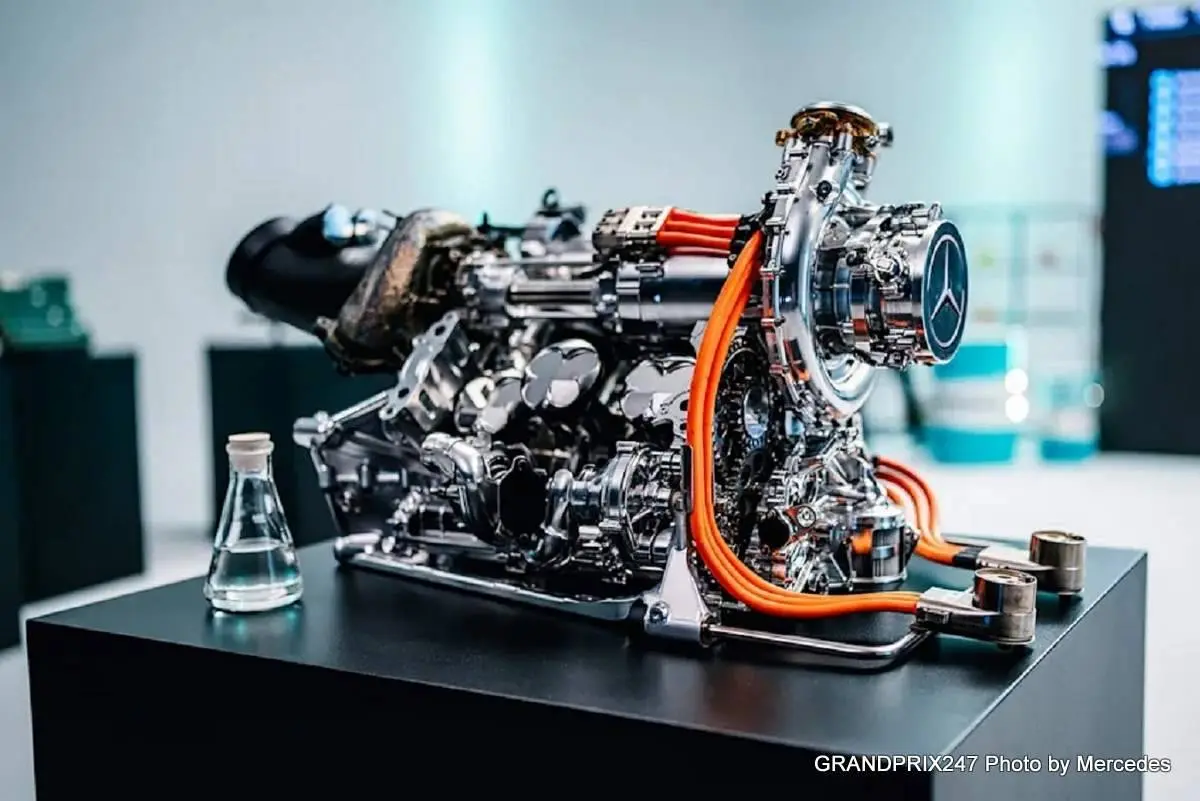
Power The cars use 1.7kg of fuel per lap, which is average for the season. It’s quite a demanding race for the ERS as well because there are two long periods of full deployment.
Aero After running a low downforce configuration in Baku, it’s back to maximum downforce in Barcelona. The eclectic mix of corners, particularly the slow-speed chicanes in Sector Three, mean the best lap times are achieved by maximising cornering performance.
Reuters compiled statistics for the Spanish Grand Prix:
- Lap distance: 4.655km. Total distance: 307.104km (66 laps)
- 2017 pole: Lewis Hamilton (Britain) Mercedes, one minute 19.141 seconds.
- 2017 winner: Hamilton
- Race lap record: 1:21.670, Kimi Raikkonen (Finland), Ferrari 2008.
- Start time: 1310 GMT
Race Victories
- Hamilton has 63 victories from 212 races and is second in the all-time list behind seven-times world champion Michael Schumacher (91). Vettel has 49.
- Ferrari have won 231 races since 1950, McLaren 182, Williams 114, Mercedes 77 and Red Bull 56. Former champions McLaren and Williams have not won since 2012.
Pole Position
- Hamilton has a record 73 career poles. Vettel has 53.
- Vettel has been on pole for the last three races. The last time Vettel had four poles in a row was during the 2011 season when he was at Red Bull.
- Ferrari have not had four successive poles since 2007 and Vettel has yet to be on pole in Barcelona. Hamilton has been on pole three times in the last four years at the Circuit de Catalunya.
- Max Verstappen, at 20 years old, can become the youngest ever pole sitter this season. The current youngest is Vettel, who did it at the age of 21 years and 72 days.
Podium
- Hamilton has 120 career podiums and is second on the all-time list behind Schumacher (155). Vettel has 101, Kimi Raikkonen 94.
- Championship Points
- Hamilton has had a record 29 successive scoring finishes to date.
- Russian rookie Sergey Sirotkin(Williams) is now the only driver on the starting grid yet to score a point in his career. Haas’s Romain Grosjean has also yet to open his account for the season.
Spanish Grand Prix
- Until last year, when Hamilton won for the second time, the Spanish Grand Prix had been won by a sequence of 10 different drivers.
- Fernando Alonso (2006, 2013), Hamilton (2014, 2017) and Kimi Raikkonen (2005, 2008) are the only current drivers to have won twice in Spain.
- Other active winners are Verstappen (2016) and Vettel (2011).
- All but three of the last 17 Spanish Grands Prix have been won from pole position. Those three were all in the last seven years, however.
- The only drivers to win in Barcelona without starting on the front row are Michael Schumacher (third on the grid in 1996), Alonso (from fifth in 2013) and Verstappen (fourth in 2016).
- Alonso is the only Spaniard to have won a grand prix.
- Ferrari are the most successful team at the Circuit de Catalunya with eight wins. Since the first Spanish Grand Prix in 1951, the Italian team have won it 12 times.
Milestone
- Mercedes took their first win of the season in Baku. That ended a run of three races without a win, the first time that had happened in the V6 turbo hybrid era that started in 2014.
- Red Bull can take their 150th podium finish on Sunday, having failed to do so in Baku when both cars collided.
- Spain will also be Red Bull’s 250th race, but they are celebrating that landmark in Monaco rather than Barcelona since they did not start the 2005 U.S. Grand Prix at Indianapolis.
- Vettel can take his 50th win on Sunday.
loading
Latest News
Loading