In the wake of a dull Monaco Grand Prix afternoon, there are growing concerns that overtaking with current era Formula 1 cars is a tough task and at a premium, prompting 2016 World Champion Nico Rosberg to suggest that a return to ground effects may be a possible solution.
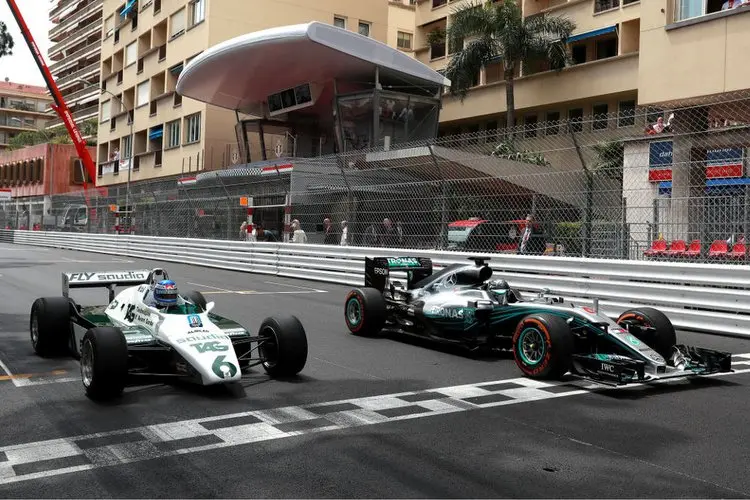
Rosberg and his F1 World Champion father Keke drove their respective title-winning cars, with the younger Rosberg hopping into his title-winning Mercedes W07 while Keke had a back-to-the-future experience at the wheel of his 1982 Williams FW08.
Speaking to reporters after the race weekend in Monaco, Rosberg junior said, "I was looking at my Dad's car and it's all ground effect. The aerodynamics are under the car. They could follow each other in the gearbox all the time."
"They [F1] have to go into that sort of direction. And hopefully, they'll manage [it by] 2021 at the latest. Because that's what we all need, for the fun. We need to see battles, fighting and touching wheels. That is one of the biggest problems because it's as difficult as ever."
"Unfortunately at the moment it is not at the right place, and then the costs [need changing] to give more opportunities to the middle teams to have some success."
Ground-effect aero was the way of Formula 1, and indeed all single-seaters, throughout the late seventies, the eighties and early nineties. The concept also had a huge impact in Indycar racing during that time.
Teams were pushing the envelope and increasingly spurning wings for innovative and aggressive ground effect solutions. As a result of cornering speeds and G-forces increased dramatically and on the basis of safety, the FIA moved to ban side-skirts in 1981 and mandated a six-centimetre ground clearance in an attempt to negate the aero advantage.
This, in turn, spawned a slew of innovative solutions to circumvent the restrictions, with the likes of Colin Chapman, Gordon Murray, John Barnard and their peers of that era pushing the boundaries of innovation to circumvent the restrictions. It was a fascinating off-track duel, which also happened to produce some of F1's most iconic race cars.
In the nineties, safety became paramount amid regular driver deaths during this period and gradually the concept was squeezed out by the FIA's increased regulation in 1995, with the introduction of the mandatory plank on the car underside to limit the aero benefits.
Fast forward to 2018, Liberty Media are exploring ways to make F1 cars more competitive, more affordable and all the time trying to level the playing field, which is heavily tilted towards the big spenders.
Rosberg explained, "They are doing a good job because Liberty knows what entertainment is about. They really try to bring all that in and try to bring the young people in different ways and that's a great approach."
"So, this is all good. But the problem that pours through everything, are the two things that they are working as well but are much more difficult. It's the cost and the overtaking. The aerodynamics are just too much so it's as hard as ever to follow and that is such a pity."
"Sometimes a guy is so much faster, but he just can't get close. That's the key because that's entertaining. If we see battles, that's awesome," added Rosberg.
Big Question: Will allowing ground-effects in modern F1 be a good thing?
Latest News
Loading