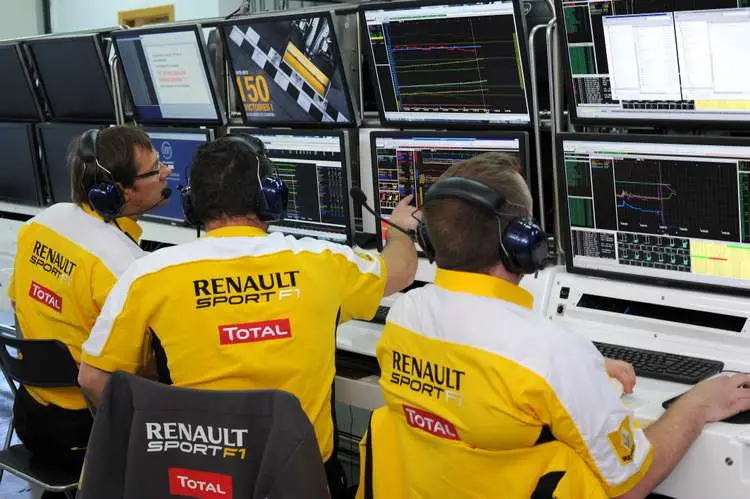
One of the most unique features of the Singapore Grand Prix weekend is the topsy-turvy night timetable. Instead of waking in daylight and going to work, teams work through the night and sleep away the days.
It culminates in a spectacular night-time finale under thousands of lights, but how is the build-up for team members? David Mart, engine engineer for Daniel Ricciardo, explains: "Singapore is a great event and the differences to a normal race weekend are what make it stand out. We arrive early in the week and try to stay on European time, which is not easy as naturally your body wants to stay awake during the day. When you come back from work in the morning you see people going out to do their day jobs, or coming back from parties, so it can be quite hard to switch off and go to sleep. It can help to go to the gym or go for a run to switch off, but this year with the smog I’m not sure we will be going out too much!
"Eating is also a tricky thing to get right. Eating your breakfast at 4pm is a bit weird, but then getting something to eat when you finish in the middle of the night is hard too. There are limited options outside room service, but after seven years we now know the food courts and markets where you can go to get a bite outside the hotel.
"Working conditions are quite hard in comparison to other races. The garage is hot and humid and you have to remind yourself to drink a lot of water, particularly since the circuit requires you to be on top form. It’s one of the longest laps of the season, with 23 corners. A track with that sort of intensity requires a lot of preparation and it is very time-consuming to get the settings right. You need to factor in a very high chance of a safety car, which has been called every year so far. This requires some flexibility in fuel loads but you need to balance out the performance gains with the risks. It can require some mental gymnastics, particularly during the race. More often than not we get to the two hour mark in Singapore, which makes it the longest race of the year by quite some margin. You can feel exhausted by the time you’ve finished the debrief!
"This year we go straight to Japan, which will be pretty tough. The last time we went straight from Singapore to Japan was 2009 and it was a bit of a killer. You need to be on form and set up from early on in the week, but you are very jetlagged from staying on the European time for so long. But I will miss Singapore: it’s one of the best weekends of the year."
Remi Taffin, director of operations: "Singapore is an enjoyable race all round, and this year we are really looking forward to it as it represents one of the best opportunities of the second part of the season to score some good points. It’s a street track, with the emphasis on good driveability, so plays to the strengths of both teams’ packages.
"With this in mind we took the penalties in Monza to be able to tackle Singapore in as strong a position as possible. We know it will be a tough race as the power unit and the chassis are really put to the test, but we’ve got all the elements in place to make the most of the chances we get."
Renault 2015 Fast Facts:
- Fuel consumption in Singapore is high due to the stop-start nature of the track layout, but engineers are able to offset the high consumption by recovering energy under braking. Using the ICE alone, the engine would consume around 150kg of fuel over the race, but energy harvesting and employment has brought this down significantly. Last year’s consumption was in the order of 99 kg. The track conditions can improve significantly throughout the weekend, which can have a big impact on fuel consumption.
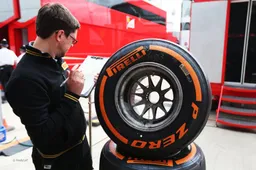
- The Singapore track is illuminated by almost 2,000 lights. The heat given off by the lights heats the track temperature significantly, taking it to almost 38°C, or the same as a race such as Abu Dhabi. This, plus the abrasive tarmac surface, greatly increases tyre wear. Rear tyre wear can be a limiting factor to performance and strategy so engineers will try to factor this in while mapping the engines and creating set-ups for torque delivery from the driver demand.
- The long lap and the high chance of a safety car makes Singapore one of the longest races on the calendar. The 2009 was the shortest so far, at one hour and 56 minutes. Twice in its history it has passed the two hour mark (in 2012 and 2014), the maximum time permitted for a Grand Prix. Compare this to Monza, which was won in just one hour 18 minutes last week. It is in fact the second longest lap time of the year behind Spa, which is 2km longer.
- The safety car has been deployed every year in Singapore since its debut on the calendar.
- The drivers can lose up to 3kg of fluid during the race in the hot and humid atmosphere. This needs to be taken into account when setting the car weight before the race.
Latest News
Loading