Modern Formula 1 is set up in a deliberate manner to eliminate privateer teams.
I've been maintaining this position for years online. His voice is of course louder than mine. Hearing him say it, though, really helps clarify "reality".
In U.S. politics, everyone here are busy arguing with each other over their Red or Blue Team stance. Much like with U.S. football, a lot of effort is put into such blather given the fact that for all of the personal energy expended in arguing about one political position or the other, the reality is that nobody arguing actually has any control over the things they think they are debating.
In reality, there is much going on that somehow manages to escape mainstream awareness, but is just as important than many of the things people are pointlessly spending so much time arguing about.
This sort of clime leads me to think in terms of "what are the people thinking and doing that actually have input and control over the direction of the United States?".

Whenever someone dismisses a seemingly wasteful expenditure of tax payer money, by either political team, it is said with a proud, knowing grin that implies there is actual stupidity or carelessness going on. When in reality everyone involved are actually very smart people, and it is just that they know something the citizens do not. They have their own agenda.
Much like the U.S., Formula One seems to have been inundated by a raft of rules and regulations that have come out of nowhere. Things seemingly never discussed publicly, but somehow gains enough traction to get ratified almost instantaneously. Rules and regs that have seemed to be questionable, or even zany.
It was my contention that for many years recently, everything being done rule wise has ironically been not to control cost, but to actually keep Formula One expensive.
It could be the thought that for a big company like a Mercedes or Renault, it could be embarrassing if they debuted a car with a new bespoke engine, and out of the blue a team like Force India shows up with something from a Cosworth, or even a lowly Nissan or Hyundai.

V10 design was getting pretty stable, then V8. So, to avoid that possibility, maybe you come up with a wacky confabulation of a hybrid spec that obviously requires a lot of money to create and to get right.
Just a crazy conspiracy theory. I would cite some other nuances in the rules, but something just made me think a moment ago that has made me more steadfast in my Alex Jones position.
Parc ferme. Make the cars in Q3 run with race fuel, and then nobody after the fact can do anything to set the car up better for the race. Because, the mechanics need a break the night before the race. Other reasons are given. It also coincidentally means a team can't "accidentally" get their car setup in such a way that makes it competitive with a team higher up the ladder than them, who may get it wrong.
I'm sure that didn't enter anyone's mind. It keeps anyone from "cheating", altering the car in an illegal fashion. Never mind that they could do that before qualifying, this keeps them from doing it before the race.
Changing the chassis rules to "keep costs down". High noses, low noses, ugly noses. What we got last year was a surprise? Really? I drew a diagram posted online immediately after they announced the new rules, and it almost completely matched the results of a number of teams.

How much money went into redesigning the noses? Does this not favor the wealthier teams, and hurt the private teams?
Towards the end of the V10 era, we were attaining some parity on the grid, through the natural development cycle of having dumped a ton of money into the design. Then we were told to save costs, we needed V8s. Or, we needed V8s because they were more "road car relevant". Never mind that again, more money would have to be spent.
Obviously. Is FOM idiots, the Working Group on drugs? Are they stupid? It makes complete sense if one looks at it from wanting to maintain the status quo.
KERS - would a small engine company like a Cosworth want to spend as much money as Mercedes or Ferrari on that? Who did that favor?
DRS - we're going to make it cheaper, by adding yet another new aero aspect to the car that every team has to run dynamic tests on to figure out how it is going to affect the car? Many said "won't that result in fake passing?", but seemingly the Powers That Be somehow did not anticipate that result. Really?
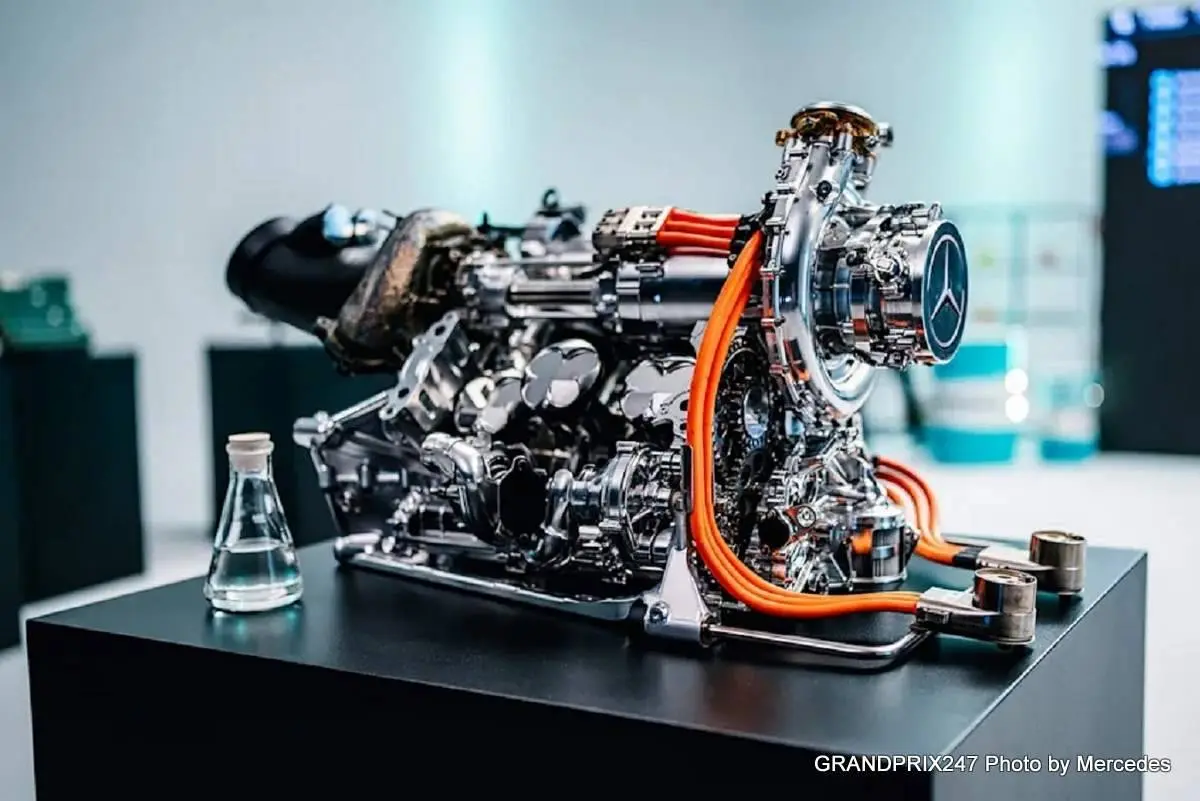
V6T confabulated Rube Goldergian machines. To save money? Obviously not. To be "road car relevant" again. I won't argue what I think is the dubious nature of that claim, but who does this favor? From where did this dictate come from, and why does it now supercede apparently everything else in F1? Most importantly, common sense?

Limit how many engines. Because, fewer engines are cheaper than a lot of engines. Did that make sense to everybody? Oops, got one wrong there, didn't see that coming? I don't buy that. It was obvious that the total expenditure for creating these contraptions would be just as expensive, if not more, than the well developed V8 spec.
Citing the individual cost of the material of each engine does is irrelevant. It costs more, and again prevents an upstart from coming in with a cheaper V10 engine that might be as competitive as a Renault or Mercedes.
There are some other spurious things one could throw in that might support the position that for some very large manufacturers, they may prefer a more private party. Curiously, we're now actually hearing talk of customer cars, which is surely the death knell of a privateer team wanting to compete on a fairly level playing field.
"Well, they can just buy our car" a rather stern voice is heard, reminiscent of a famous science-fiction movie actor.
Which could be very comfortably profitable for said person's organization. A slippery slope towards spec racing, despite tales of customer cars in the past or the present success of Indycar. I rue the day, it is completely against what I think of as the soul of F1, a situation brought about by corporate weight through the careful wielding of bureaucracy.

Car racing does not have to be this complicated, and certainly not this expensive, or take this form. I'm not sure if Bob Fernley is thinking these sorts of things, or if it's taboo for him to say, but ultimately what is going on now in Formula One is the effort by large corporations to ensure their advertising dollar is not invalidated by a team that might only spend 1/10th as much money.
If it's going to be pragmatically impossible for a team that spends less money to actually compete - that's not car racing, is it?
Opinion piece by GrandPrix247.com reader Chip McDonald
Latest News




Loading