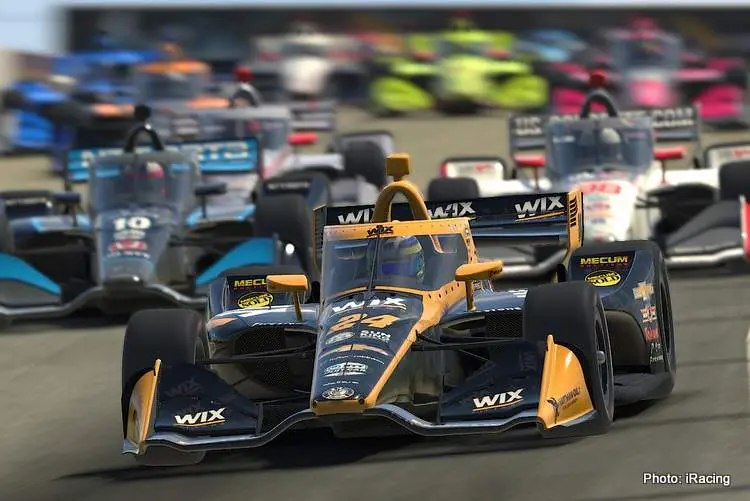
Buckle up, racing enthusiasts! We're embarking on a thrilling ride through the evolution of virtual games, from the humble beginnings of arcade classics to the hyper-realistic simulations of today.
But this isn't your typical history lesson—it's a pit stop adventure, where each stop represents a defining era in the world of racing games. Let's hit the gas and dive in!
The Arcade Era – Where It All Began (1970s-1980s)
Our journey kicks off in the neon-lit arcades of the 1970s and 1980s, where racing games were all about speed, simplicity, and groundbreaking fun.
Arcade Icons:
- Gran Trak 10 (1974): One of the pioneers, featuring a top-down view and a steering wheel for an immersive experience.
- Pole Position (1982): This game raised the bar with pseudo-3D graphics and track-side billboards, bringing a slice of real-world racing to arcades.
These games weren’t about realism—they were about the thrill of the race. Steering wheels and pedals introduced physical interaction, while time-sensitive checkpoints kept players on the edge of their seats.
The Console Revolution – Racing Comes Home (1990s)
With the rise of home consoles in the 1990s, racing games shifted into high gear. Developers harnessed improving technology to create iconic franchises that shaped the industry.
Game-Changers:
- Super Mario Kart (1992): Blending racing with chaos, this game turned karting into a cultural phenomenon.
- Gran Turismo (1997): Bringing depth and realism, featuring licensed cars, detailed handling, and career modes—a first for racing games.
This era was marked by experimentation. Whether you preferred the wild fun of Crash Team Racing or the adrenaline-fueled police chases of Need for Speed, there was a game for everyone.
The PC Simulation Boom – Realism Takes the Wheel (2000s)
By the early 2000s, PC gaming surged forward, and racing games embraced a more simulation-oriented approach.
Milestones in Realism:
- iRacing (2008): Set new standards for hyper-realistic physics, tire wear, and online competition.
- Richard Burns Rally (2004): Gave rally fans an unflinching challenge, with demanding tracks and no arcade shortcuts.
This era redefined what racing games could be. Developers began collaborating with car manufacturers and motorsport professionals, ensuring that games weren’t just entertainment—they were a training tool for real-world racers.
Open Worlds and Accessibility – Horizon Expands (2010s)
Racing games in the 2010s shifted gears yet again, bringing players expansive open worlds, accessible gameplay, and unmatched visuals.
Defining Titles:
- Forza Horizon (2012): Mixed festival vibes with open-world exploration, giving players the freedom to race how and where they wanted.
- The Crew (2014): Took things further, recreating a scaled-down version of the United States for players to explore at their leisure.
This period democratized racing games, inviting casual players to enjoy the thrill of speed without the steep learning curve of hardcore simulations.
Virtual Reality and Hyper-Realism – The Present Day
Today, racing games are experiencing their most exciting era yet, with developers pushing the boundaries of immersion and realism.
Current Standouts:
- Gran Turismo 7 (2022) and Assetto Corsa Competizione: Deliver unparalleled realism, with stunning graphics, accurate physics, and dynamic weather systems.
- Virtual Reality (VR): Revolutionized racing with titles like Project CARS 2 VR, letting players experience the track from a first-person perspective.
The combination of cutting-edge hardware, realistic physics, and community-driven online play has made modern racing games feel indistinguishable from the real thing.
What’s Around the Corner? The Future of Racing Games
As we look ahead, the future of racing games is accelerating faster than ever. Key trends include:
- AI-Driven Dynamics: Smarter AI opponents that learn and adapt to your racing style, making every race unique.
- Immersive Tech: Advances in VR and augmented reality (AR) could create cockpit-level experiences, blurring the lines between games and reality.
- Sustainability in Simulations: With the rise of electric vehicles (EVs), racing games will explore new ways to simulate EV dynamics and energy management.
- Blockchain Integration: Developers are leveraging blockchain technology to create shared universes, where players can own and trade custom-built cars, enhancing engagement.
Why Racing Games Matter
Racing games have come a long way, evolving from simple arcade thrills to lifelike simulations. But beyond the tech and visuals, they tap into something universal: the joy of speed, competition, and control. They let players step into the shoes of professional racers, turn ordinary moments into adrenaline-pumping adventures, and forge communities across the globe.
For motorsport enthusiasts, racing games aren’t just entertainment—they’re an extension of their passion, a place where they can explore the limits of speed without ever leaving their couch. For those looking to add a bit of excitement to their gaming experience, check out Ninja.
Latest News



Loading