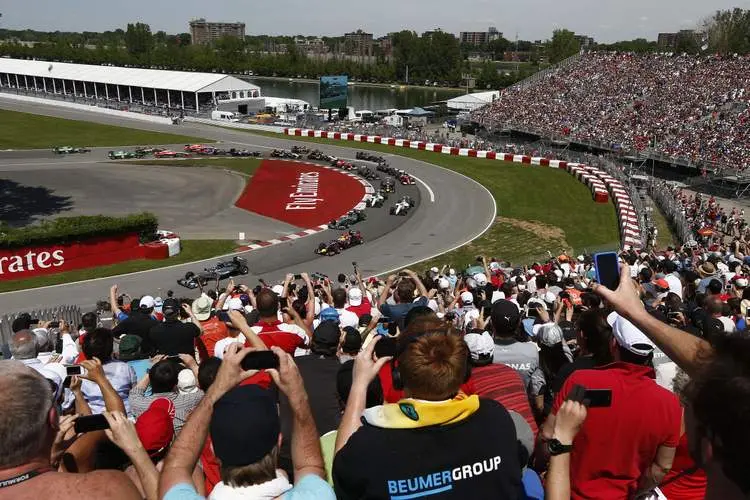
A Formula 1 race day doesn’t start at lights out, it begins with the little rituals that prime your attention, your crew, and your space.
Some fans add a playful cue like forest arrow to mark the moment the warm-up lap of the day begins.
The key is to blend light prep, savvy conversation, and quick activities that amplify the spectacle without hijacking it. Whether you’re at home, in a fan zone, or trackside, here’s a blueprint for a more intentional Sunday.
Set the Stage Before Formation Lap
The viewing grid—light, sound, seating
Dim overhead lights and use two warm lamps behind the seating to cut reflections. Switch your screen to “Cinema/Game” mode and kill motion smoothing. Make comfort intentional: feet flat, shoulders relaxed, snacks and water reachable—because posture quietly decides how focused you’ll be on Lap 52.
The soundtrack & signal ritual
Queue a short pre-race playlist (lo-fi → synth build → team anthem). When the final chorus hits, that’s your cue to silence nonessential notifications and enter “race mode.” A two-minute breath cycle (inhale 4, hold 4, exhale 6) keeps nerves steady for opening laps and first-corner chaos.
Tyre Talk That Actually Adds Value

Compounds, warm-up, and track evolution
Discuss tyres like a strategist, not a parrot. Ask: How fast does this compound reach operating window? What’s the expected degradation in clean air vs. traffic? On green tracks, the undercut is often potent after the first round of rubbering; on cooler days with slow warm-up, the overcut can sting back.
Pit windows and deltas—keep it simple
Pre-race, pick one pit delta to track (e.g., ~20–24 seconds). When gaps near that number, you’ll feel an undercut coming before the commentary calls it. Note the Safety Car/Virtual Safety Car effect: a neutralization can halve the pit loss and flip your strategy bingo card in a heartbeat.
Smart Fan Activities Between Bursts of Action

Race Bingo 2.0 (quick, fun, non-intrusive)
Create a four-by-four card with items like “DRS train,” “purple out-lap,” “radio ‘my tyres are gone’,” “unsafe release investigated,” “team orders debate.” First to complete a row chooses the post-race anthem. Keep it light—no eyes off the screen for more than a few seconds.
Micro-quizzes for the quieter stints
Prepare eight rapid-fire questions you can run during mid-race lulls: tyre codes, famous undercut swings, hallmark corners, debut poles. Cap answers at five seconds each; the goal is energy, not homework.
Data snack, not data dump
Pick one metric to glance at each stint: sector trends for a leader, or average pace of the midfield train. Snap a single note—“Leader +0.2 in S2 last three laps”—then look back up. Watching shouldn’t become spreadsheet duty.
Food, Hydration, and Pace Yourself Like a Pro

Modular snacks that don’t steal attention
Serve bases (toast points, veggie sticks, crackers) plus three toppings (spiced yogurt, hummus, salsa). Everything one-handable; nothing noisy. Hydrate with citrus-mint water to sidestep late-race headaches; save heavy food for after the chequered.
Two-lap stretch rule
Anytime the field forms a DRS train or a replay loop runs, stand for two laps: shoulder rolls, neck circles, calf pumps. Your body will thank you on Lap 65 when the real drama kicks off.
Social Without Spoilers
One-line check-ins
Between stints, each person gets a single sentence: “Undercut will work if P3 clears traffic,” or “Watch S2—rear sliding.” This keeps the room aligned and prevents hot-take monologues that drown the race.
The kitchen is the spoiler zone
If someone’s streaming on delay or rewatching, move deep analysis to a designated spot (kitchen/balcony). Protecting synchronicity preserves the collective gasp when strategies collide.
Kids and Newcomers: Bring Them Into the Story

Assign “driver cards”
Hand out simple cards with a driver/team, tyre start, and one fun fact. When “their” driver pits or sets a fastest lap, they call it out. Instant engagement, zero complexity.
Corner-by-corner viewing
Pick one sector and watch only for lines, kerb use, and traction. New fans learn why pace differs; kids spot patterns like pros—“Car X rides the exit kerb harder each lap.”
When the Race Turns: Safety Cars, Weather, Chaos
The yellow-flag playbook
During a SC/VSC, call out three things: who gets a cheap stop, who is trapped behind team-mate stack, and who now has tyre offset. Jot one prediction on a sticky note. After racing resumes, check who nailed it—small wagers of pride keep brains sharp.
Weather pivots
If drizzle hits, switch from raw lap time to relative pace: who loses the least per lap? That’s often your future winner, even if they’re not yet on the right tyre.
Post-Race: Close the Loop Like a Pit Wall

Micro-debrief, maximum satisfaction
In two minutes, answer: What decided the race? (tyre warm-up, traffic, pit delta, SC timing), Which call surprised you?, Who over-delivered? Capture one line in a shared notes app—your season diary grows organically.
Gentle landing ritual
Lower lights, play a cool-down track, and stretch for sixty seconds. If you’re trackside, swap a single pin or sticker with another fan; at home, snap a photo of your bingo card. The memory anchors the day and tees up your next Grand Prix.
Race-day rituals don’t need spreadsheets or silence—they need rhythm. A touch of tyre literacy, a few smart mini-activities, and intentional pacing turn a good broadcast into a great shared experience. Build your grid, breathe, and enjoy the chess at 300 km/h.
Latest News

Loading