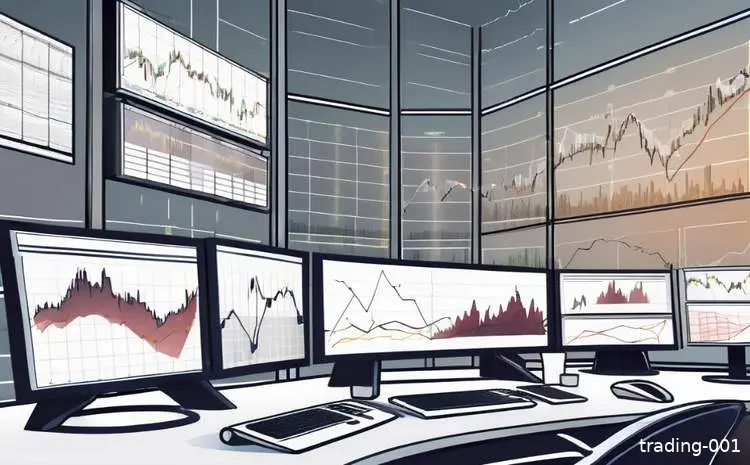
These days, prop firm trading (trading with firm money) and automated strategies (using computer programs to trade) are everywhere—and for good reason.
They’re shaping how modern traders work and how markets move. Firms such as Funding Rock focus on prop trading, where firms trade financial instruments using their own capital rather than on behalf of clients.
If you’re interested in trading with more capital, you can apply for Funding Rock funding and start your journey. This is a special report for our Formula readers and F1 fans interested in prop trading.
What Is Proprietary Trading?
Proprietary trading—or “prop trading”—is when a company trades using its own money, not client money. Unlike retail brokers who earn commissions on client trades, prop firms take on the risk and reap the rewards directly. They may trade stocks, currencies, futures, options, or commodities, depending on their focus. Visit LightPips for more information.
Think of it like this: you’re a chef cooking with your own ingredients instead of running orders for customers. You win big if your recipes (trades) succeed, but you also take the losses if they don’t.
Definition and Overview of Proprietary Trading
Proprietary trading refers to the practice of using a firm's capital to trade financial instruments in order to generate profits. Unlike traditional trading where the focus is on executing orders for clients, proprietary trading involves trading for the firm's own account.
Prop firms are typically structured as independent entities separate from commercial banks or other financial organizations. They are often established by experienced traders or investment professionals who have a deep understanding of the markets and trading strategies.
At its core, proprietary trading is driven by the firm's ability to leverage its own resources, access to market information, and expertise in order to generate profits from trading activities.
Why Prop Firms Matter
Boosting Market Liquidity
Prop firms trade in big volumes. That means it’s easier for anyone—retail or institutional—to buy or sell without dramatically shifting prices. More trading = smoother markets. Prop firms contribute to price discovery and help establish fair market valuations.
Sharpening Price Discovery
They’re always on the hunt for profitable setups. Their activity helps markets find true, fair values. Think of them as active price-checkers—constantly probing and testing pricing models.
Training New Talent
Many prop firms act like boot camps: You pass a challenge, you get funding, you trade under supervision. Some even offer mentorship programs and training to sharpen your skills.
Automated Trading: Robots vs. Humans
The other hot trend? Automated trading—programs (or bots) that trade for you.
Why So Popular?
- Speed: A bot can execute thousands of decisions per second—no human can match that
- Emotion-free decisions: No fear or greed. The bot follows rules—even when panic spreads .
- Backtesting: You can test your rules on past data to see if your approach even makes sense
- Multitasking: Bots can watch multiple markets and trade accounts simultaneously—something no human can do
In fact, automated systems now account for around 70–80% of trading volume in some markets.
Types of Automated Trading
- Algorithmic Trading – Uses rules (e.g., moving average crossovers, volume thresholds) to buy/sell automatically
- High Frequency Trading (HFT) – Executes micro-trades in milliseconds. It captures tiny price differences but needs rock-solid tech and super-fast connections
- Statistical Arbitrage & Arbitrage – Finds price mismatches across markets. Bots can exploit these before anyone notices.
How Prop Firms Mix in Automation
Today, most prop firms combine human traders with automation:
Speed & Efficiency
Bots can place hundreds of trades a minute, spotting and reacting to tiny market shifts.
Diversification
You can run different strategies across equities, FX, futures—simultaneously, and consistently.
Risk Control
Bots stick to rules—stop-loss, size limits—helping prevent disasters from human boredom, overconfidence, or emotional mistakes.
The Upsides of Automated Prop Trading
- Lightning-fast execution = edging out competition.
- Emotion-free trading = consistency day-in, day-out
- Refined strategies – use backtesting to fine-tune your methods .
- Multiple setups at once = diversified opportunities
Risks & Challenges to Watch Out For
- Tech failures – if your server crashes, your bot might freeze or misfire .
- Over-optimization – creating a bot that was perfect for last year’s data but fails in real markets
- Flash crashes – like the 2010 “Flash Crash,” where a glitch in HFT sent markets into a panic
- Ethics & regulation – some bots spread fake orders or act manipulatively, and regulators are watching
- Barriers to entry – top-tier automation needs expensive servers, co-location, and top talent—often only props can handle it
Making Prop & Automation Work for You
Choose Your Strategy Wisely
Scalping? Swing trades? Arbitrage? Choose something your personality and lifestyle fit. Maybe you’re up for coding bots, or maybe you prefer manual setups with light automation.
Build & Test Your Systems
Start with a hypothesis—say, a moving average crossover. Code it, backtest it on months of data. Know its strengths and where it fails before risking real money.
The adoption of automated trading has also led to increased competition among prop firms.
Protect Yourself & the Firm
Use stop-losses on every position.
Monitor your bots and your trades live.
Never risk more than the firm (or you) can take.
Stay Adaptive & Smart
Markets change. If your system keeps losing, don’t just turn it off—ask why. Refine, tweak, or replace. Prop firms love traders who can build and improve their systems continuously.
Follow Legal & Moral Lines
Don’t use manipulative strategies. Stay within each market’s rules. You don’t want fines—or a prize for collapsing the market around you.
Final Take
Prop trading and automation are reshaping how we trade:
- Prop firms bring capital, speed, and structure to traders who otherwise might stay small.
- Automation brings precision, speed, and consistency—if built and monitored right.
- Together, they make markets more efficient and profitable... for those who get it.
But don’t be fooled—it demands discipline, money management, technical know-how, and emotional control. Whether you code the next killer bot or trade with guidance, what matters most is thinking strategically, managing risk carefully, and always learning.
If you're excited by the mix of human insight and machine precision—and happy to grind through the details—you might just be cut out for this new world of dynamic trading.
Latest News


Loading