Pirelli go aggressive to tempt F1 teams towards two-stop strategies
F1 NewsSaturday, 31 May 2025 at 14:15
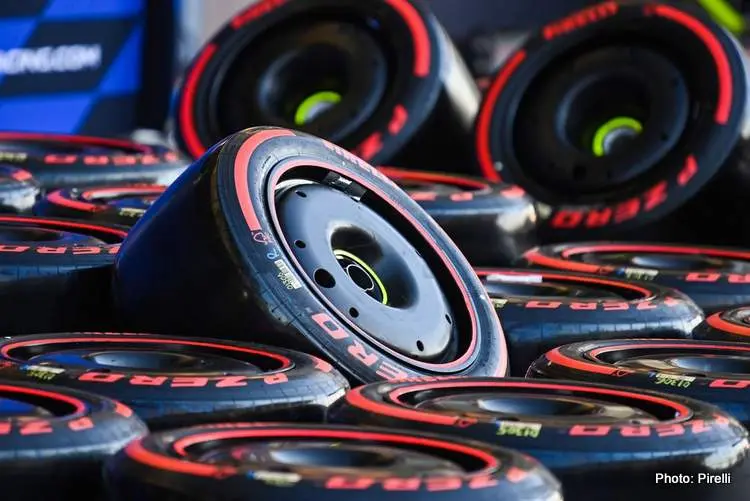
Pirelli is pressing ahead with a more aggressive tyre selection strategy for upcoming Formula 1 races, aiming to incentivise teams to adopt two-stop strategies under normal Grand Prix conditions.
The move comes despite Monaco’s mandatory two-stop experiment failing to enhance the race spectacle. While acknowledging that the Monte Carlo street race is a unique case on the calendar, Pirelli is using fast, permanent circuits to create greater strategic variation through tyre compound selection.
Pirelli Motorsport boss Mario Isola outlined the rationale behind the recent and forthcoming tyre choices, starting with the introduction of the C6 compound: “We had mixed feedback from the teams.
"I believe that it's quite normal when you have a new compound, especially a soft compound like the C6. The compound is quite close to the C5. Ideally, I would like to see in the future a C6 that is a more aggressive choice, different from the current one.
“We didn’t have a lot of time to test and develop this compound. It was something that we felt at the end of last season — that we needed a compound that was softer than C5. So, at the moment, I’m reasonably happy, and I’m looking for Canada where we’ll probably get more information on the C6," Isola added.
Silverstone and Spa to feature revised compound selections


For the summer rounds, Pirelli is modifying its compound approach to increase the likelihood of multi-stop races. Isola revealed: “We have more information now compared to the first draft of the compound selection. Talking to F1 teams and drivers, and the FIA of course, it is clear we need to be a bit more aggressive or find a way to encourage teams towards a two-stop strategy. That was not a choice for the races where we went one step softer.
“So at the moment, we modified the selection for Silverstone — we’ll go one step softer with C2, C3, and C4. And we also decided to skip one level in Spa. So instead of C2, C3, and C4, we go with C1, C3, and C4.
“That means between C1 and C3 — the Hard and the Medium — you have a much bigger delta. If teams want to be aggressive, they have to use C3 and C4 on a two-stop. If they want to be conservative, they use C1 and C3, but that means they are slower. So, I’m curious to see if it works.”
Belgium selected for strategic variation test

Explaining why Spa-Francorchamps was chosen as the venue to trial a non-linear compound gap, Isola said simulations showed it offered the greatest potential for mixed strategies: “As usual, we run simulations to try to understand how many strategies are possible with different compound selections
“We found out that Belgium was the one where we had the highest number of strategies by moving to C1, C3, and C4. There was an initial idea to have C1, C3, and C4 also in Silverstone.
"But then we realised that with C1 and C3, probably in Silverstone you can easily complete a one-stop race without any big issue — because the C1 is working quite well there. While in Belgium, it’s probably slower. And this is creating this uncertain situation,” explained Isola.
Pirelli’s revised approach reflects ongoing efforts to use tyre variability as a tool to enhance race dynamics, particularly at circuits where overtaking remains limited.

Latest News






Loading