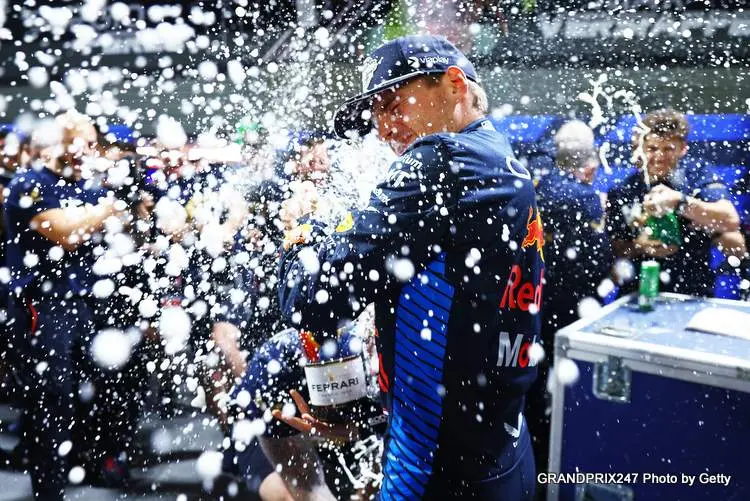
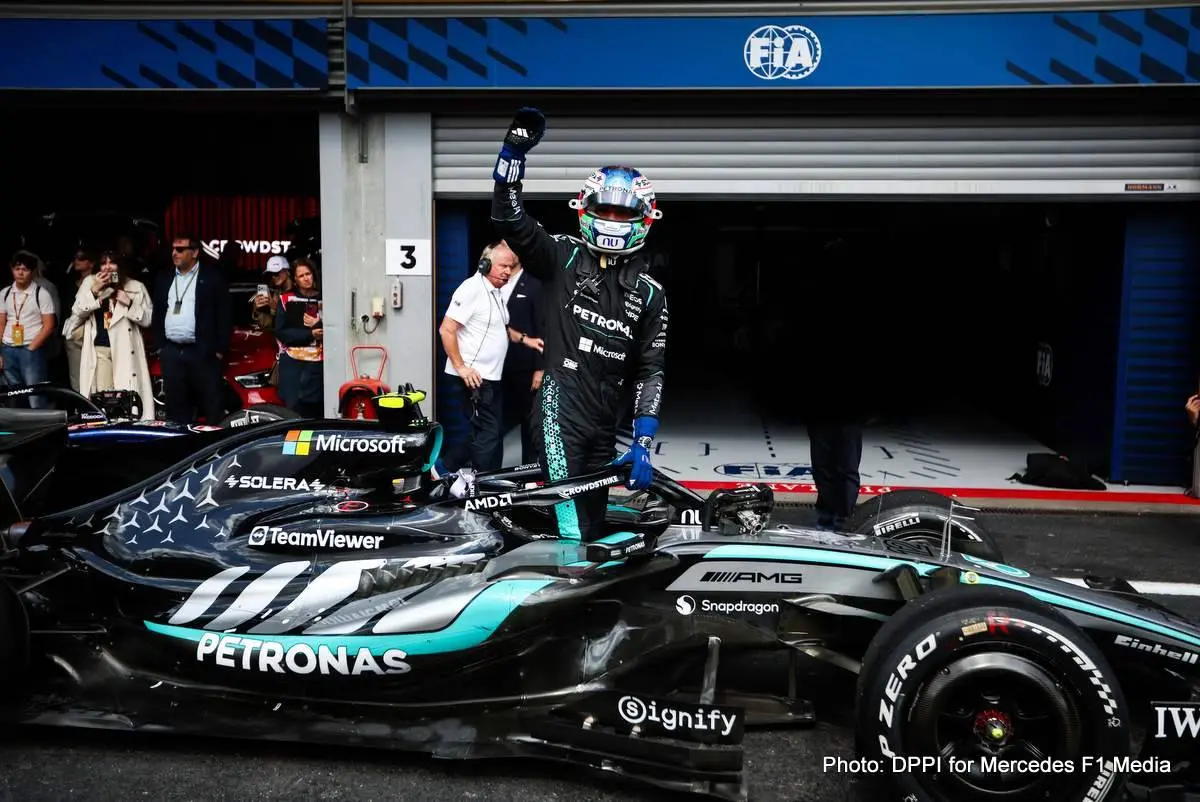
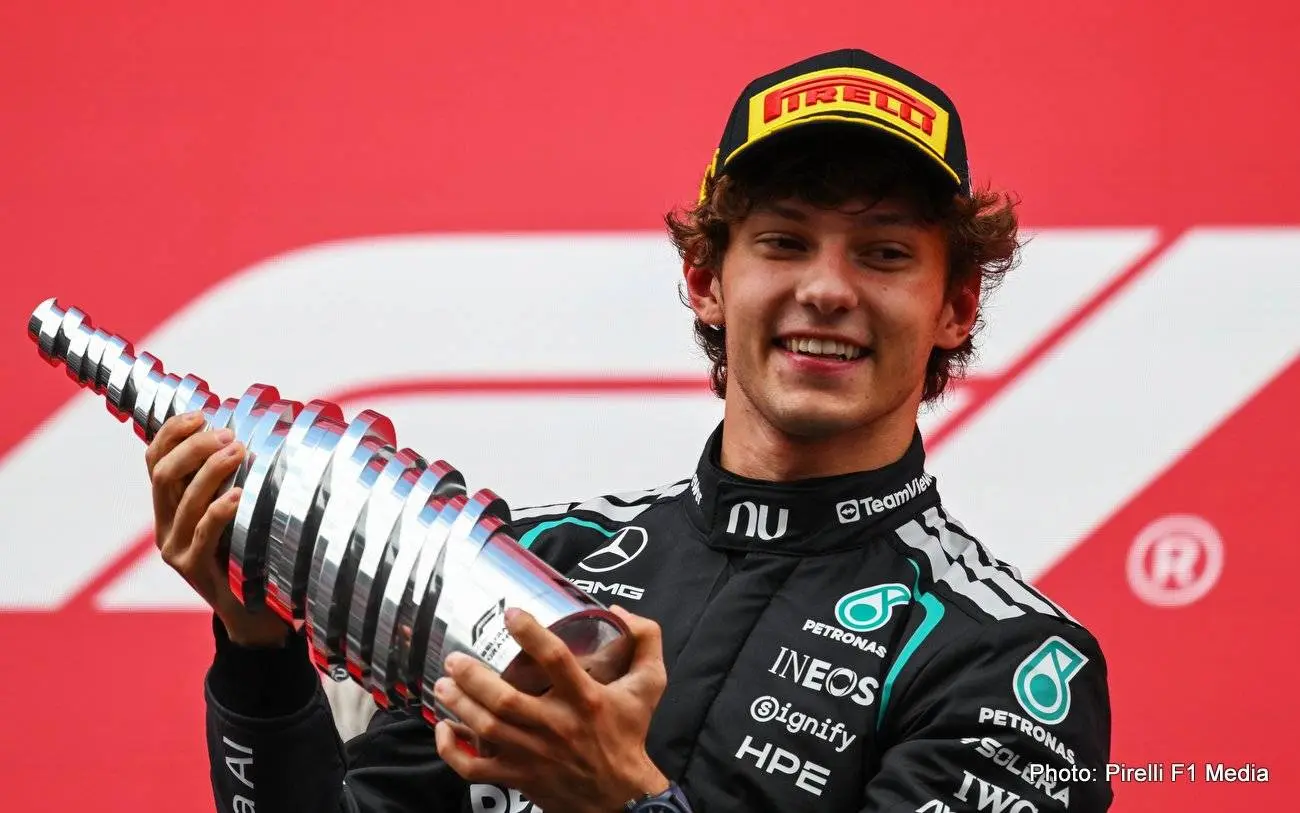
You have to feel sorry for George Russell. It seems every time he wins a race, there’s another story superseding it. The Las Vegas Grand Prix was no exception.
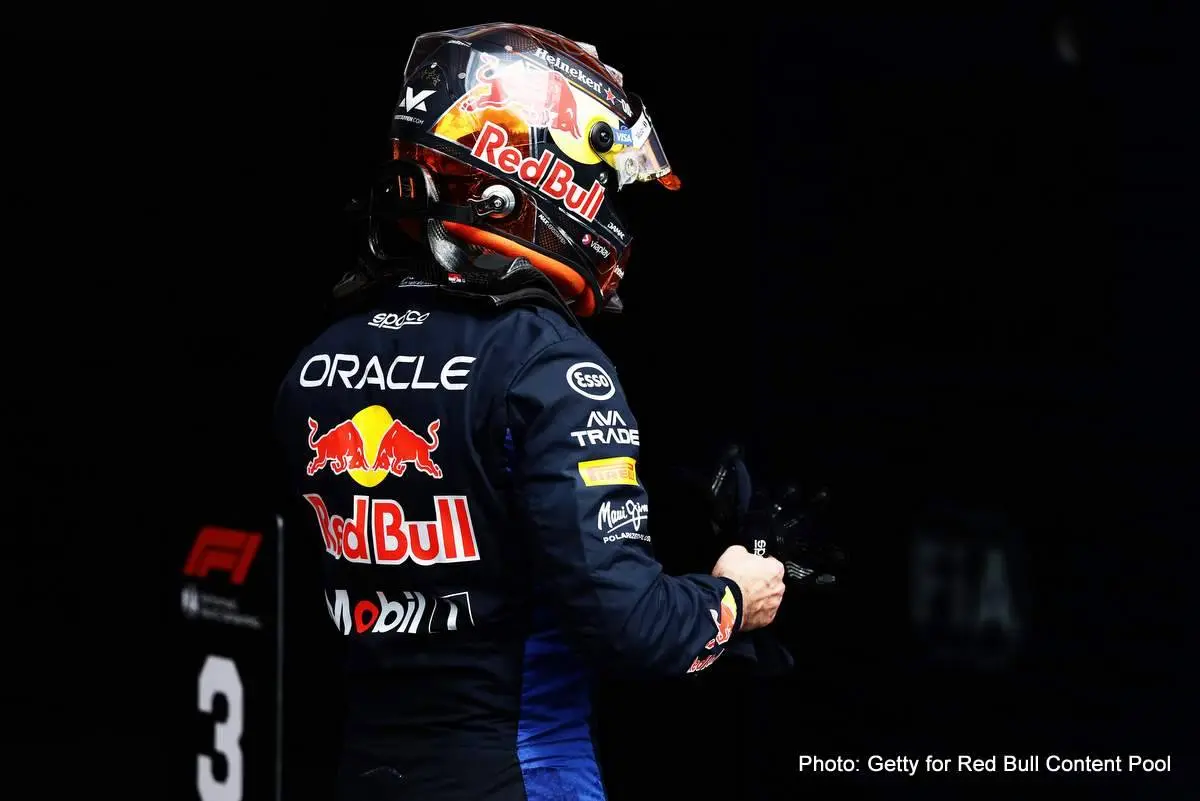
The Max Verstappen of 2021 struggled to win the Formula 1 driver’s championship. However, the Max of 2024, would have made easier work of it.
Morphing from the truculent child race driver of yesteryear, he presented himself as the complete package this season.
Many would argue he peaked in Brazil but, his actions in the Nevada desert's Las Vegas Grand Prix sealed the deal.
Welcome to the hall of GOATs
When the going got tough, Verstappen got going. While others on the grid folded, he only raised his game. There are lots of fast drivers out there, but this is one of the defining qualities that makes him great.
It’s a satisfying feeling when the driver who deserves to win the F1 world championship actually does. Next year should be a vintage show, as at least four teams look like they can field winning cars.
However, this will be cold comfort for his competitors. Verstappen has undeniably proved that he doesn’t need the fastest car to win. Feel me, Zak? And more than deserves his seat on F1’s Mount Olympus.
Talking of GOATs, we also saw an older one telegraph that his tank, contrary to his team principal’s aspersions, is not empty.
Hamilton should have been on pole and won the race. Instead, he had to settle for a second. Not bad when you start tenth.
His is an “expired shelf-life” that Ferrari will be happy to have purchased and one Toto Wolff may wish he retained in 2025!
Good ideas, bad ideas, and no idea

This sums up the W15 and Mercedes et al. Everyone interviewed over the weekend apparently had no insight into why they were schooling the grid.
There’s only one thing worse than having a slow car and knowing the problem, and that’s having an erratically quick one and not. Hardly a good place to be or admit to!
Cold out there
When the temperatures are low, Mercedes is the quickest car on the track. This suggests that there’s nothing fundamentally wrong with the W15’s chassis and its aero. However, its Achilles heel appears to be getting and keeping its tyres in a functional “window”.
Parc Ferme assumes the team then chase set-up to resolve this problem. More often than not, this seems to result in a car that is ungainly and only optimised for the tyre “window”.
However, when the tyres then either: let go, stop going, or fail to get going in the first place, this set-up soufflé collapses.
The whole is less than the sum of the parts

On paper, this approach probably makes sense. However, it means the car relies heavily on an erratic tyre performance.
This results in an uncomfortable feeling for the drivers as they can never be sure what they have from one corner to the next. A strategy that is proving to be expensive in terms of crashes and individual driver performance.
Not stepping up, but levelling down
However, the common denominator in Las Vegas was the “cold graining” of the tyres. Nobody could switch them on. This was evidenced by the lack of marbles on the track and the fact that everyone’s out-lap was pretty much on the race pace straight away.
This meant that Mercedes’ inherent tyre deficiency was neutralized. The car was then probably set up to optimize handling and aero, resulting in the drivers feeling comfortable and consequently confident in the car.
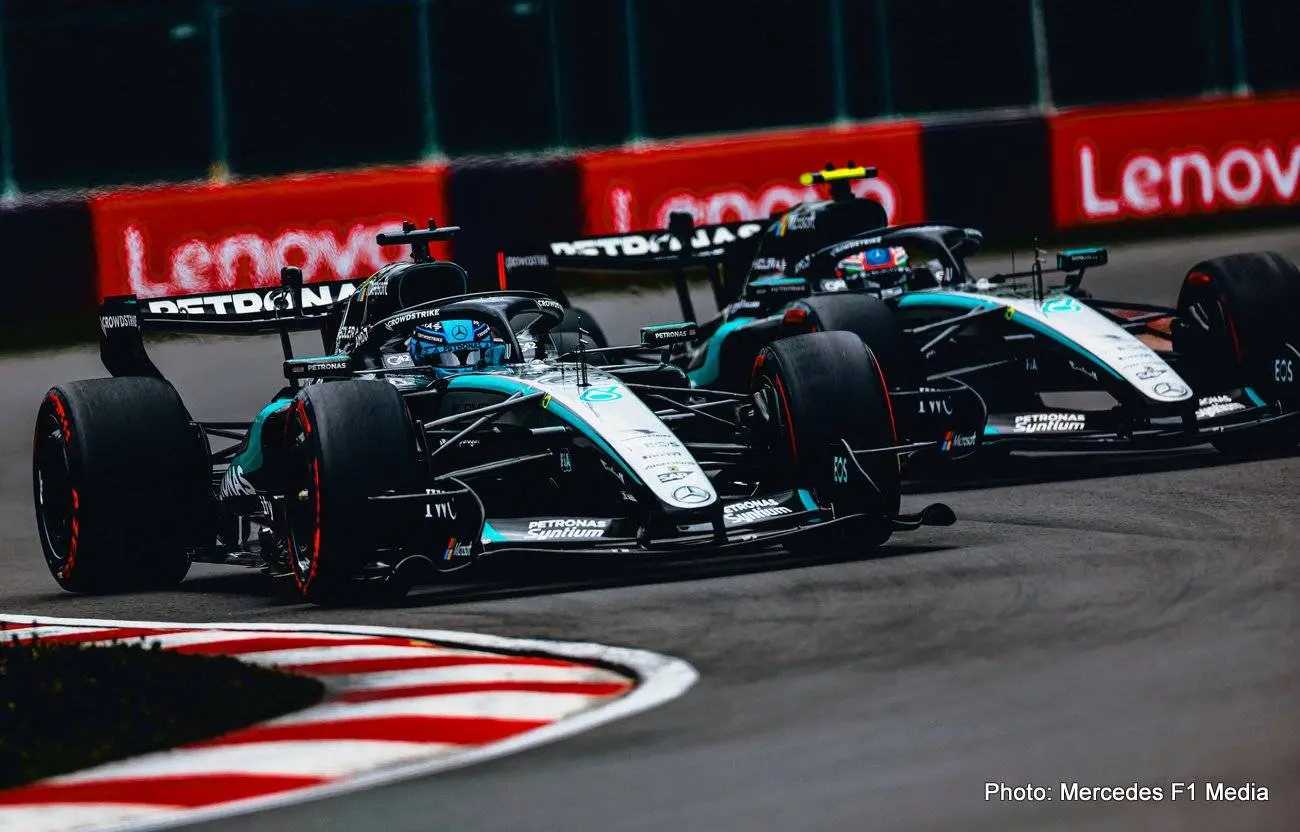
Result…double Mercedes podium. Oh, and last but not least, George, nice win, mate.
Latest News
Loading