There were plenty of question marks over the 2022 Formula 1 regulations before their introduction. However, they centred on the viability and, to a degree, safety, of ground effect reliance.
This time round, it’s the functionality of the power unit. First, the good-ish news. The new Formula 1 regulations have moved away from the intricate floor venturis to a more straightforward arrangement. To try and compensate for the consequential loss of downforce, the permissible size of the diffuser has been increased.
The net effect, in combination with some of the new bodywork and wing prescriptions, should provide more predictable handling and consign those wind breeze “moments to the past.
Another aerodynamic tweek of note is the volumes, shapes, and restrictions designed to reduce the dirty air trail behind the cars. In F1, slowing down the competitor following you is almost as important as speeding yourself up.
Dirty air and more bad wind?

The 2022 Formula 1 regulations had the same objective. Unsurprisingly, the innovative designers soon found ways around them, which means we can expect this second attempt to fail midway through the 2026 season.
These changes are all welcome, if they work and therein lies the problem. They are all CAD theories. The FIA cannot test these new regulations in the real world, as apparently, it doesn’t have the money.
Not to decry modern computing power and CFD, but if the F1 teams have learnt anything over the past years, the output might say “yes” but reality says “ok, but not with the wind blowing in that direction”.
The only conceptual models that seem to consistently work are those in pencil by that Luddite, Adrian Newey. Unfortunately for the FIA, he bats for the other team. This means we will no doubt, see some unintended consequences again, like the porpoising of 2022.
The lottery of 2026 Formula 1 power units

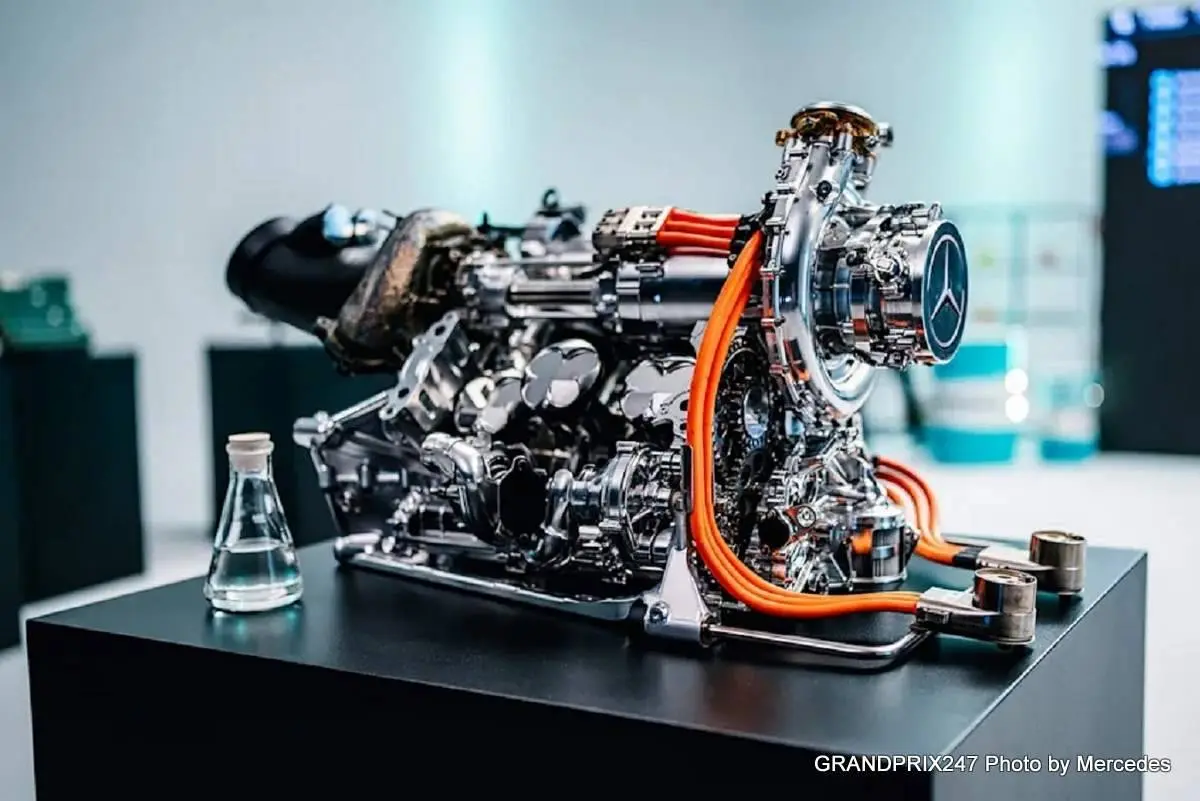
However, the real problem and one effectively now acknowledged by FIA Single Seater Director Nikolas Tombazis is the PU. His recent comment that: “Obviously, when you have a much bigger proportion of electrical power and a smaller proportion of ICE power, and you don't have batteries that are discharging over the entire race distance, then energy management becomes a bit more of a challenge.”
Word in the paddock says the battery won’t last for a complete lap, which means the pit wall strategists will need to get their abacuses out and calculate where and when to deploy the battery.
If the objective is to provide an antidote for single-team dominance, it could well be successful. There are so many potential balls to drop by the driver or the pit wall in this area that there will be fewer lockouts and one-two finishes.
Show me yours

To be fair, they (the FIA) are relying on the Formula 1 PU manufacturers for the data, which is half the problem. Personally, if it were a summer lunchtime in the desert and they told me it was sunny outside, I’d still look out the window to check.
The decision to go in this direction was a mistake from the get-go and needs to be owned jointly by F1 and the FIA. The latter’s president has been smart enough to get ahead of it all by waving the ICU V8 flag. He's now joined by Stefano Domenicali on behalf of Formula 1.
Parc Ferme sympathises with Tombazis. It’s difficult to see how this can be resolved at such a late juncture other than by capping the power discharge in some way. But, regulating it is another matter.
Apparently, the FIA believes the end result will not be as bad as feared. However, the statement admits there will be a level of badness. Something like a disaster instead of an unmitigated screw up, maybe...
Latest News
Loading