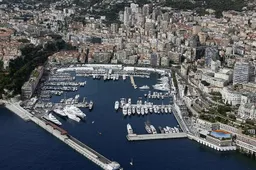
Michigan vs. Nevada: Formula 1's Legacy in America's Gaming Hubs
F1 NewsThursday, 17 April 2025 at 01:56
From Detroit's spartan street circuits to Las Vegas' swanky parking lot tracks, Michigan and Nevada have hosted Formula 1 in very different ways. Now, as online gambling remakes their economies, find out where these states rank in racing history.
In Michigan and Nevada, Formula 1 represents two different eras of American motorsport. Detroit's downtown Grand Prix (1982-1988) was a cruel test of skill, and Las Vegas' Caesars Palace races (1981-1982) were spectacle flops.
Several decades after that, Formula 1 returned to Vegas for a sleek night race - just as Michigan's online gambling market was growing faster than Nevada's. Racing and gaming helped both states; now find out how their paths diverged.
Michigan's Online Gambling Surge
The rising online gambling industry contrasts with Michigan's fading Formula 1 heritage. All of this money pours into a region that once hosted one of Formula 1's most demanding circuits, with state income reaching 248.2 million in January 2025. That's mainly thanks to online operators offering lucrative bonuses like free spins on Gambla. Detroit alone collected 11.8 million in gambling taxes. The financial success begs the question: Can gambling revenues revive Michigan's motorsport ambitions?
Likewise, Nevada's December 2024 gaming revenue - still dependent on physical casinos and restricted online play - directly supports its F1 spectacle. The diverging approaches show that gambling policies shape racing economies: Michigan's digital-first model drives general growth, while Nevada's tradition protects its position as America's racing entertainment capital.
Detroit's Grueling Street Circuit

Conditions at the Detroit Grand Prix were punishing. That 2.5-mile track snaked past the Renaissance Center through downtown's crumbling streets. But bumps, heat, and humidity pushed cars and drivers to their limits. The rate of attrition was high. Only the toughest survived.
Ayrton Senna won three straight races here (1986-1988). And before him, there were legends like Nelson Piquet and Keke Rosberg. However, by 1988, FISA demanded better facilities. Detroit refused. The race vanished. From downtown to Belle Isle, IndyCar took over. F1 never returned.
The Michigan International Speedway really missed out on the opportunity. Michigan International Speedway (MIS) was designed for speed. And its top banks had hosted NASCAR and IndyCar, but not F1. Some early designs included road courses by Stirling Moss. These were used briefly before being abandoned.
Las Vegas' First Parking Lot Race
This was F1 at its most bizarre - the Caesars Palace Grand Prix (1981-1982). That circuit twisted through a casino parking lot. Drivers hated it. Fans certainly wanted nothing ot do with it either. Still, the races were important because they decided championships.
Defending champions Nelson Piquet and Keke Rosberg were there, but the events proved very forgettable. The track was flat, featureless and extremely hot. Two years later, F1 departed. Vegas would not hold another Grand Prix for 41 years.
Formula 1's Exciting Vegas Comeback

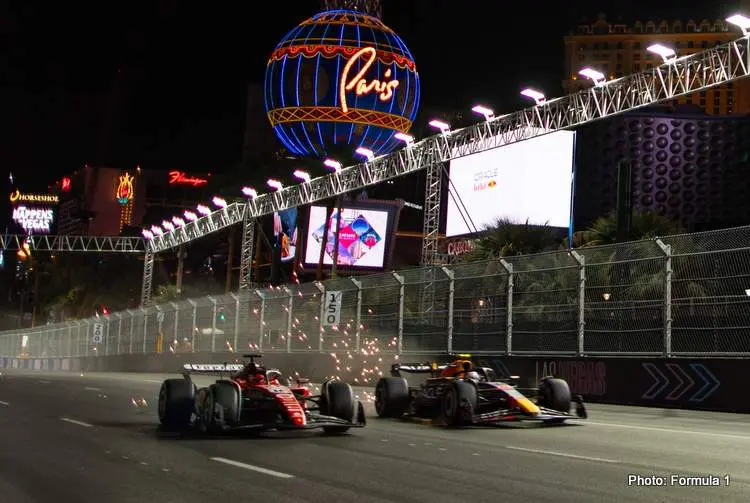
The exact opposite occurred at the 2023 Las Vegas Grand Prix. It was part of a 3.8-mile street circuit past the Strip's neon lights. It was Max Verstappen's debut race; the rest is history. George Russell took the 2024 top spot. It is now a marquee race, locked in until at least 2032.
The new track is fast, smooth, and packed with overtaking spots. And that is quite a contrast to the chaotic parking lot. But does spectacle outweigh racing quality? First impressions were very much mixed. The night race is great, but some fans miss real competition.
Economic Impacts of Racing and Gambling
Both states have jumped on motorsports to boost tourism and local economies. Detroit's Grand Prix once drew international attention, but the city's decline in the late '80s hurt its racing scene. Now, Michigan's gambling revenue brings in millions for state and city budgets.
Nevada, on the other hand, has always linked racing to its casino industry. While the Caesars Palace Grand Prix flopped, the new Las Vegas Grand Prix is backed by casinos, luxury resorts, and big sponsors.
Nevada seems sure of its future in Formula 1. That 10-year deal with Las Vegas keeps the race going through 2032. And if Michigan's online gambling keeps growing, could it lure other big events as well? Competition is heating up on and off the track.
Future of Formula 1 and Gambling in Both States

Is Formula 1 coming back to Michigan? Unlikely. The focus is now on street circuits like Vegas as well as established tracks like COTA. Nonetheless, Michigan's gambling growth could help pay for future motorsport investments. Formula 1 fans will have to focus on the Vegas lights for the foreseeable future.
The road to F1 success was different for Michigan and Nevada. Detroit's Grand Prix was rough and short. Las Vegas failed on its first try but is now shining again. While Nevada aspires to the throne, Michigan is gambling on itself. And here racing and betting go together - both states bet on speed, but only one is winning the long game.
In the next decade, Michigan will compete against Nevada's entertainment empire. One thing is certain: If you mix money with motorsports, the race never ends.
Latest News
Loading