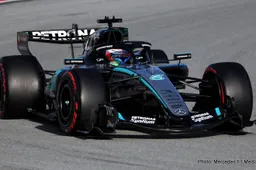
Mercedes officially launch their 2026 Formula 1 car, the W17 in online event
F1 NewsMonday, 02 February 2026 at 13:08
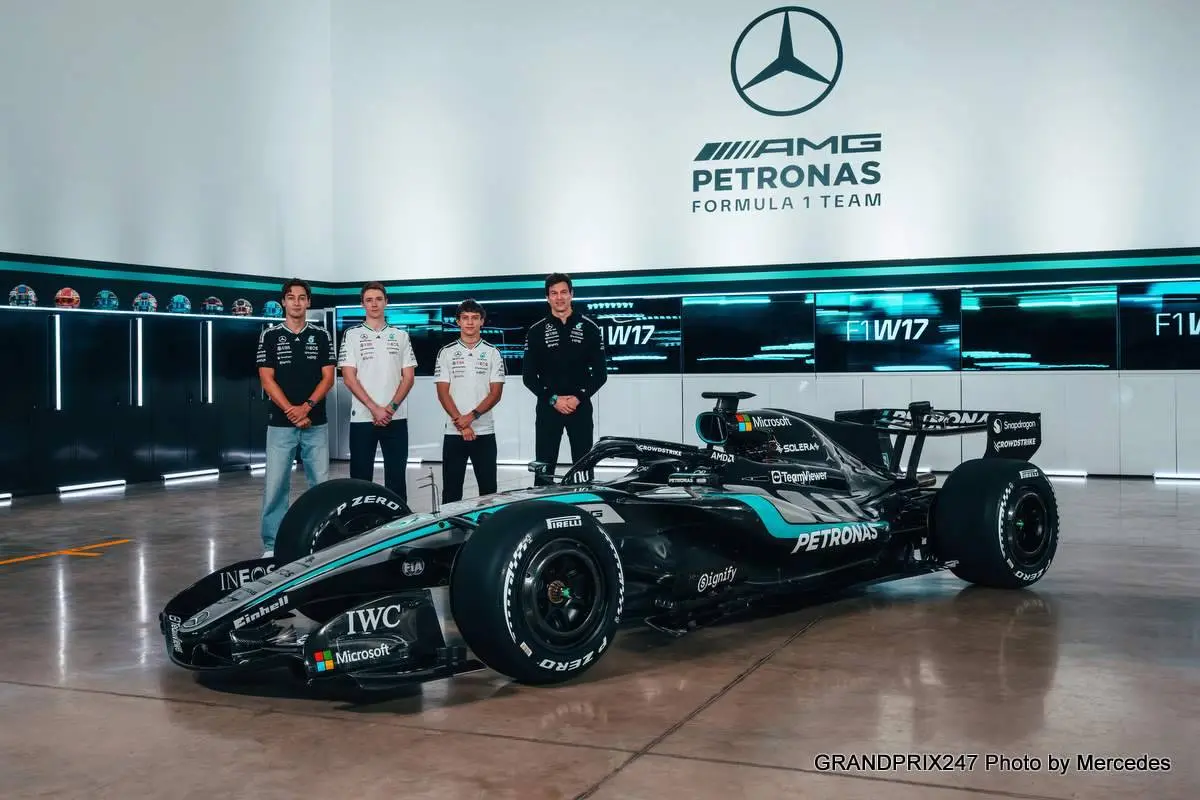
The Mercedes-AMG PETRONAS F1 Team has taken its first formal step towards the 2026 Formula 1 season with a digital launch that introduced the Mercedes AMG F1 W17 E PERFORMANCE and outlined the scope of change facing the sport.
With a comprehensive reset of technical regulations looming, the team framed the W17 as the product of an all-encompassing rethink across power unit, chassis, aerodynamics and operations.
Team Principal and CEO Toto Wolff positioned 2026 as a defining inflection point for both the organisation and Formula 1: “2026 represents a decisive moment for our team and for the sport.
"The upcoming season will be shaped by some of the most demanding technical regulation changes we have faced. These rules will test every aspect of our organisation, while also creating significant opportunities to innovate and set new performance benchmarks.
"We approach this next era with clear ambition, focused execution, and an uncompromising commitment to delivering results," Wolff added.
Power unit reset anchors Brackley–Brixworth integration

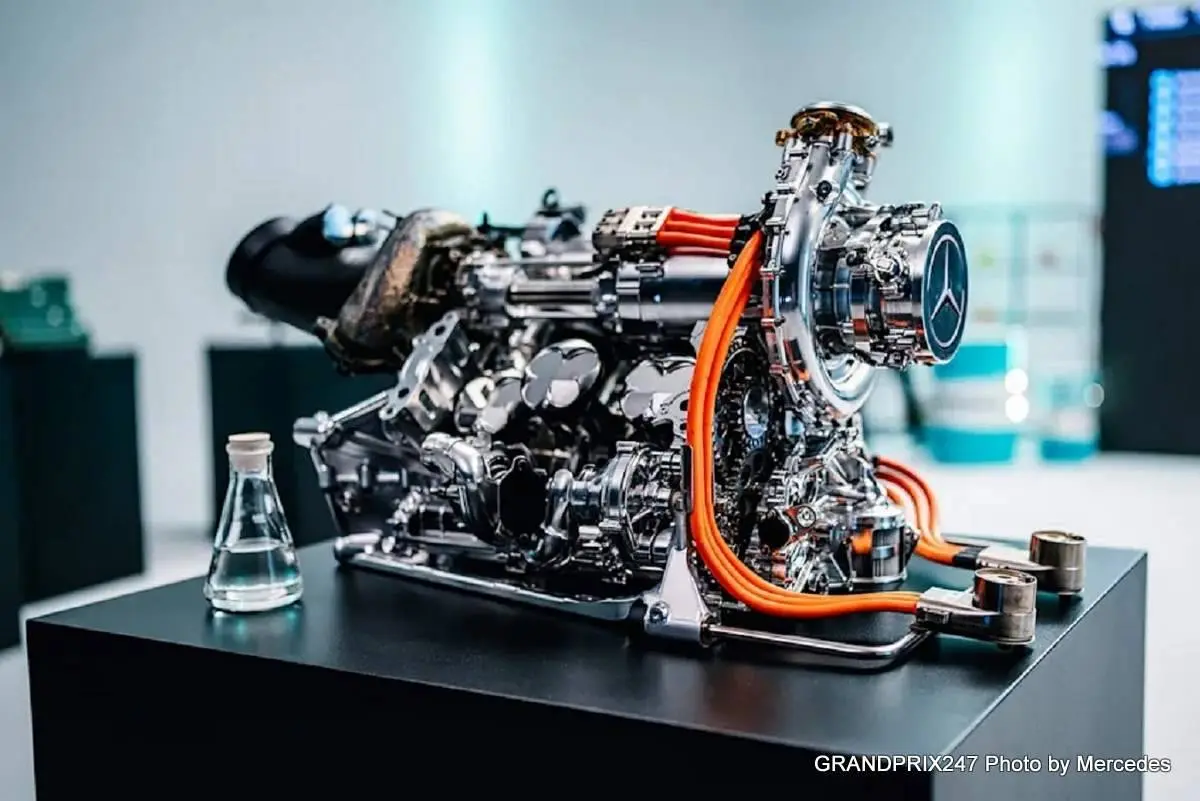
At the centre of the W17 project sits an all-new hybrid power unit developed by Mercedes AMG High Performance Powertrains for the 2026 regulations. The architecture delivers a near 50:50 split between internal combustion and electrical output, removes the MGU-H entirely, and increases MGU-K power from 120 kW to 350 kW. These changes require new approaches to energy recovery and deployment across a lap.
The power unit runs on advanced sustainable fuel developed with PETRONAS, engineered as a drop-in solution designed to reduce lifecycle carbon impact while maintaining performance. Mercedes emphasised that the W17’s cooling layout and aerodynamics have been conceived alongside the power unit from the outset to ensure thermal robustness and energy efficiency under all operating conditions, from heavy braking zones to extended full throttle running.
Hywel Thomas, Managing Director of Mercedes AMG HPP, underlined the scale of the task: “The 2026 Formula 1 season marks an entirely new chapter for the sport and particularly for those at the coalface of powertrain development.
"As Managing Director of Mercedes AMG High Performance Powertrains, I have never seen a challenge like this: new power unit architecture, sustainable fuels, greater hybrid emphasis, all converging at once together with a whole new car. It is not merely an evolution; it is a revolution.”
Thomas highlighted the compressed development cycles now required, he added: “What distinguishes this era is the pace at which we must learn.
"The integration of advanced sustainable fuels, increased electrical hybridisation and newly defined energy deployment strategies demands a faster feedback loop.
"We cannot rely on long testing cycles to polish solutions. Efficiency is mission critical, both on the dyno and the track," Thomas concluded.
PETRONAS Executive Vice President and CEO Downstream Datuk Sazali described fuel as a fully integrated performance element, adding: “Fuel is fundamental to performance in Formula 1 as it powers every lap and every acceleration on track.
"The 2026 regulations have reinforced the need to formulate fuels differently, with performance, efficiency and sustainability designed together. Our advanced sustainable fuels are the result of years of formulation work and continuous engine testing.”
Chassis rules shrink the car and redefine performance tools

The W17 has been designed around chassis regulations that mandate a shorter wheelbase by 200 mm, a reduced width of 100 mm, and a minimum weight reduction of approximately 30 kg. Active aerodynamics, with movable front and rear wings, replace the Drag Reduction System and are intended to manage the balance between drag and downforce across straights and corners.
Narrower tyres at both axles aim to cut drag and mass, while revised suspension kinematics complement the aerodynamic reset. Energy deployment strategies using Boost and Overtake modes are set to play a central role in racing performance under the new framework.
Technical Director James Allison described the regulations as a complete transformation, he said: “This is not just a tweak to the regulations. It is a wholesale transformation of almost every aspect of the car. Power unit, chassis, aerodynamics, tyres, all are being changed at once.”
Allison stressed the mindset behind the project, adding: “We hope we have brought the necessary courage and commitment to make the project a success.
"We have made our best judgements during the design phase, and we will continue to innovate relentlessly now that the cars are running. Regulation changes are the lifeblood of Formula 1 advancement.
"They challenge every assumption and reward teamwork and ingenuity.”
Driver line-up retained as continuity meets development focus

Mercedes confirmed continuity in its race driver pairing, with George Russell and Kimi Antonelli remaining after a productive first season together in 2025. Russell secured 2 victories and finished 4th in the Drivers’ Championship, while Antonelli claimed multiple podiums and his first Sprint pole position in Miami.
Fred Vesti steps up to the role of Third Driver, combining simulator duties and race weekend support with an active IMSA programme.
Wolff outlined the philosophy behind the line-up, he explained: “George, Kimi, and Fred represent everything our driver programme stands for.
"George has become one of the most complete and dependable racers in the sport.
"Kimi brings talent and fearlessness, matched with an eagerness to learn. Fred provides vital continuity and technical insight that strengthens us behind the scenes.”
The team also added several Development Drivers, including F1 Academy champion Doriane Pin and Formula 2 race winner Joshua Dürksen, alongside continued simulator support from Anthony Davidson.
Visual identity evolves alongside regulations

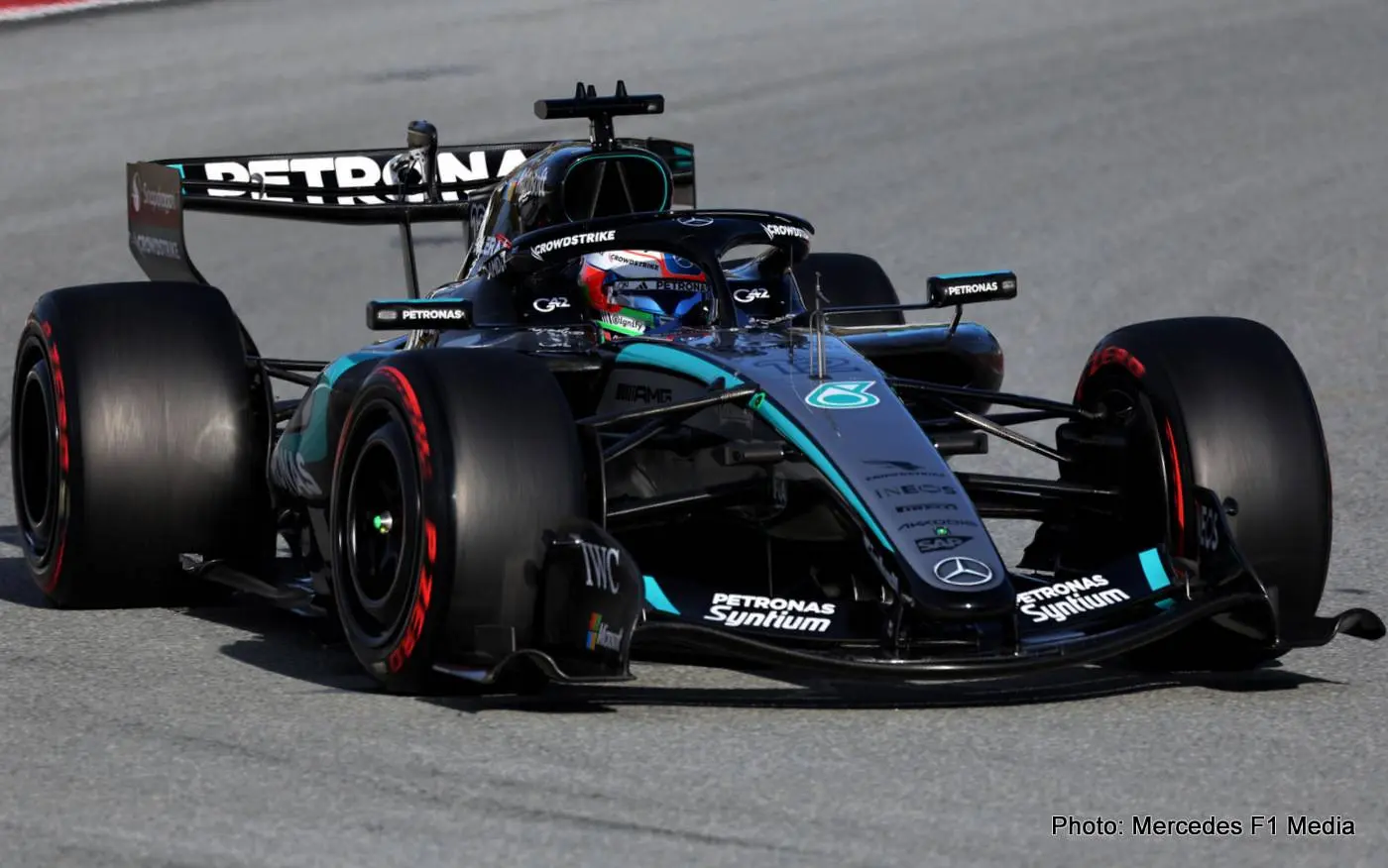
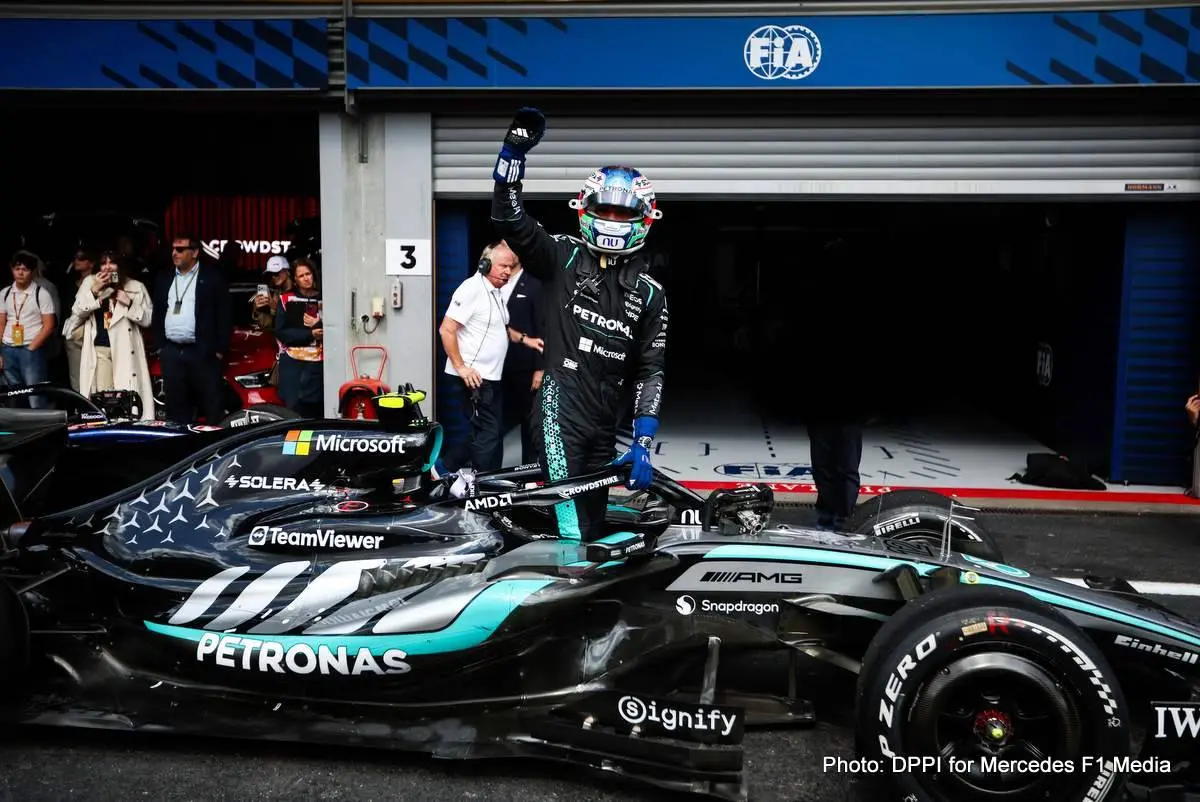
Mercedes also revealed a refreshed visual identity for the W17. A refined team logo accompanies a new livery built around a flowing PETRONAS green line that transitions between traditional Mercedes silver and deep black.
AMG inspired rhombus detailing features on the sidepods, while the three pointed star pattern remains prominent on the engine cover, signaling continuity within a clearly defined new era.
As the 2026 reset approaches, Mercedes has framed the W17 not as a refinement of the past but as a foundational platform for the next cycle of Formula 1 competition.
loading
Latest News
Loading