Stroll and the recurring wrist injury. What's really going on?
F1 NewsSaturday, 14 June 2025 at 13:47
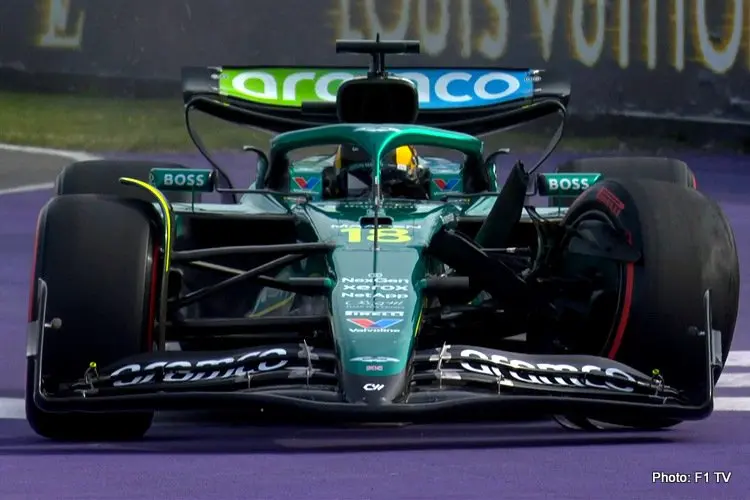
Aston Martin declared Lance Stroll fit for his home Canadian Grand Prix after he was forced to withdraw from the race in Spain two weeks earlier due to a flare-up of a two-year-old wrist injury. Formula 1 fans are asking what's going on?
The 26-year-old Canadian had reported pain following qualifying in Barcelona and was pulled from Sunday’s race to undergo a minor procedure. In the short time since, it is presumed that Stroll received the best available treatment to manage the recurring discomfort. The team confirmed he completed a private test ahead of Montreal and he was subsequently cleared to return.
But the issue has cast fresh doubt over Stroll’s physical readiness and long-term racing fitness. He crashed in FP2 on Friday at Circuit Gilles Villeneuve, bringing out the red flags after just a handful of laps, rekindling concerns that the injury or the rush to return may not be fully behind him.
Stroll himself has been evasive about the nature of the flare-up, telling reporters, “I don’t really want to get into it… it’s just my medical privacy.” While he insisted the crash was not caused by discomfort, saying, “I wasn’t in pain in the car, I just lost the rear,” the optics of yet another incident invite scrutiny.
This is not merely a matter of form. It is a safety concern. Formula 1 is a dangerous sport, and any lack of physical readiness could have serious consequences not just for Stroll but for those sharing the track with him. "Motorsport is Dangerous", it says on the tickets.
From Crash to Recurrence: A Two-Year Timeline

Stroll’s wrist injury dates back to a pre-season cycling crash in February 2023. While training in Spain, he suffered a displaced fracture in his right wrist, additional fractures in his left hand and wrist, and several broken toes.
He underwent surgery on the right wrist within 48 hours, with metal screws inserted by Dr Xavier Mir in Barcelona. The left wrist was managed non-surgically but required extensive rehab.
Despite missing pre-season testing, Stroll returned for the 2023 season opener in Bahrain. He completed the full campaign, finishing tenth in the standings with 74 points. Although he admitted to driving in pain early on, there were no missed races.
In 2024, Stroll appeared to be fully fit, competing in all 24 races and avoiding any public issues with the injury. That changed in 2025. Stroll began to feel recurring pain in the early rounds of the season, particularly during the triple-header in Imola, Monaco and Barcelona. He later revealed, “It’s something that had been bothering me for a couple of months.”
Aston Martin withdrew him from the Spanish Grand Prix, citing worsening symptoms. A procedure was performed by the same medical team that operated on him in 2023. It was described as preventive and minor, but the timeline suggests a chronic underlying issue.
What’s Really Going On With Stroll’s Wrist?

With little official information available and only vague public statements from Stroll and Aston Martin, speculation over the true nature of the injury has been unavoidable.
Thanks to ChatGPT-based analysis sourced from respected orthopaedic and sports injury sources, including the Mayo Clinic, the Cleveland Clinic, OrthoInfo, and the British Journal of Sports Medicine, several possibilities emerge.
Stroll’s 2023 surgery could have left him with joint surface irregularities or cartilage damage, leading to post-traumatic arthritis. Symptoms include pain, stiffness and reduced load tolerance, all of which align with the issues reported during the 2025 recurrence.
TFCC (Triangular Fibrocartilage Complex) Injury
If the left wrist sustained ligament or cartilage damage in the original crash, particularly to the TFCC, and was not surgically treated, it may have healed poorly or remained unstable. TFCC tears are known to cause long-term pain, clicking and weakness.
Hardware Irritation or Stress Shielding
The metal screws in his right wrist could be causing tissue irritation or biomechanical imbalance. Sometimes hardware needs to be revised or removed if it leads to chronic discomfort or bone stress redistribution.
Scapholunate Ligament Instability
Common in wrist trauma, scapholunate ligament damage can result in delayed-onset instability. Symptoms often escalate over time and under high-repetition stress, which Formula 1 driving demands.
Overuse Tendinopathy
Given the physical demands of F1, overuse injuries such as tendinopathy of the flexor or extensor muscles are possible, particularly in a wrist previously weakened by fracture. Inflammation may have built up gradually before peaking mid-season.
Nerve Entrapment or Compartment Syndrome
Less likely, but not impossible, are complications like nerve entrapment or compartment syndrome. These can cause numbness, pain or grip weakness and may require surgical release. But the above are all speculative conclusions. The reality is that Stroll's taking the "medical privacy" route could mean we will never know.
In closing, Stroll insists he is fit and ready. “I’m feeling good… confident it won’t be an issue going forward,” he said ahead of the Canadian Grand Prix. But that confidence will be tested. Chronic wrist issues, especially involving soft tissue or post-surgical complications, rarely go away without ongoing intervention, or in some cases, rest from racing altogether.
With Aston Martin under pressure to improve results and no clear alternative in their current driver line-up, the team will be watching closely. If the injury recurs again or impacts performance, more questions will follow. For now, Stroll is back in the car. But is the wrist story over?
Lance Stroll and the recurring wrist injury. What's really going on?
Latest News


Loading