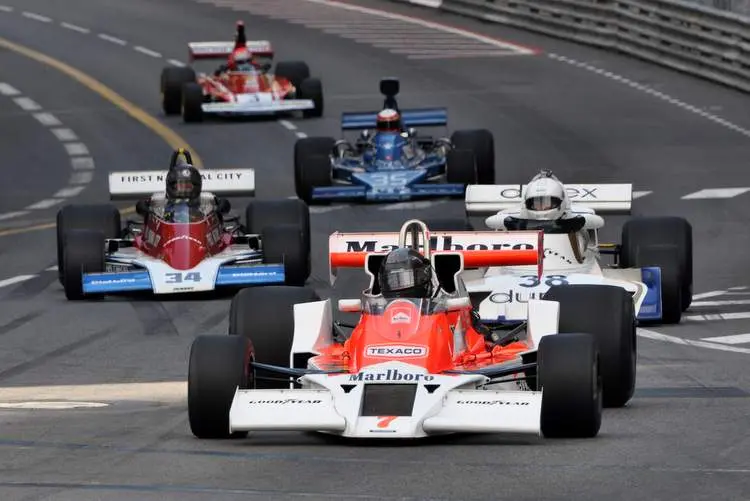
A couple of weeks ago I got a call from a Credit Suisse representative informing me that I had won the best picture in the 2016 Credit Suisse Photo Award at Grand Prix de Monaco Historique.
Obviously, I was pleased and somewhat bemused that the announcement was made almost two years since I entered the competition. In fact, I had forgotten about it until I was called!
Anyway, now that I have taken advantage of the bragging opportunity here's what this piece is actually about:
I must admit covering the Grand Prix de Monaco Historique two year ago - the event happens every other year - was a great experience. Up close to those seventies and eighties cars is pure bliss, and needless to say, I flung the earplugs in the bin! I wanted the pure sound that tickles my eardrums all weekend long.
The seventies and eighties were when F1 hooked me, so those cars had special meaning to me each time they roared past - yes they roar...
As a bonus they throw in the cars of the sixties and fifties during the course of the weekend, and you have a feast for racing and Formula 1 aficionados that is hard to match.
The cars of a few decades ago are awesome to photograph. Low, mean with huge tyres - and getting up so close to these beauties, then hearing those V8s and V12s crackling around the Principality is pure heaven.
This is the cool thing about Formula 1 cars of the seventies, eighties and even nineties - we can still see them, hear them, overdose on the pure beauty that made them and that era so memorable to many of us who were around at the time. Even those who were not of that era are fascinated.
Indeed the business of restoring and running old Formula 1 cars is a thriving industry with many specialist teams and engineering houses catering specifically for this genre of the sport. In other words, these classic F1 cars are going to be around for a very long time.
They will be raced and for sure not driven in anger as they were in their heyday, but they still provide us all the deja-vu we can handle.
And if you are rich or a lotto winner, you can pick up a good race ready Formula 1 classic for anything from $100,000 to over a million dollars.
If you really in the pounds seat you could buy Alan Jones' FW07/01 at a recent auction, while Ayrton Senna's McLaren MP4/8A was also under the hammer earlier this year.
Watching these iconic cars on track - with names of the great original drivers still emblazoned on the cockpits - is a pure 'Back to the Future' experience, still magical and I urge anyone who has the chance to visit a classic F1 event do so. Worth the effort.
Now, fast forward 30 or so years and for argument's sake create a scenario in 2050 where this year's Mercedes W09 is up for sale and bought by our man Richie Richer.
First question: What would it cost?
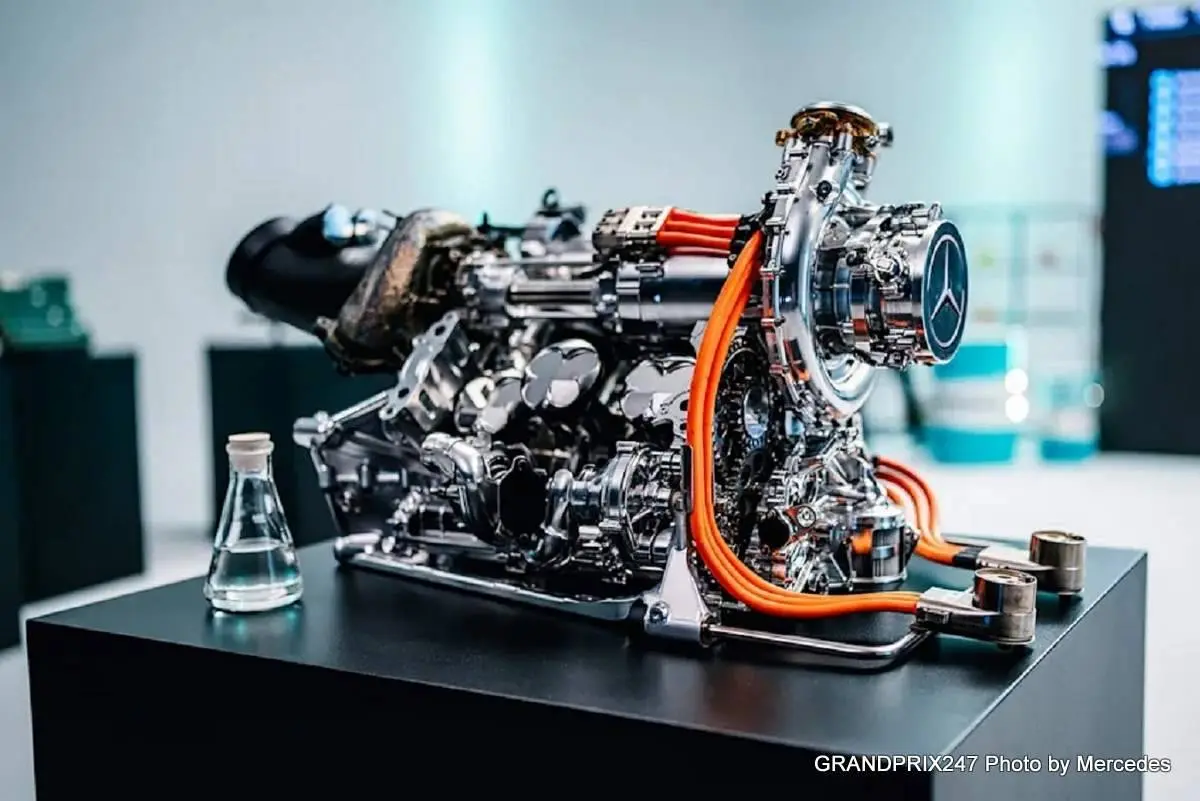
I don't know why but $25-million (correct me if I am wrong) springs to mind mostly because of the unbelievably expensive power units of this era. Let's also not factor in inflation.
So our scenario continues: In 2050 Richer finds the $25-mil needed and buys Lewis Hamilton's ready to race Mercedes-AMG F1 W09 EQ Power+ he used in 2018.
Richie picks up the W09 with his trailer and takes it home where it has pride of place in his purpose-built garage with two other F1 cars from the eighties and nineties that Richie collected since his financial windfall.
One day he decides to take it out on an F1 classic track day at Silverstone International Circuit to get some mileage and feel for the car.
Out with the manual, he looks up the section: How to start the W09.
There it says: "You need five engineers to start the Mercedes-AMG F1 W09 EQ Power+. Each with a specific role behind a computer booting it up in sequence before it will fire-up."
"Please note if the sequence of inputs by the engineers is incorrect abort the process immediately. Resume from the beginning."
"Note: The wrong input sequence can result in huge damage to the car, including meltdown to silver puddle state."
The manual adds in the footnotes: "During the 2018 season the engineers who started Hamilton's car for every session were Tom, Dick, Harry, Pedro and Joel with Mickey ready to take over the mouse if any of his colleagues fell ill or unavailable."
In a nutshell to get the engine on the W09 to start making a noise of sorts, the quintet of engineers start the fire-up sequence procedure with Tom doing his thing on his laptop, followed by Dick, Harry and Pedro, in turn, doing their stuff on PCs and then Joel clicking the Vroom-Vroom button on his iPad that finally fires up the M09 EQ Power+.
So there's Mr Richer at Silverstone (in 2050 on a rare sunny day) trying to fire up this W09.
But there is a problem, the three of engineers required are by now retired octagenarians (or older) with little desire to zimmerframe-it back to a pit garage. Another has passed, while two that were keen cannot fire up the power unit without the three others. And where were they going to find all those old computers and apps to do the job?
Okay, so you get the picture. Who will fire these things up in thirty or forty years from now? No one.
Today's Formula 1 cars will probably become museum pieces or whatever they do with the most expensive cars in the world that you can't drive unless five blokes mouse click all the right icons in the proper sequence.
Add to that the fact that spares will be impossibly expensive. And what would a spare engine cost? Or a front wing with all those appendages? Five or ten million?
Finally the Halo!
With respect, most of the well-heeled gentlemen (and others) who can afford classic F1 cars are no longer spring chickens and the majority of the drivers are portly fellows. Our fake man Richie himself a good 90kgs... how the hell is he going to squeeze in and out of the cockpit with that friggin halo in the way?
Sure the above is a tale of fiction, a trivial amid far more well known and serious reasons on how this era F1 cars have failed the sport but it highlights how, in terms of the much bigger picture, short-sighted rulemakers have been with this era's cars - for his I place the blame squarely on the FIA led by Jean Todt.
What was the governing body of the sport thinking when it devised and agreed on this Formula 1 power unit disaster?
Because in devising what we have now they have stolen from us what the essence of our sport is all about, and the very scary bit is that the architects of the past mistakes remain in the seat of power plotting the next chapter of Formula 1's future.
Latest News
Loading