Inside Line: Proper Formula 2 is key to the future of Formula 1
F1 NewsSaturday, 02 February 2019 at 19:14
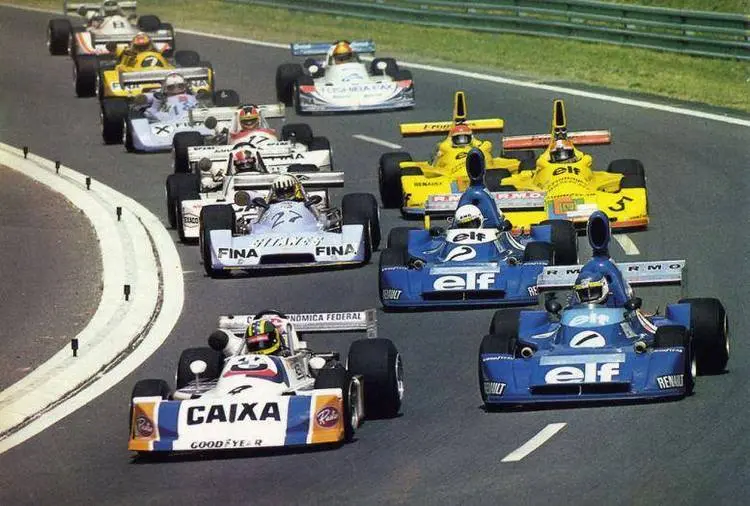
While the future of Formula 1 is being plotted with above all else the big picture in mind, it is a fact the little or no thought is being put into Formula 2 as a proper feeder series for the top flight not only for drivers but also for teams and even engine manufacturers.
Formula 2 has existed in different guises since the FIA championship kicked off in 1950, because F1 cars were scarce most races allowed F2 spec cars to compete.
What we have today is hardly a real Formula 2 in the true sense of the word, if it was it would not be a one-make series. Instead, it would be ten small constructors putting out two cars each with a selection of say three or four power units.
In other words, Formula 2 would be a mini version of F1. As fanciful as this sounds this is how it was once upon a time before Bernie Ecclestone and his cohorts in the FIA pulverised anything that was good in motorsport in favour of Formula 1.
But in doing so the gang did the sport no favours because they basically killed the industry of teams constructing race cars and turned it into an industry of teams running race cars.
Racing teams with Formula 1 aspirations have no avenue to truly prove themselves, as there is no need to build and race their own cars. No proving grounds exist.
As a result when Formula 1 needed teams to step up to the big league, back in 2010, what we got inadequate teams to step up, remember HRT, Manor, Marussia, Manor, Lotus, Caterham - many names for three long defunct teams.
Look around at the landscape now and nothing has changed, yes there are some great Formula 2 operations at the moment, but can they even think of embarking on a Formula 1 project? Of course not, they have no constructor experience and are unlikely to have in the current guise of the sport.
There is a place for one-make junior series' and these should abound, but when things get serious: one step away from Formula 1, should the onus not be tp also prepare teams for the next step?
Most sports have divisions, so should motorsport - Formula 2 and Formula 3 should be downsized divisions of Formula 1 but not exclusively to groom drivers, but also prepare constructors and engine builders for the top flight.
Below that - Formula 4, Formula Renault, Formula Ford etc etc - there is a place for single-make series.
The idea of Formula 2 being the breeding ground also for constructors is hardly a new thing. Once there thrived an excellent example of how Formula 1 benefitted from it's feeder series.
One of the best examples of Formula 2 success bearing fruit in Formula 1 is Ron Dennis, the man who made McLaren the second most successful team in Formula 1 history second only to Ferrari.
The tale of car mechanic turned Formula 1 team maestro and automotive mogul is well told, in a nutshell: In 1975 Dennis ran a Formula 3 team under the name Project Three, a few years later he added Project Four which ran a March in Formula 2 for a couple of years.
The success Dennis enjoyed, with his well run and immaculate teams, caught the attention of Marlboro who were heavily involved with McLaren, struggling at the time under the leadership of Teddy Mayer.
In a rapid coupe d'equipe, Dennis was put in charge of McLaren and the rest, as they say, is history. His time in Formula 2 important enough that subsequent McLaren's carried the MP4 (McLaren Project 4) naming prefix of all cars built at Woking during his long spell at the helm.
In the early seventies, Formula 2 constructors were plentiful. March, Chevron and Ralt built customer cars and were popular, but there were also independent outfits that entered F2 with the purpose of getting into F 1.
The likes of Toleman, who won the 1980 Formula 2 championship with Brian Henton, before they progressed to Formula 1 and will always be remembered as the team that gave rookie Ayrton Senna his break in F1. Since then the team was bought by Benetton and the rest is history.
March made their name in Formula 2 and Formula 3 while producing some handy Formula 1 cars for their own works efforts and customers. Hesketh and Penske were simply re-skinned Marches at one point.
One could argue that Dennis' Project 4 was not a constructor as they used March chassis, but the foundation for the future of his team was set during those early years.
Those that used F2 as a stepping stone to F1 included, Team Surtees who were F2 champions in 1972 before their foray into Formula 1, Renault were champions with Jean Pierre Jabouille and Rene Arnoux (1975 and 1976) before they went on to revolutionise Formula 1 with their turbo concept.
Minardi, Onyx, Osella and Honda used Formula 2 as a test bed for Formula 1 projects. Before them, in the sixties, Tyrrell, Matra and Tecno all cut their teeth in the second tier while F1 teams (Brabham, McLaren and Lotus) also built F2 cars for customers and raced them as works entries.
The progression to Formula 1 was realistic and could happen because Formula 2 was a fertile grooming ground for drivers, teams, constructors and engine builders. While many were content to remain competing in the series that boasted massive grids in their heyday, others took it to the next level.
Of course, it will be argued that times have changed, expenses etc etc. All valid but instead of keeping it a one-make series, divide the load with say three or four F2 constructors each supplying three teams. Ditto in Formula 3.
In terms of engines, open it up to say two or three F2 engine manufacturers and if aligned to the prevalent F1 technical rules you have a mini-F1 in the proper sense.
History shows that by the time Ecclestone got his tentacles into Formula 1, circa mid-eighties, his scorched earth policy to all other forms of motorsport simply destroyed true Formula 2 as it was and should have evolved,
Subsequent resurrections of the F1 feeder series as Formula 3000, GP2 and now the rebranded F2 are hardly a breeding ground for constructors which Formula 1 sorely needs.
With a clean sheet of paper power-brokers and rule-makers of the sport have the opportunity to set a proper F2 structure that will bear fruit in the long term, because it is long past the time to stop thinking short term, The template for it to succeed is etched in the sport's history.
Latest News






Loading