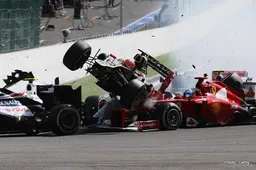
Inside Line: For Jules, again I ask why did you not stop the race?
F1 NewsSunday, 21 July 2019 at 12:41
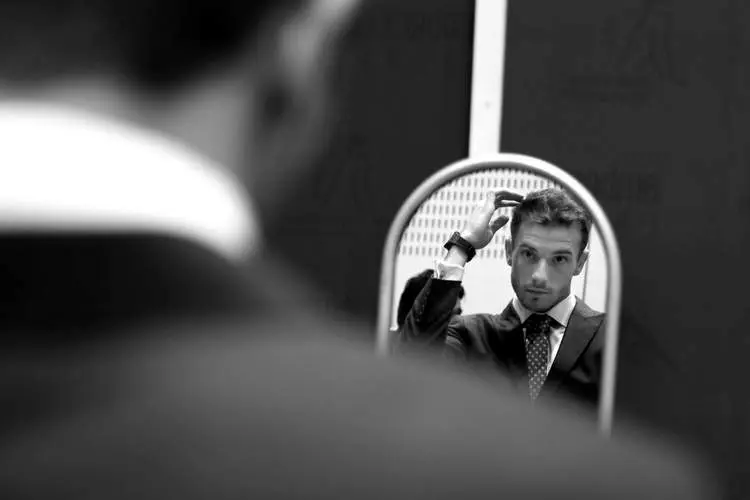
Be warned this is a long read but an important read for the integrity of our sport, whether it hurts or not, truth and reconciliation is very important in matters of life and death.
There is a skeleton in our Formula 1 closet that needs to be addressed. Everyone - fans, presidents, officials, drivers, families - we must all be on the same page for this to go away in peace. No trials, no judgements, no sentences. Just resolution.
Jules Bianchi was 25-years-old when he was robbed from us, he succumbed to injuries he suffered on a dark day at Suzuka ten months earlier and turning out the light on one of the most promising drivers of the era.
We dreamt of him as a potential Formula 1 World Champion, possibly with Ferrari, until that tragic day that shattered all our dreams.
In a nutshell, during the 2014 Japanese Grand Prix, Bianchi lost control of his Marussia in treacherously wet and raining conditions, he slid off the track and collided with a recovery vehicle employed to recover Adrian Sutil's stricken Sauber.
The orange car speared into the recovery tractor and resulted in the driver suffering a diffuse axonal injury. After emergency surgery, he was placed into an induced coma and remained comatose until his death on 17 July 2015. Four years ago, last week.
Remembering that day on the anniversary of his passing, sadly made me realise that there is unfinished business with regards to Jules and that fateful day in Japan. Unanswered questions that an official investigation has failed to answer, to this day, to my knowledge.
A panel was set up to investigate the crash, summing up their findings that was contained in a 300 pages dossier down to a couple of A4 pages summary (below) which they made public.
The findings outraged many, most of all the family because the crux of the matter was the FIA appointed committee was laying the blame on Jules with their finding that: "Bianchi did not slow sufficiently to avoid losing control."
Unsurprisingly at the time, the distraught family released a statement addressing the FIA report and it's findings, accusing it of failing "to identify where errors had been made which led to Jules’ death" and added that “Jules Bianchi’s death was avoidable."
Gary Hartstein, former Formula 1 doctor, also took issue with the findings and was quick to point out some glaring holes in the saga, "When we look at the composition of the panel, we realise that fully HALF the members have a clear and unambiguous conflict of interest in any investigation.
"The current positions, and indeed future careers in motorsport, of those panel members who are not dear personal friends of the FIA president [Todt] depend intimately on remaining in his good graces.
"Mind you, I am not impugning the integrity of anyone. That’s what’s so insidious with conflicts of interest. They only have to appear to exist to have their negative effects," added Hartstein.
For me personally, in the gallery, the glaring panel absentee was Charlie Whiting which inadvertently or not singles him out as the 'accused' in this saga or else, surely, he to should have been in that panel. He was Race Director as always, bossing the race, the uber-referee and making the calls on that fateful day.
Why did Charlie not stop the race with a red flag when long before the crash happened we were shouting for it to stop?
That is my first big question.
From what I have gathered the stewards did not even think about that option but were rather debating whether to deploy a safety car.
Charlie said as much in a press briefing afterwards, "We put double waved yellows out because we felt the incident could be dealt with without using the safety car.
"The next stage up is a safety car but, because the car was well away from the track and against the tyres, it is the normal procedure for us to follow under those circumstances. We didn't see any need for a safety car."
On TV a thousand miles away it was obvious to me and my mates watching the events unfold that the race should have been red-flagged a couple of laps before the accident as conditions were terrible and failure to do so allowed the race to go on unnecessarily and dangerously as it turned out, after which the tragedy was triggered.
Next question - and a crucial one for me - tell us about the helicopter and/or lack thereof?
This is what FIA chief medical officer Jean-Charles Piette told reporters: "The main referral hospital, which is Mie General Medical Centre, is 15km from the circuit. The distance by road is supposed to be 25 minutes under normal circumstances.
"When Jules had his accident, the chief medical officer told me at that moment that the helicopter can take off from the circuit but cannot land at the hospital.
"So we decided, as initially thought from the morning, to use a resuscitation ambulance to go to hospital. With a police escort, the duration of the transfer was 32 minutes."
Assuming this is all true, the next double-pronged questions I need to ask are: when were you first aware that the hospital was inaccessible by helicopter? Surely someone was monitoring this all race long?
This one bugs me big time as a one-time PR guy for Dubai Autodrome that helicopter better be there or the race won't happen. And if it can't fly out and land at the circuit's purpose-built helipad then there is no racing. Very, very simple rule, cast in stone for obvious reasons.
But these were ignored on the day because the conditions were such over the nearest hospital that no helicopter could land. With this information, 99.9% of race directors would have stopped the race. No helicopter, no race - I repeat.
And I am not alone in this question as Dr Hartstein poses the question far better than I could: "We were also told at Sochi that Jules’ condition at the end of that waterlogged siren-punctuated ambulance ride to the hospital was exactly the same as when he left the circuit.
"Are you kidding me?
"Don’t get me wrong. I have no doubt that my Japanese colleagues were indeed been able to make sure that Jules’ blood pressure, heart rate, oxygen saturation, expired carbon dioxide, etc (the EXTERNAL parameters, the ones we measure easily) were unchanged over 40 minutes.
"But find the nearest neurosurgeon and ask him if the brain of a patient who’s had a head injury with immediate coma is the same after 40 minutes of transport as after 20 minutes [a helicopter would take], and he’ll look at you like you were nuts. Because you are.
"Why did Dr Saillant not address the question of EXACTLY when the Medical Delegate (his personal appointee) knew that the helicopter could not land at the receiving hospital?
"Under difficult circumstances, this often requires near real-time communication with the helicopter crew. The delegate is up in race control with nothing else to do during the race. That’s why he’s there.
"Why was racing not stopped? Hartstein also questioned.
People can point to an axe to grind by the Doctor, but so be it and let him grind it if there is truth in that and his questions match, mine then he has my ear. Before you spear into him read his website and get to know why guys like him are marginalised when they, in fact, speak the most sense.
Whatever his 'crimes against bureaucracy' he echoes my concerns not only about the death of a great young chap destined for so many great things but also cronyism as the enemy of the people. We are obligated to stand up against this, not to apportion blame and impose sentence but only to seek the truth unhindered.
This is what paralysed F1 driver Phillipe Streiff told Radio Free at the time of the panel findings being made public: “Shame on Jean Todt, who ordered and organised at the last World Motor Sport Council in Doha, Qatar, the report about the accident of Jules Bianchi. It was a document prepared by a group of ten friends, including Professor Gerard Saillant, to clear the errors of the FIA."
Notably, the French race driver retracted: "I let myself get carried away in front of the camera. I ask Jean Todt and Gerard Saillant, who are well aware of my health problems, to excuse me. I regret having said things about them that are totally out of line with the consideration they both deserve."
I am no spring chicken and have been around the block many times, so I know a 'squeeze' when I see one as well as the 'offer you cannot refuse' tactic used endlessly to silence uprisings.
I have at times believed in a swell of support behind me when there was none, but on this issue I gather that I am not alone in this crusade, which it must be for true F1 fans.
Let us together, ascertain the truth and if need some people will have to put up their hands and "say we are humans and we all make mistakes, we made a mistake."
Hopefully, if they were indeed errors-of-judgement under extreme duress as evidence appears to point we must accept this and not fling blame, but rather strive never make to the same mistakes again.
Afterall Charlie was human as were his team on duty that day. The accusations of "cover-up-by-cronies" can like cancer grow, unless anyone connected the investigation panel wish to enlighten first the Bianchi family, and in no particular order me, Doc Hartstein and our readers - all F1 fans for that matter - by answering the three unanswered questions posed in the conclusion of this piece
Worth noting from, a man who cries every day for the loss of his son, the father Philippe Bianchi who said: “This was not normal circumstances, so we must not say that Jules was to blame in this accident. It must also never happen again, so what do we most lack right now? Justice and truth."
Maybe I have missed something but there is no public resolution to this that I know of. The Bianchi family are still aggrieved by all accounts and Hartstein has not retracted any of his statements.
FIA compiled Jules Bianchi Accident Panel Report dated 03 December 2014
The following is a summary of the findings of the Accident Panel's examination of the circumstances surrounding Jules Bianchi's crash at the Japanese Grand Prix on 5 October 2014 in Suzuka.
On lap 43 of the Japanese GP, Jules Bianchi lost control of his Marussia in Turn 7 and struck a mobile crane that was recovering Adrian Sutil’s Sauber, which had crashed the lap before. Bianchi suffered life-threatening injuries to his head and was evacuated to hospital by ambulance.
The weather conditions at the time were rain and a deteriorating track condition, and the section of the track where the accident occurred was subject to double yellow flags, due to Sutil’s crash.
A review of all the evidence and other information about the events leading up to Bianchi’s accident has been carried out by the 10-man Accident Panel, appointed by the FIA.
The Panel has issued a 396-page report on their findings with recommendations for improvements, many relevant to all of motorsport. This has been presented to the FIA World Motorsport Council.
Conclusions
The review of the events leading up to Bianchi’s accident indicate that a number of key issues occurred, which may have contributed to the accident, though none alone caused it:
- The semi-dry racing line at T 7 was abruptly narrowed by water draining onto the track and flowing downhill along it. Both Sutil, and Bianchi one lap later, lost control at this point in T 7.
- Sutil’s car was in the process of being recovered by mobile crane when Bianchi approached Sectors 7 and 8, which include the part of T 7 where the recovery was taking place. Sectors 7 and 8 were subject to double yellow flags.
- Bianchi did not slow sufficiently to avoid losing control at the same point on the track as Sutil.
- If drivers adhere to the requirements of double yellow flags, as set out in Appendix H, Art. 2.4.5.1.b, then neither competitors nor officials should be put in immediate or physical danger.
- The actions taken following Sutil’s accident were consistent with the regulations, and their interpretation following 384 incidents in the preceding 8 years. Without the benefit of hindsight, there is no apparent reason why the Safety Car should have been deployed either before or after Sutil’s accident.
- Bianchi over-controlled the oversteering car, such that he left the track earlier than Sutil, and headed towards a point “up-stream” along the barrier. Unfortunately, the mobile crane was in front of this part of the barrier, and he struck and under-ran the rear of it at high speed.
- During the 2 seconds Bianchi’s car was leaving the track and traversing the run-off area, he applied both throttle and brake together, using both feet. The FailSafe algorithm is designed to over-ride the throttle and cut the engine, but was inhibited by the Torque Coordinator, which controls the rear Brake-by-Wire system. Bianchi’s Marussia has a unique design of BBW, which proved to be incompatible with the FailSafe settings.
- The fact that the FailSafe did not disqualify the engine torque requested by the driver may have affected the impact velocity; it has not been possible to reliably quantify this. However, it may be that Bianchi was distracted by what was happening and the fact that his front wheels had locked, and been unable to steer the car such that it missed the crane.
- Bianchi’s helmet struck the sloping underside of the crane. The magnitude of the blow and the glancing nature of it caused massive head deceleration and angular acceleration, leading to his severe injuries.
- All rescue and medical procedures were followed, and their expediency are considered to have contributed significantly to the saving of Bianchi’s life.
- It is not feasible to mitigate the injuries Bianchi suffered by either enclosing the driver’s cockpit, or fitting skirts to the crane. Neither approach is practical due to the very large forces involved in the accident between a 700kg car striking a 6500kg crane at a speed of 126kph. There is simply insufficient impact structure on a F1 car to absorb the energy of such an impact without either destroying the driver’s survival cell, or generating non-survivable decelerations.
It is considered fundamentally wrong to try and make an impact between a racing car and a large and heavy vehicle survivable. It is imperative to prevent a car ever hitting the crane and/or the marshals working near it.
Recommendations
A number of recommendations for improvements have been proposed, relevant in many cases to all of motorsport. They include the following:
- A new regulation for double yellow flags Proposed new Appendix H Article (possibly under 2.4.5.1 b):
The Clerk of the Course will impose a speed limit in any section of track where double yellow flags are being displayed.
It is proposed that a Working Group, made up of FIA Race Directors and Stewards should meet and draw up detailed regulations and guidelines for the application of this new regulation, in time to apply it in 2015 across international circuit racing. - Safety-critical software: A review of safety-critical software and measures to check its integrity will take place.
- Track drainage: Guidelines on circuit drainage will be reviewed, to include drainage off access roads.
- 4-hour Rule: Article 5.3 of the F1 Sporting Regulations states that:
However, should the race be suspended (see Article 41) the length of the suspension will be added to this period up to a maximum total race time of four hours.
It is proposed that a regulation or guideline be established such that the Start time of an event shall not be less than 4 hours before either sunset or dusk, except in the case of night races.
It is also recommended that the F1 Calendar is reviewed in order to avoid, where possible, races taking place during local rainy seasons. - Super Licence. It is proposed that drivers acquiring a Super Licence for the first time should undertake a course to familiarise themselves with the procedures used by F1 in running and ensuring the safety of an event.
- It is also proposed that new licence holders pass a test to ensure that they are familiar with all the relevant regulations.
- F1 risk review. Consideration will be given to a review of F1 risk, in order to ascertain whether there are any significant holes in the safety defences, such that an unforeseen combination of circumstances could result in a serious accident.
- Tyres. It is part of the challenge of a racing driver to drive his car as fast as possible given the track conditions combined with the characteristics of his tyres. Although the characteristics of the wet weather tyres provided by Pirelli did not influence Bianchi’s accident or its outcome in any significant way, it is recommended that provision is made for the tyre supplier to develop and adequately test wet weather tyres between each F1 season, such that it is able to supply the latest developments to the first event.
Composition of the Accident Panel
- Peter Wright, President of the Safety Commission Members
- Ross Brawn, former Team Principal of Mercedes F1 Team, Brawn Grand Prix and former Technical Director of Scuderia Ferrari
- Stefano Domenicali, former Team Principal of Scuderia Ferrari
- Gerd Ennser, Chief Stewards’ representative
- Emerson Fittipaldi, President of the FIA Drivers’ Commission, F1 Steward
- Eduardo de Freitas, WEC Race Director
- Roger Peart, President of the Circuits Commission, President of the ASN of Canada, F1 Steward
- Antonio Rigozzi, Advocate, Judge at the International Court of Appeal of the FIA co-opted by the teams
- Gérard Saillant, President of the FIA Institute and President of the Medical Commission
- Alex Wurz, President of the GPDA, drivers’ representative
The Way Forward
This is not a call for a vendetta or a witch-hunt but rather a need to put to rest for all concerned the anxiety of the unknown. We need to think about Jules with love and affection, not feel obliged to find the truth for him in this manner.
Just to dispell the 'Jules-was-speeding' myth here goes from the Frenchman's team: "The Marussia F1 Team is shocked and angered by these allegations. Jules did slow down under the double waved yellow flags. That is an irrefutable fact, as proven by the telemetry data, which the team has provided to the FIA.
"In the FIA press conference which took place in Sochi on Friday 10 October, Charlie Whiting, the FIA’s Race Director, confirmed that the team had provided such data, that he himself had examined this data and that Jules did slow."
Together as the F1 community we should demand this be put to rest once with answers to a few key questions which we have no answer to and really need answers devoid of spin-doctor tinkering:
- Why was the race not stopped or safety car deployed when the no-end-in-sight-monsoon-like weather should have dictated to do so?
- Why was the race not stopped or safety car deployed when the tractor was parked in the run-off area of the circuit's trickiest and wettest complex?
- Why was the race not stopped or safety car deployed when there was no helicopter access to the closest hospital?
We cannot blame Jules for doing what racing drivers do - drive fast no matter the circumstances - and blaming him for the accident, as they have, is a stain we have to remove from his legacy.
Imagine this allows fans of our sport, now and future, to read about him one day and come to the bit that says Jules died because: "Bianchi over-controlled the oversteering car" and "did not slow sufficiently to avoid losing control."
What will they think? "Ah well, too bad trying too hard and just drove too fast when he shouldn't have. And, wow, look how great the FIA were in handling the whole matter. All those important people on the panel. Maybe Jules was too much of a hotheaded. That's racing for you..."
God forbid that happens! And seriously is this what we are expected to do?
https://www.grandprix247.com/2016/10/06/bianchi-i-want-justice-and-truth-for-jules/
Latest News
Loading