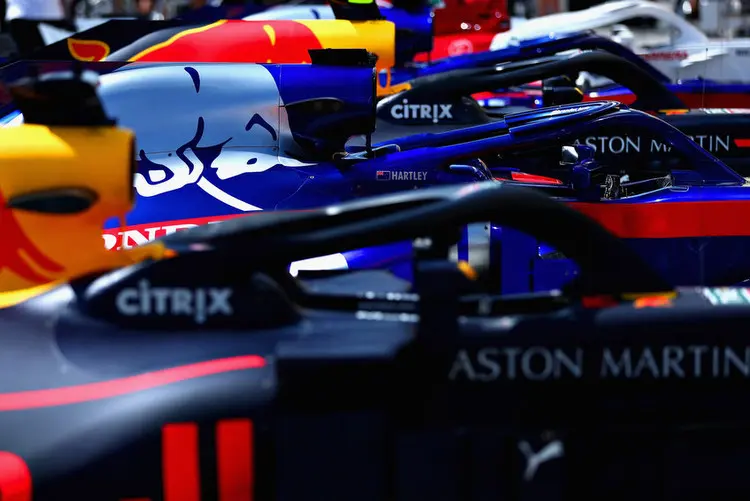
The Hungaroring - venue of the 2018 Hungarian Grand Prix - provides teams with an interesting challenge, demanding a very strong chassis in the mix of medium and slow speed corners, while also rewarding straightline speed in sector one and good cooling efficiency.
Although rewarding engine power less than at other events, the Hungaroring provides an all-round test of an F1 car. An added complication this year will be the introduction of a new tarmac surface.
 Downforce vs Drag
- Like Monaco and Singapore, drag is not a critical performance differentiator at the Hungaroring thanks to its lack of long straights.
- A mixture of low, medium and high speed corners dominates the circuit, requiring as much downforce as possible in a range of conditions such as roll, steer, yaw and pitch combinations.
- Therefore, teams should opt for their maximum downforce/drag aerodynamic set-up. However, it will be interesting to see if Red Bull choose to run with their Monaco spec rear wing, t-wing and monkey seat, which was a step more aggressive than their previous high downforce rear wing configuration, given the high drag penalty in Sector One.

Car Strengths Needed
- Good traction out of the slow corners, especially those preceding longer straights, such as the first and final corners.
- Consistent downforce in the range of cornering conditions, although outright Aero efficiency is not rewarded as much here as at other circuits.
- Strong front end turn-in in the middle sector will enable drivers to get on the throttle earlier in the medium-high speed middle sector section, potentially gaining significant laptime.
Key Corners
- Turn 11 – this has been transformed from a medium to a high speed corner with the new regulations, and this year will be close to flat-out for the best cars, as well as a key performance differentiator.
- Turns 13/14 – these high radius hairpins lead to more time spent cornering, placing the tyres under sustained load; a driver confident in the balance of their car here will benefit in the race, not only in terms off laptime, but also due to improved tyre life.
Tyres

- Once again, there is a step in the trio of compounds being brought to the Hungaroring by Pirelli.
- In reality, this is not particularly concerning for the teams as, with the US, SS and S being very close together in performance, the gap between the US and S is actually what that between two consecutive compounds should be.
- Last year, the one-stop was particularly easy to carry out on the SS and S compounds, which are equivalent to this year’s Soft and Medium. Indeed, Hülkenberg actually managed to complete 45 laps on the SuperSoft, despite Renault’s R.S.17 being very hard on the tyres through the year.
- It is therefore likely that an US-M one-stop will possible, while depending on the temperature and new track surface impact, it may even possible to use the two softest compounds, and still only make one visit to the pits.
- A two-stop race is unlikely to be on the cards without a safety car in the dry, owing to the difficult of overtaking around this circuit.

Overtaking/DRS
- As mentioned above, overtaking is extremely tricky in Hungary, with the medium-speed middle sector making following the car in front particularly difficult.
- However, unlike in Monaco, there are some overtaking opportunities, with the DRS zone along the pit straight providing the best chance. In addition, drivers may position their car in Turn 1 to provide a better run than their rival down to Turn 2, along another DRS-assisted straight.
Weather
- The weather is expected to be very warm, with temperatures of up to 30 degrees celsius on all three days, as the teams would have expected. The lower average speed than a track like Silverstone, together with the heat, tests cooling packages to their limit.
- However, there is a chance of heavy showers on each of the days, especially in the afternoon.
Form Guide
- This track should not particularly favour one of the top three teams, although with a number of corners moving more towards the medium-high speed range, it is possible that Mercedes could be strongest, as their dominance in this area was evidenced at Silverstone. Meanwhile, the lack of straights may hinder Ferrari, but play into the hands of Red Bull, especially in Sectors Two and Three.
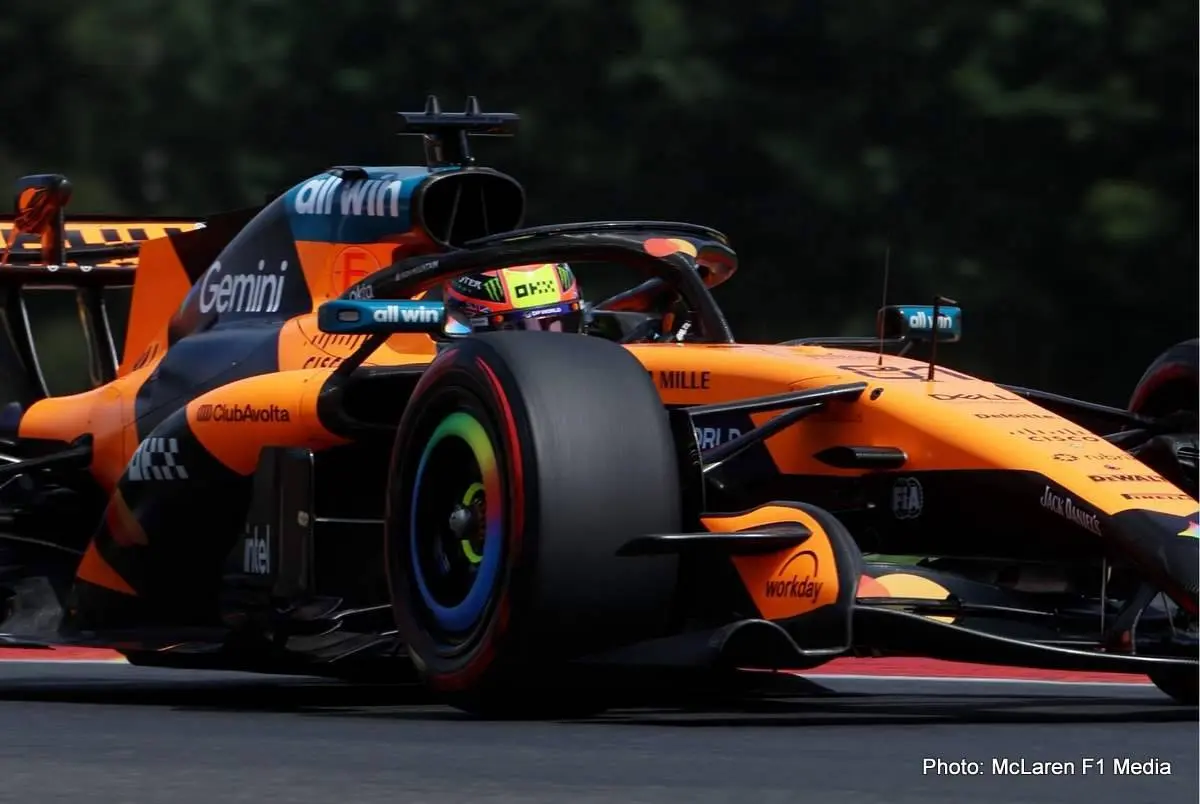
- McLaren will look to move towards the front of the midfield on a track that should allow them to run maximum downforce, a configuration which suits them more than other teams, while the Woking squad will be aided by an Aerodynamic update.
loading
Latest News
Loading