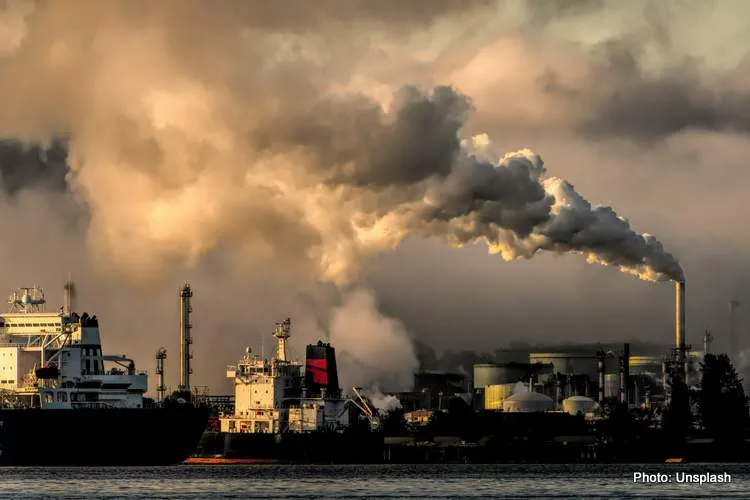
The fact is, climate change is real and affects every single individual on Earth. With the Industrial Revolution, there has been a startling increase of 1.1°C (2°F) in global temperatures, leading to a worrying number of changes.
The world is rapidly losing polar sea ice at a shocking rate of 13% per decade, and 2025 could be the hottest year on record. But unlike these changes, humanity isn't taking a step back and is instead changing things for the better with technology.
With vast innovations, from AI-powered climate models to renewable energy resources being created, technology has truly become our greatest asset. Are you ready to find out how science is combating climate change? Let’s take a look at how science is revolutionizing the world for the better. This is a special report for our Formula 1 readers interested in saving the world from pollution.
What Is Climate Change and Why It Matters
The term ‘climate change’ refers to shifts in temperatures and weather patterns over long periods of time, primarily as a result of anthropogenic factors such as fossil fuel combustion. The global mean surface temperature has increased by approximately 1.1 degrees Celsius since the 1800s, though certain areas, such as the Arctic, are warming over two times faster than that.
The last eight years have been the hottest ever recorded, and natural disasters associated with climate change cost over $280 billion in 2021 alone. And while the climate is becoming more and more unpredictable, we would like to recommend that you relax a little using the MelBet APK for your sports bets.
After all, at least something in this world should be pleasant and predictable, and this betting application has been reliable for more than 10 years and serves millions of users. With it, your data and funds are safe, and thousands of events for betting guarantee a pleasant pastime. In the meantime, we will return to climate change.
Why does this matter? Because each and every part of the globe is affected. The rising water levels put more than 680 million people who live along the coast in danger of being displaced by the year 2050. These climate changes led to the European heatwave of 2022, which caused an estimated 20,000 deaths.
Along with this, wildfires in the USA burned more than 10 million hectares in 2020, which is an area larger than Portugal. Along with all this, food security has now come under attack, and it is now an international crisis needing immediate attention.
The Impact of Global Warming on the Planet
The Earth has started to change as a consequence of global warming, and the consequences are already irreversible. Take into account the following changes:
- Melting Ice Caps and Rising Sea Levels: Just from Greenland in 2019, 532 billion tons of ice were lost, which resulted in sea levels rising by approximately 3.3 millimeters every year. Coastal areas like Jakarta are sinking at a rapid pace, which requires Indonesia to move its capital.
- Extreme Weather Events: Since the 1970s, wildfires in Australia have doubled due to the rise of category 4 and 5 hurricanes. The "Black Summer" that took place from 2019 to 2020 scorched over 18 million hectares, which also led to 3 billion animals losing their lives.
- Biodiversity Loss: Natural extinction is now in its sixth phase, and with it, many species are dying out much quicker than expected. Estimated rates state that species are going extinct 1,000 times faster than normal, leading to coral reefs, which support over 25% of marine life, losing their color at alarming rates.
- Ocean Acidification: The oceans are believed to be absorbing 30% of CO2 emissions. This over-acidification threatens the population of shellfish and coral, along with fish that billions depend upon.
Now, these changes are not things we will face in the future. They are already happening at the moment. Nonetheless, with the help of technology, there is still hope that we can change our ways. And before we tell you how to solve these problems, we would like to add a little something pleasant to your life. We advise you to subscribe to the Instagram MelBet and stay up to date with all the sports news and events. After all, sports are a wonderful thing, and in this group, you will be closer to them. Well, its main highlight is sports memes, so you will definitely not be bored. Subscribe!
How Greenhouse Gases Drive Climate Change
Carbon dioxide (CO2), methane (CH4), and nitrous oxide (N2O) are greenhouse gases that warm the planet by trapping heat in the Earth’s atmosphere. CO2 concentration has increased from 280 parts per million (ppm) before industrialization to over 420 ppm in 2023, which is the highest value in 800,000 years. Methane may be less abundant, but its ability to heat can reach over 80 times that of CO2 in a span of two decades.
And the number one source of it all? Fossil fuels. Around 75% of global greenhouse gas emissions stem from burning coal, oil, or natural gas. Almost a quarter of CO2 emissions can be traced back to the transportation industry. Deforestation is also a major problem. The Amazon rainforest, regarded as the ‘lungs of the Earth,’ has lost more than 17% of its forest cover during the last half-century. Human activity increases the greenhouse gas effect at a staggering rate, which makes learning about this phenomenon necessary to help create sustainable measures.
Renewable Energy Solutions to Reduce Emissions
Renewable energy continues to lead the battle against climate change by reducing the use of fossil fuels and offering cleaner alternatives. These solutions are not only theoretical, but they are also changing the world’s energy system currently. A few of them include:
| Energy Source | How It Works | Key Benefits | Global Adoption | Future Potential |
| Solar Power | Converts sunlight into electricity via photovoltaic cells. | Zero emissions, abundant resource. | Over 1,200 GW installed worldwide by 2023. | Expected to power 20% of global electricity by 2030. |
| Wind Energy | Uses wind turbines to generate electricity. | Low operating costs, scalable. | Provides 15% of EU electricity, growing rapidly in China. | Offshore wind capacity projected to triple by 2030. |
| Hydropower | Harnesses moving water to produce energy. | Reliable, flexible grid integration. | Supplies 16% of global electricity, dominant in Norway. | Modernization could boost efficiency by 20%. |
| Geothermal | Taps Earth's internal heat for power and heating. | Constant energy supply, minimal footprint. | Provides 25% of Iceland's energy, expanding in Kenya. | Global potential of 200 GW by 2050. |
If we invest our time and resources in research and new ideas for innovation, renewable technologies have the potential to decrease global emissions tremendously and build a sustainable future.
The Role of Carbon Capture Technologies
Capturing carbon using technology is very helpful for hard-to-reduce emission sectors. Climeworks runs facilities in Iceland that capture 4,000 tons of CO2 from the air each year. Carbon is later stored in basalt rock formations located underground, where it turns into stone within two years.
For the cement, steel, and electricity industries, there is a different variation called Carbon Capture and Storage (CCS). Norway has successfully stored over 20 million tons of CO2 underwater in the North Sea since 1996 with its Sleipner project. Petra Nova in the United States used to capture over a million tons of CO2 per year, but they stopped operating, and work is being done to reduce their emissions. These technologies are still pretty new and expensive, but that is expected to change by 2030 as current advancements in technology are predicted to raise global CCS capacity by 600%.
Using AI to Monitor and Combat Climate Change
Artificial Intelligence (AI) is changing the way we view and act upon climate change. It handles large datasets, makes forecasts, and improves approaches to problems. Here are a few examples of AI in use:
- Learning from Climate Data: AI improves the quality of climate forecasts by enhancing climate models. Scientists using AI can predict temperatures and changes in weather more accurately. Google’s AI company, DeepMind, has developed systems that can now predict rain with nearly 89% accuracy within a 90-minute time window.
- Improving Energy Consumption: AI-enabled smart grids make real-time adjustments to energy allocation to minimize energy wastage. AI is responsible for helping utility providers lower energy usage by 10% in the US, which leads to saving millions of dollars each year.
- Monitoring Deforestation: AI systems have the ability to analyze satellite images and identify instances of illegal logging within seconds. AI is used in projects such as Global Forest Watch that aim to monitor forests around the world. This helps protect important carbon sinks such as the Amazon rainforest.
- Reacting to Natural Disasters: AI helps in forecasting natural calamities such as floods and wildfires, which leads to quicker emergency response times. AI-based systems have been deployed in California to detect wildfires within minutes instead of hours.
There is a shift in how we view climate action, and AI is at the center of that transformation. The endless possibilities of AI are helping to monitor and protect our planet unlike ever before.
Sustainable Innovations in Transportation and Industry
The transportation and industry sectors are major contributors to global emissions, but astonishing advancements are improving the outlook for the future. Leading the move towards a sustainable future are electric vehicles (EVs), which saw a 35 percent increase in sales from the previous year, totaling 14 million globally sold units. Major companies such as Tesla and Ford, alongside traditional car manufacturers like Volkswagen, are estimated to have EVs account for 30 percent of global car sales by the year 2030.
On the other hand, the industry has shifted towards producing green steel, with Sweden's HYBRIT project delivering the first batch of fossil-free steel in 2021, reducing emissions by 95% when utilizing hydrogen instead of coal. Furthermore, architecture and agricultural residue, as well as waste oil fuels (SAFs), have succeeded in reducing the emissions of the aviation industry and cutting the carbon footprint of a flight by 80%. These advancements bring about confidence that a future with restricted carbon emissions is possible, and it is progressing rapidly.
The Dawn of a Greener Future: Technology Leading the Way
It is true that fighting against global warming is an uphill task, but technology is clearing the fog. Every solar panel, electric vehicle, and a captured ton of CO2 redefines the future. It isn’t just wishful thinking—innovation is powering action. These changes, which are possible due to technology, make the world better. We should welcome these breakthroughs with open arms and make haste towards a healthier and happier world.
Latest News











Loading