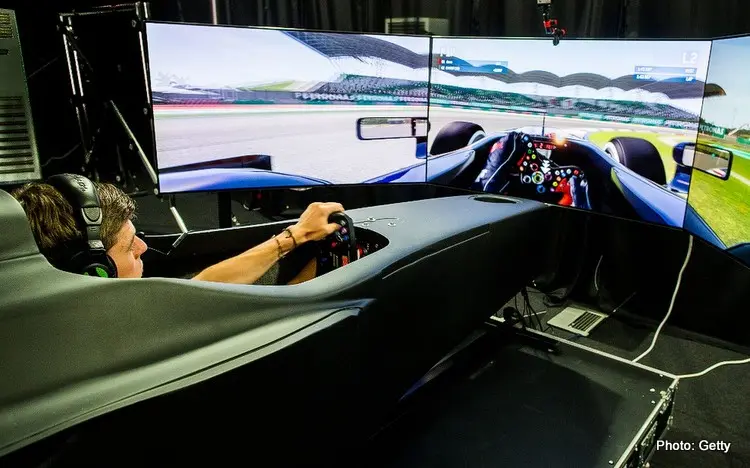
Simulators have become an indispensable part of modern Formula 1, bridging the gap between virtual environments and real-world racing.
These state-of-the-art systems allow teams and drivers to refine their skills, test vehicle performance, and plan strategies, all without the constraints of time and cost associated with physical track testing.
Beyond their technical prowess, simulators are shaping the future of F1 racing by creating a symbiotic relationship between human ingenuity and digital precision.
Enhancing Driver Skills

For F1 drivers, simulators are invaluable. They recreate racing circuits with incredible accuracy, offering the chance to master tracks before setting foot on them. For instance, rookies use simulators to familiarize themselves with iconic circuits like Spa-Francorchamps or Monaco, reducing the learning curve when race weekend arrives.
Experienced drivers, too, rely on simulators to fine-tune their skills. Whether it’s testing braking points, exploring overtaking maneuvers, or practicing under simulated weather conditions, they can prepare for every possible scenario. This preparation often makes the difference between winning and losing on race day.
Simulators also serve as a platform for testing mental endurance. Long sessions in these virtual environments help drivers build the focus required for high-stress, high-speed decision-making during races. Additionally, drivers can practice adapting to unexpected scenarios like sudden tire failures or wet-weather conditions, helping them react instinctively when similar situations arise on track.
Beyond individual skill-building, simulators foster collaboration. Drivers and engineers work side-by-side, analyzing virtual lap data and refining driving styles to complement car setups. This teamwork strengthens the bond between drivers and technical crews, ultimately translating into better on-track synergy.
Driving Innovation in Vehicle Design

Simulators are equally critical for car development. By modeling how new components behave on the track, engineers can identify flaws and refine designs before building physical prototypes. This not only cuts costs but also accelerates innovation.
Driver-in-the-Loop (DIL) simulators add another dimension by incorporating real driver feedback during virtual tests. For example, if a driver notices stability issues in high-speed corners, engineers can use this insight to adjust suspension settings or aerodynamics, ultimately leading to better on-track performance.
The integration of Artificial Intelligence (AI) into simulators further amplifies their utility. AI-powered simulations can predict how car components might perform under extreme conditions, offering insights that might otherwise take months of on-track testing to uncover. This kind of efficiency is crucial in a sport where even milliseconds can determine the outcome of a championship.
In some ways, this approach is reminiscent of how online gamers analyze trends to optimize their experiences. Enthusiasts exploring best payout slots often use return-to-player (RTP) data to identify opportunities for success, much like how F1 engineers use simulation data to unlock a car's full potential.
Optimizing Race Strategies

Simulators are not just tools for drivers and engineers; they are essential for race strategists. Teams use them to simulate various race-day scenarios, including pit stop timing, tire wear, and fuel consumption. This helps them anticipate and react to unexpected challenges, such as sudden weather changes or safety car deployments.
For instance, a team might simulate an entire race to determine the best tire strategy for a particular track. These insights enable them to make informed decisions during the race, often giving them a crucial edge over competitors. Additionally, simulators allow teams to test multiple race strategies simultaneously, evaluating outcomes in a fraction of the time it would take on a real track.
The 2020 season provided a perfect example of how simulations can dictate race outcomes. With limited practice sessions due to COVID-19 restrictions, teams leaned heavily on simulators to adapt car setups and strategies. Virtual preparations became the backbone of success in a highly unpredictable season.
Simulators are also instrumental in evaluating new race formats. Concepts like sprint races or revised qualifying sessions are tested in virtual settings before being implemented in real-world scenarios, ensuring they provide excitement without compromising the integrity of the sport.
Expanding into Esports and Beyond

Simulators are also reshaping the fan experience. With the rise of sim racing leagues, fans now have the opportunity to immerse themselves in the world of F1. High-fidelity simulators bring the thrill of racing into homes, democratizing motorsports and inspiring a new generation of enthusiasts.
This connection between virtual and real-world competition is transforming the perception of racing. Just as simulators elevate F1 performance, esports platforms elevate the accessibility of racing to global audiences. Sim racing events featuring F1 drivers competing against esports professionals have further blurred the lines between simulation and reality, offering fans unprecedented levels of engagement.
Simulators are also influencing the training of young drivers. Platforms like F1 Esports are proving to be viable entry points into professional racing careers, with several esports champions transitioning into real-world racing disciplines. This convergence of digital and physical racing is setting the stage for a future where talent can be discovered and nurtured without the traditional barriers of cost and access.
Conclusion
The role of simulators in modern F1 racing cannot be overstated. They enhance driver performance, fuel vehicle innovation, and provide a competitive edge through meticulous strategic planning. Beyond the professional sphere, they also inspire fans and broaden the appeal of motorsports.
As the technology behind these systems continues to evolve, their impact will only grow, ensuring that simulators remain a cornerstone of Formula 1 for years to come. Many platforms demonstrate how simulation-based insights can elevate experiences across different domains, highlighting the transformative power of virtual environments.
Latest News



Loading