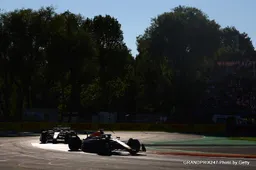
Hamilton at Ferrari: Is the 8th Formula 1 world title coming?
F1 NewsSaturday, 06 September 2025 at 06:19
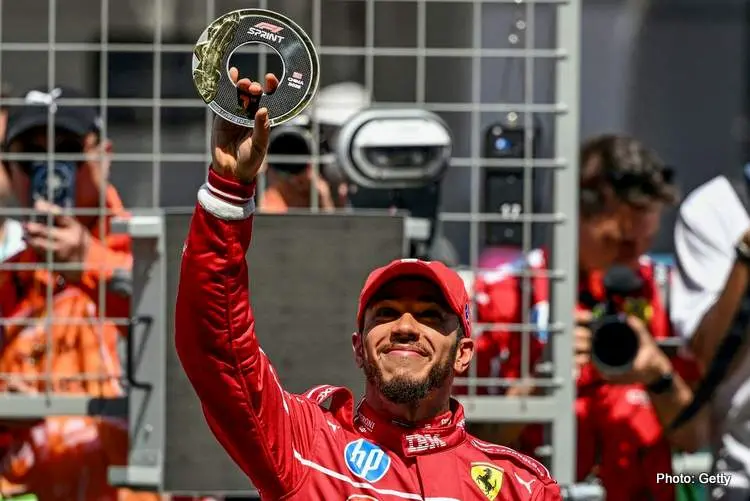
In January 2024, the seven-time world champion of Formula 1, Lewis Hamilton announced that he would leave Mercedes to join Scuderia Ferrari.
This announcement sent ripples through the Formula 1 world. When Hamilton was switching parties, he already had seven world titles and a very successful career with the Silver Arrows. The announcement surprised the whole world, especially car enthusiasts.
Now, as the new 2025 season is moving forward, everything starts unfolding. After the big loss in 2021, and two lackluster years with Mercedes, Hamilton decided to move to The Prancing Horse for the first time in his career.
Under the blinding lights of the Marina Bay Street Circuit in Singapore, Hamilton showed what many thought was only possible in dream; his first win in red. This wasn’t just motorsport poetry, iit was history in motion.
A new era carved with experience and risk. Precision, patience, and pure pace carried him to the apex of the podium that night. It wasn’t just another race, it was a statement telling the world that the fire he had on his first race years ago still ignites in his heart. The question has switched from why he switched, to how did he do it?
To find the answers to these questions, we need to analyse team dynamics, Hamilton’s performance, and Ferrari's technical evolution.
How it all started

It all started when the announcement of Hamilton leaving Mercedes started spreading. People thought it was nothing but another rumour. Everyone knows that the duo of Hamilton and Mercedes is almost inseparable.
The F1 world shook when they heard the seven-time champion was finally going to be seen in red. The fairytale became the reality. Hamilton chose to write the final chapter of his tale in red.
The switch of teams turned the critics into two groups. One group was claiming that Hamilton was chasing a childhood dream and it was his final destiny. While the other group was being skeptical. They were saying Hamilton was past his prime and he was just trying to grasp a fading glory.
But the truth is, both groups were wrong. It was never about fading or fairy tales, it was about keeping the legacy up of Hamilton himself. Hamilton wanted to prove that his excellence and legacy weren’t only contained in a car or team.
It was all by himself. It was he who pushed everything to his limits and conquered the grand podium of Formula One. By switching the team, he showed that he just didn’t want to drive for Ferrari, he wanted to win with Ferrari.
Ferrari's legacy and Hamilton's impact

Ferrari is an icon of Formula One racing. There is something special about the team. It’s not just the oldest team in the race, it’s like a dream wrapped in metal and fire. But this iconic team has not won since 2007.
Their last title was with Kimi Räikkönen in 2007 with 110 points, just by a single point. But this time it is different. As of Round 8, Hamilton sits second in the Drivers’ Championship with 175 points, just 13 points behind Max Verstappen, who has 188 points. With 14 races and 3 sprint weekends remaining, the statistical path to Hamilton’s win is still alive.
Outside the track, fans and bettors alike are closely watching Hamilton’s progress. Just as Ferrari’s return to form signals a shift in Formula One, the rise of Ethereum betting is reshaping how enthusiasts engage with the sport, bringing speed, transparency, and global access into the wagering scene.
Risks of the Hamilton-Ferrari union

The new SF-25 F1 car from Ferrari has a drag coefficient of 6% which is lower than the SF-24. Its suspension went through a significant change by adapting to pull-rods, whereas the 2024 car had push-rods.
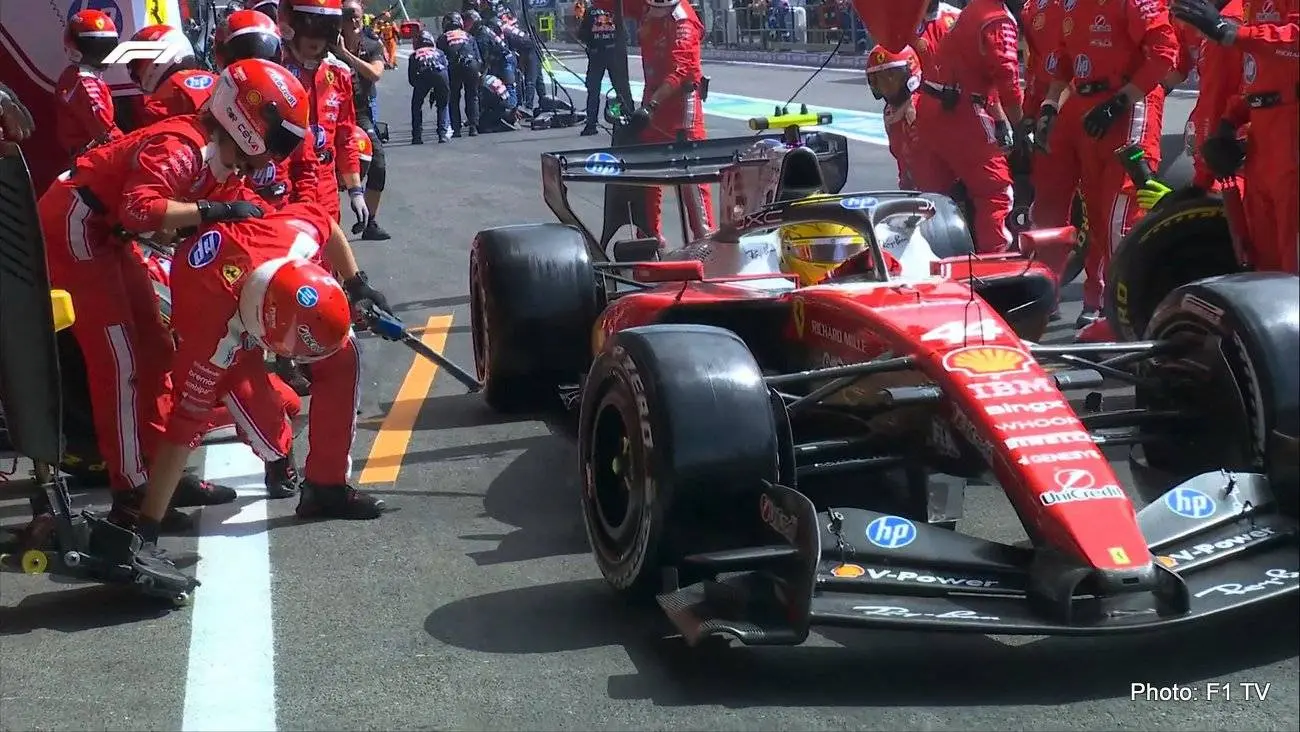
The car also has a whole new chassis, which makes it more consistent at low speed and medium speed tracks. The car’s power unit stands second, right behind Red Bull's RPBT. It doesn’t chew up tires like a woodchipper, and doesn’t melt in 30°C track temps like the 2022 disaster did. Finally, Ferrari seems to understand that races cannot only be won with drivers and cars, pit stops and strategy are equally important.
Although the path seems easy in analytical terms, there are risks concerning all the way. First of all, Ferrari’s pit wall has a history of failing under pressure. While Vasseur has improved team discipline and coordination. As for the car being a hybrid, although fast, noticeable thermal heating was seen. One of the greatest risks with bringing Hamilton into Ferrari was potential conflict with Charles Leclerc, who is considered the team’s “Golden Child.” But so far, the dynamic has been managed professionally.
Hamilton’s experience has reportedly influenced Leclerc and race management approach. Hamilton has now become the center of the team, and Leclerc is watching his dream slowly becoming Hamilton's story of redemption.
The Competition

Red Bull
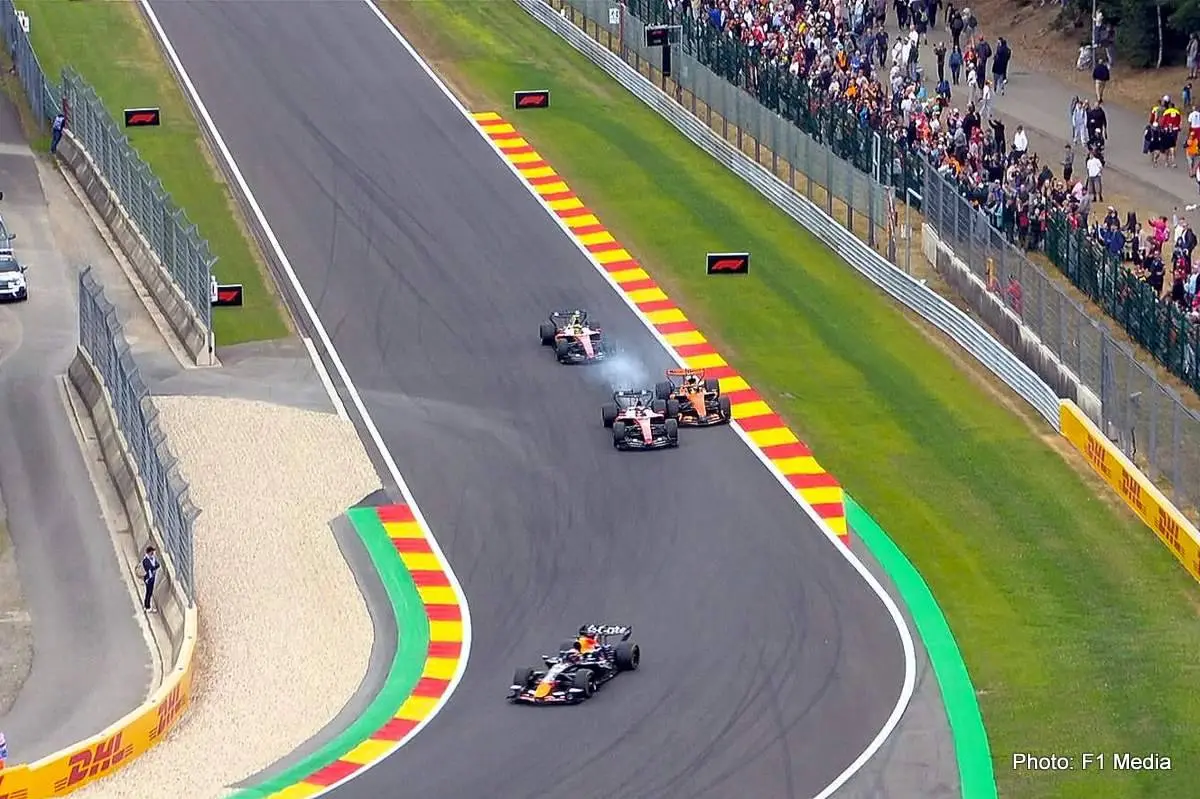
Although Red Bull is still one of the best team with the pace and performance their cars provide, it is no longer untouchable. They struggled in Monaco. They stumbled in Hungary. And in Singapore? They got beaten fair and square. Not by random chaos, not by bad weather, but by raw race pace from a 40 year old in a red suit.
If you're Max Verstappen and you see Lewis Hamilton closing the points gap with 14 races to go, you’re not going to have a peaceful sleep. Especially in a time where Ferrari is pushing its limits and delivering something new like a Hollywood movie.
Max Verstappen, as usual, continues to be consistent and aggressive, but the RB21 has shown some instability under high downforce configurations. They struggled in Monaco and again in Singapore, circuits where Ferrari has shown significant strengths.
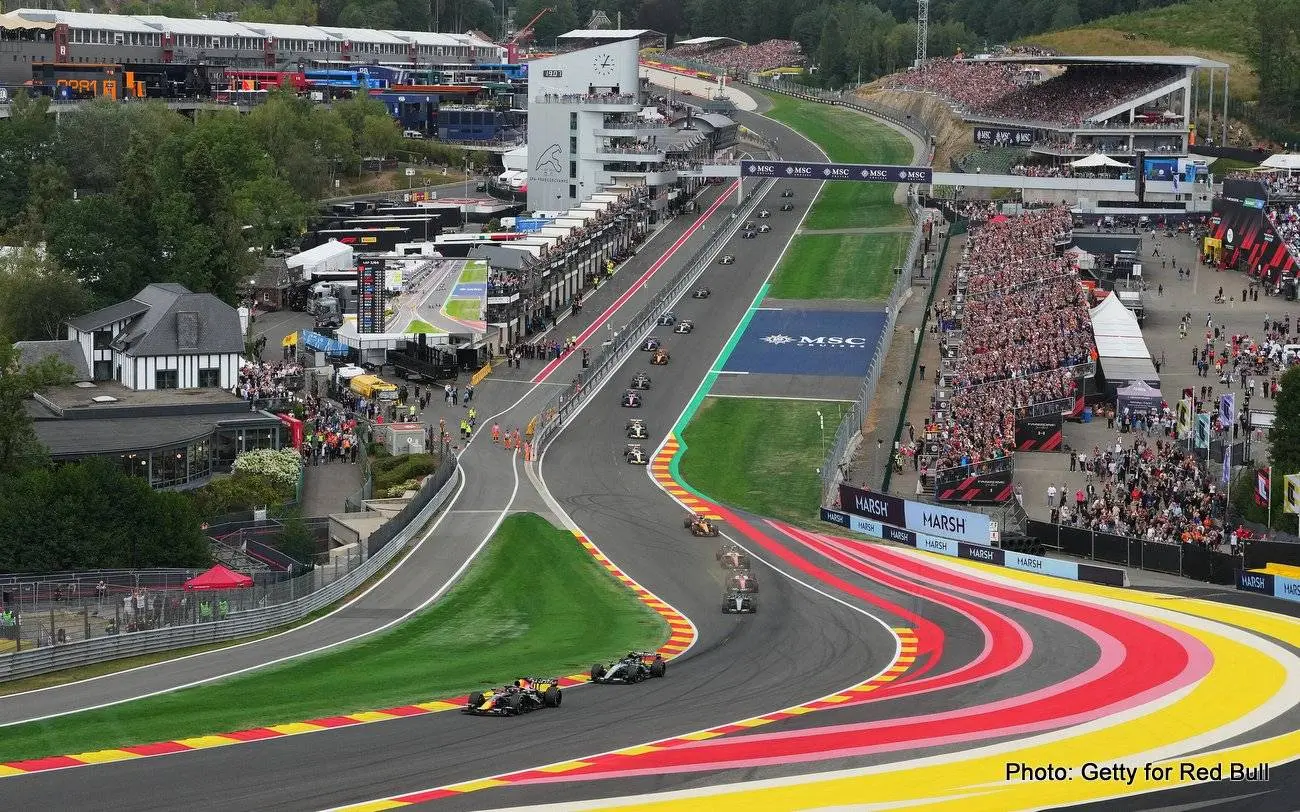
However, Red Bull remains a potent threat on high speed tracks like Spa, Monza, and Suzuka where simple pick up from raw speed and pace can change the standing of the race.
McLaren
The 2025 McLaren, under Andrea Stella, is probably the most well-balanced car on the grid. With Lando Norris and Oscar Piastri both delivering consistently, McLaren poses a serious constructors’ challenge. Though neither driver has yet displayed the killer instinct like Hamilton possesses in late season title battles.
Mercedes
Finally, the silver arrows, Hamilton’s former team, has been suffering from wind tunnel data and track performance. Although George Russell has outshone Esteban Ocon, the W15 is not yet a race winning package.
Hamilton-Ferrari will the F1 title dream come true?

While data and analytics might be the backbone of modern F1, mental strength is the brain. Especially at the top level, psychology isn’t just a side note, it’s a part of the strategy. Hamilton’s motivation is showing.
Now, based on a Monte Carlo simulation of the remaining races — factoring in car performance, past track data, and unpredictable weather, Hamilton takes the title in 42.6% of runs, while Verstappen wins it 48.3% of the time. A surprise from Norris or Leclerc is possible with 9.1%. But the model assumes no DNFs for the front-runners.
Lewis Hamilton’s performance in Singapore wasn’t just an anomaly, it was a signal backed by a well-balanced new car, a focused and determined Ferrari, and a race-winning mindset.
With all these things, Hamilton is now on the run for his 8th world title. If current trends hold, particularly in tire preservation and strategic adaptability, Ferrari may finally win a title in 18 years.
Latest News

Loading