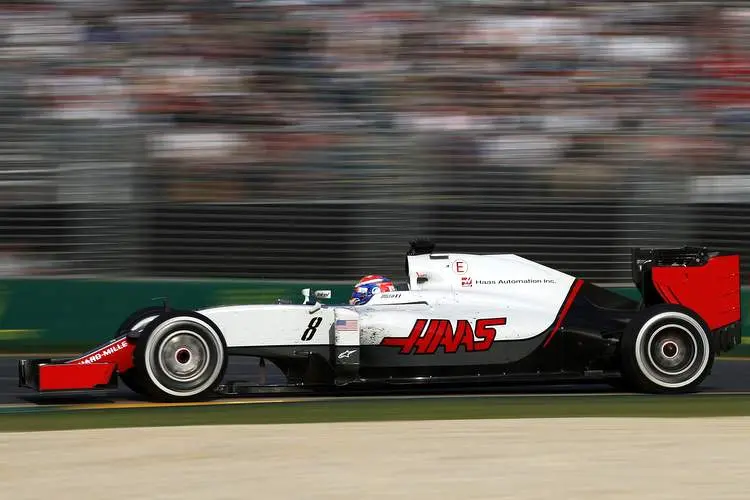
Moving to the all new USA owned Haas F1 Team was always going to a big gamble for Romain Grosjean, but it seems a well calculated one as the Frenchman performed strongly to score points for his brand new team at the season opening Australian Grand Prix. The Frenchman reflects on an historic weekend Down Under and looks ahead to Bahrain.
Haas F1 Team now has its first grand prix under its belt. Obviously, Australia went very well for you. What can you take from it and apply to Bahrain?
Romain Grosjean: “It went better than expected, to be fair. It was a difficult weekend with the weather, and a tricky qualifying session for everyone. Sunday is the day you really want to perform, and we did very well. The car was reliable and it went to the end. The strategy was perfect. Since day one the car has shown huge potential. We showed that in Australia. With barely any setup work, we put it on the track and managed to hold on to sixth at the end of the grand prix.”
Romain Grosjean: “It went better than expected, to be fair. It was a difficult weekend with the weather, and a tricky qualifying session for everyone. Sunday is the day you really want to perform, and we did very well. The car was reliable and it went to the end. The strategy was perfect. Since day one the car has shown huge potential. We showed that in Australia. With barely any setup work, we put it on the track and managed to hold on to sixth at the end of the grand prix.”
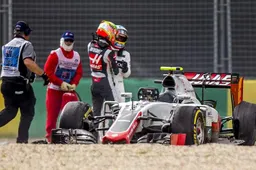
Haas F1 Team seems to handle adversity extremely well – be it with technical issues during the second week of testing at Barcelona and when you endured a pit lane collision in practice Saturday at Australia. From your perspective, how well is this new group of personnel working together?
RG: “Very well. Since winter testing, everyone on the team has worked as if they’ve been working together for several years. That’s what people were seeing from the outside and that’s what I saw from the inside. FP3 in Australia was a good example. They changed the floor of the car in just over 25 minutes, which was amazing. They managed to get the cars on track every time. There were no mistakes. Of course, everyone can improve and get more used to everything but, generally, there’s a very good feeling in the team. It’s a good group of people.”
RG: “Very well. Since winter testing, everyone on the team has worked as if they’ve been working together for several years. That’s what people were seeing from the outside and that’s what I saw from the inside. FP3 in Australia was a good example. They changed the floor of the car in just over 25 minutes, which was amazing. They managed to get the cars on track every time. There were no mistakes. Of course, everyone can improve and get more used to everything but, generally, there’s a very good feeling in the team. It’s a good group of people.”

With wet weather Friday at Australia, it compromised the team’s ability to work on the car’s setup for the race. The weather in Bahrain is usually pretty consistent, and that means consistently dry. How helpful will a full weekend of consistent weather be for you and the team?
RG: “It would be very helpful. We need to get more running. We need to get more mileage and further our understanding of the car. We have a long list of things we want to try and do, and things to improve. It’s a lot of work but, on the other hand, it means we can improve the car by a big chunk. I always like to keep things positive. If we can do a lot of that in Bahrain, the car will improve and that means we can keep working on better results.”
RG: “It would be very helpful. We need to get more running. We need to get more mileage and further our understanding of the car. We have a long list of things we want to try and do, and things to improve. It’s a lot of work but, on the other hand, it means we can improve the car by a big chunk. I always like to keep things positive. If we can do a lot of that in Bahrain, the car will improve and that means we can keep working on better results.”
How did the addition of a third tire option impact your strategy for Australia, and what impact do you think it will have on your tire strategy for Bahrain?
RG: “I think it’s pretty cool, actually. It opens more strategy, more thinking, probably more work on the pit wall trying to find out which is the best tire to go on. It’s more work on Friday to see the condition of each tire, to see the tire life. We could see different people at the front at different grand prix.”
RG: “I think it’s pretty cool, actually. It opens more strategy, more thinking, probably more work on the pit wall trying to find out which is the best tire to go on. It’s more work on Friday to see the condition of each tire, to see the tire life. We could see different people at the front at different grand prix.”
From testing in Barcelona to your home in Geneva to racing in Australia, and then back home before going to Bahrain, what do you do to physically and mentally combat the fatigue that comes with being in so many drastically different time zones in the span of a month?
RG: “Your body gets a bit of a shock. There are a few techniques, a few things you need to do. Of course, physical preparation is important. The rest is lots of sleep. You need to be prepared for your next time zone as early as possible. Bahrain is pretty close to Geneva in terms of time, so that’s cool. Australia is always a tough one because it’s 10 hours ahead, but you learn to live with it.”
RG: “Your body gets a bit of a shock. There are a few techniques, a few things you need to do. Of course, physical preparation is important. The rest is lots of sleep. You need to be prepared for your next time zone as early as possible. Bahrain is pretty close to Geneva in terms of time, so that’s cool. Australia is always a tough one because it’s 10 hours ahead, but you learn to live with it.”

Explain a lap around the Bahrain International Circuit.
Latest News
Loading