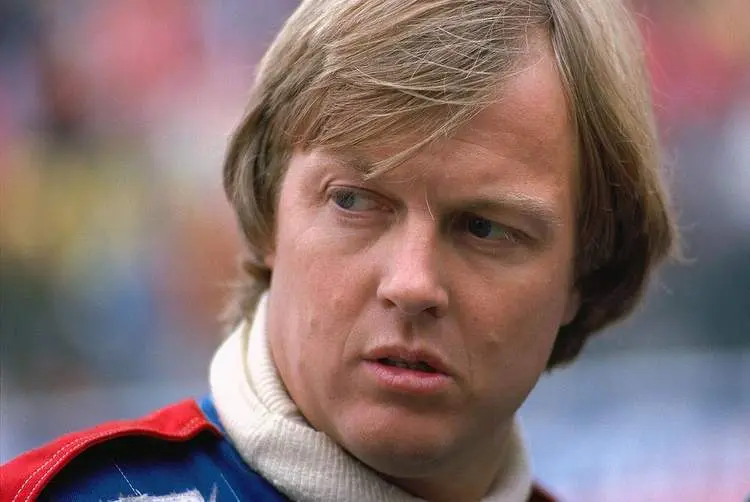
Thirty-nine years ago today, Formula One lost the inimitable Ronnie Peterson, who was killed during the 1978 Italian Grand Prix.
One of the most highly-regarded drivers of the 1970’s, the “Superswede” recorded 10 wins and 14 pole positions in his nine years in the sport, but his reputation extends far beyond the numbers.
Spending a large chunk of his career in uncompetitive cars, Peterson was nevertheless able to make his talent shine through. Never one to spend much time on testing or setup, he made his reputation on what he accomplished when the stakes were real, with his propensity to drift through corners earning him the admiration of fans and drivers alike, enraptured in his singular ability to balance the car perfectly on the edge of controlled chaos.
Among those admirers was his title rival in 1971 and ‘73, Sir Jackie Stewart, who was quoted as saying, “I don’t think Ronnie ever had the mental application that a complete racing driver needs, but I admired his ability tremendously. Any number of times, particularly in 1973, I’d follow him into a corner and think, ‘Oooh Ronnie, this time you’ve overdone it, you’re gone’, but he always seemed to get it back somehow. It never surprised me that the spectators loved him – he was exciting to watch from where I was too.”
Re-joining Lotus in 1978 after a two-year stint with March and Tyrell, Peterson came back into Colin Chapman’s outfit knowing he would play second fiddle to American Mario Andretti, who was also a great friend of the Swede. Having helped restore the team to prominence in Peterson’s absence, Chapman felt the team owed Andretti a championship, which was all but assured in that year’s dominant Lotus 79.
Enjoying a great relationship with Andretti, Peterson was more than willing to play along, collecting two wins before that fateful weekend at Monza.
For as dominant as the sports first true ground effect car had been that season, it was providing no joy for Peterson in Italy. Enduring a host of mechanical problems, Peterson instead drove the older Lotus 78, qualifying fifth on the grid while Andretti took pole in his 79. Already under less-than-ideal
circumstances, things were about to get significantly worse for the Swede.
Taken for granted these days with F1’s automated system, race starts back then required an official to manually operate the lights – one who on this particular occasion, let his excitement get the best of him, and started the race before the whole field had stopped in their places. As a result, many of the cars behind Peterson got a rolling start, and by the time the pack reached the Rettifilo chicane, he had been swallowed up inside.
Taken for granted these days with F1’s automated system, race starts back then required an official to manually operate the lights – one who on this particular occasion, let his excitement get the best of him, and started the race before the whole field had stopped in their places. As a result, many of the cars behind Peterson got a rolling start, and by the time the pack reached the Rettifilo chicane, he had been swallowed up inside.
Unsurprisingly this quickly led to a series of collisions, with first the hard-charging Arrows of Riccardo Patrese tagging James Hunt’s McLaren, and then the Brit collecting Peterson, who at 180 kph, crashed into the metal safety fencing before bouncing back across the track where he was struck again in the side by the Surtees of Vittorio Brambilla.
Shearing off the front of his Lotus in the initial impact, both of Peterson’s legs were already crushed and the car was alight before he was hit again by Brambilla. It was only though the bravery of Hunt, who made his way into the fire to drag Peterson out that a repeat of Niki Lauda’s accident in 1976 at the Nurburgring was avoided.
Unfortunately one crisis quickly gave way to another, as the treatment of Peterson once he had been extracted from the wreck was embarrassingly botched. Spectators had made their way onto the track in order to get a better look at the scene, which led police to erect a human wall and stop anyone from getting close to Peterson, including F1’s surgical advisor, Professor Sid Watkins. Left unattended for an extremely costly “11 to 18” minutes, his accident spurred the introduction of the medical car following the pack on the first lap at future races.
Unfortunately one crisis quickly gave way to another, as the treatment of Peterson once he had been extracted from the wreck was embarrassingly botched. Spectators had made their way onto the track in order to get a better look at the scene, which led police to erect a human wall and stop anyone from getting close to Peterson, including F1’s surgical advisor, Professor Sid Watkins. Left unattended for an extremely costly “11 to 18” minutes, his accident spurred the introduction of the medical car following the pack on the first lap at future races.
Finally treated and transported to hospital, the race went on, with reports later in the day announcing that Peterson was in a stable condition. Suddenly, at four in the morning, his condition significantly worsened, and he was soon after pronounced brain-dead – fat deposits had formed in his blood vessels, cutting off circulation to the brain, and while a “fat embolism” is particularly hard to treat, it was made even more so by the time he was left unattended. Ronnie Peterson was 34.
Never able to reach the heights of a Stewart or Andretti, Peterson today rarely gets the recognition he deserves, but none who saw him race could deny he belonged in the same category. Case-in-point, he had long caught the eye of Project Four Racing’s Ron Dennis, who wanted him for his fledgling team as it made the step-up from F2 to F1, eventually becoming McLaren. Unfortunately his time would never come, but the Swede managed to nevertheless leave an enduring legacy as one of the most talented drivers the sport has ever seen. From the press, to fans, to his peers, all were in agreement his was an undeniable talent, and one that was gone all too soon.
Latest News
Loading