More pit stops at Monaco Grand Prix will bring more excitement?
F1 NewsThursday, 03 July 2025 at 03:57

Formula 1 and Monaco? A dream combination. Here, the premier class of motorsport, there, the principality. The harbour. The yachts. The casino.
If you missed to go then try out the perfect online setting of Vave Casino Ireland platform. The race weekend regularly attracts various Hollywood stars. The glamour is only surpassed by the prestige. Whoever wins the Indy 500, the 24 Hours of Le Mans, and the Grand Prix in Monaco has completed the Triple Crown. Only the Briton Graham Hill has ever achieved this.
It is fitting that Prince Albert II likes to present the winner's trophy in Monte-Carlo. The event is the perfect blend of glamour and spectacle - if it weren't for one tiny contradiction: the racing is often boring.
The best example: the 2024 Grand Prix. The race was interrupted after an accident on the first lap. All the drivers used the time to change their tyres. The rest of the race resembled a procession: the first ten drivers in qualifying crossed the finish line in the same order after 78 laps.

Overtaking is difficult
Since 1984, there have been just twelve overtaking manoeuvres per race in Monaco - a sad record. The street circuit is narrow. There is only one DRS zone. The field is closer together than it has been for a long time, and the cars have been 20 centimetres wider since the 2017 season. The pace is often reduced at the front to protect the tyres and limit the strategy options of the pursuers.
"We were four seconds slower than usual," said Verstappen in 2024. "I should have brought my head cushion." The problem has been a regular talking point in recent years. In 2018, Fernando Alonso (then McLaren, now Aston Martin) spoke of the "most boring race in history".
Rule change

There was discussion about whether the Circuit de Monaco could be rebuilt. A new overtaking zone at the swimming pool chicane was considered, but rejected by the organiser, the Automobile Club de Monaco. In February, the International Automobile Federation (FIA) then pushed ahead with a rule change.
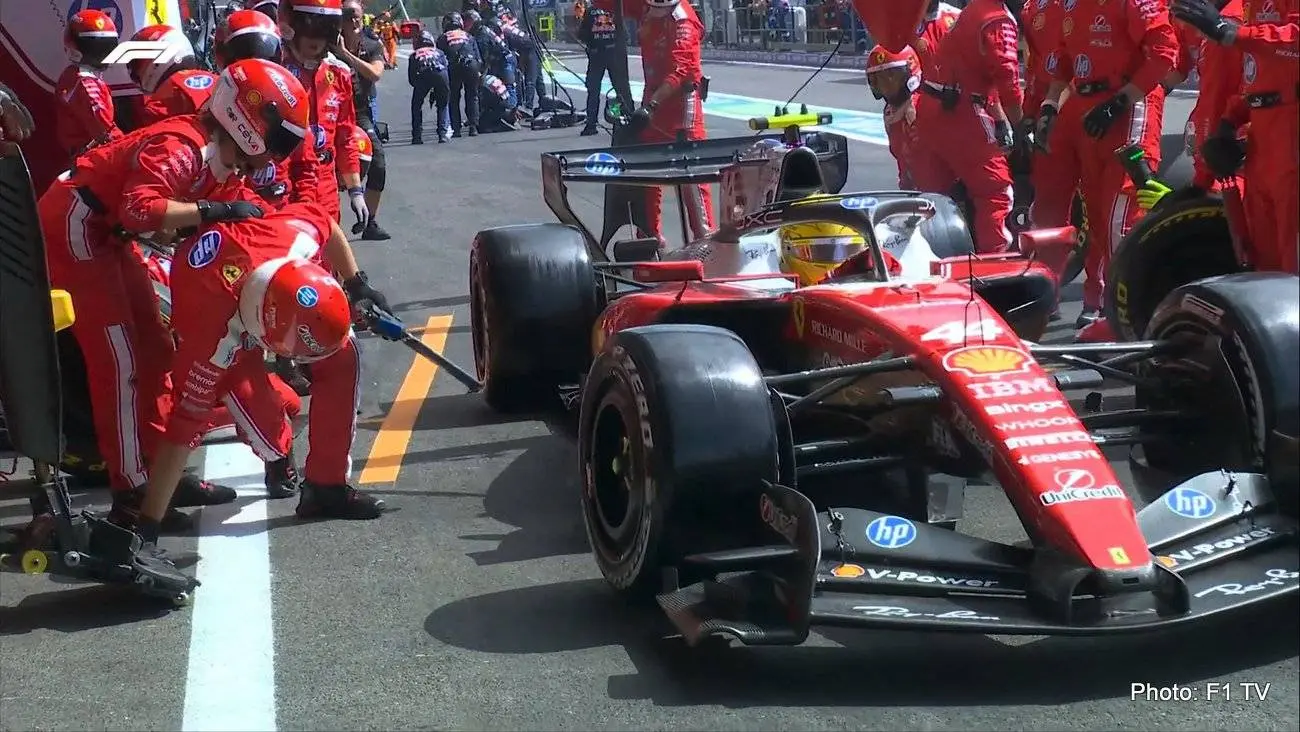
Previously, drivers were obliged to use at least two different tyre compounds (hard, medium, or soft) in a dry race, i.e,. to make at least one pit stop.
For Monaco, there is now a one-off rule that drivers must use at least three sets of tyres in the race, and at least two different compounds in dry conditions. In short, a mandatory second pit stop has been introduced.
The FIA stated the clear aim of ‘increasing the sporting spectacle’. The idea is simple: more pit stops, more action, and more strategic options for the teams, resulting in more excitement for the fans.
Aston Martin team boss Andy Cowell believes in a more varied race and tricky strategy decisions: "I bet many people will be saying on Monday: I wish we'd done it differently." Christian Horner, Team Principal of Red Bull Racing, anticipates an "additional dynamic."
Qualifying important

Qualifying always has a special significance in Monaco due to the lack of overtaking. It will be interesting to see which tyres the racing teams choose this weekend. This is because Pirelli recently introduced a new, particularly soft tyre type (C6).
This was still difficult to assess in Imola, pole setter Oscar Piastri spoke of a "real puzzle". And as each team only has a certain number of tyres available each weekend, the decision in qualifying determines which fresh tyres are left for the race.
The new pit stop rule leads to many unknowns. There has been much speculation as to whether teams could split the strategies for both drivers or whether drivers could reel off both pit stops early in the race.
Latest News

Loading

![Brown: Brad Pitt can come play [Sonny Hayes] with McLaren anytime](https://r.testifier.nl/Acbs8526SDKI/resizing_type:fill/width:256/height:170/plain/https://s3-newsifier.ams3.digitaloceanspaces.com/grandprix247.com/images/2025-11/screenshot-2025-07-004.jpg@webp)