Gary Anderson on Ferrari’s Rear Suspension: A Step, Not a Leap
F1 NewsWednesday, 23 July 2025 at 01:09
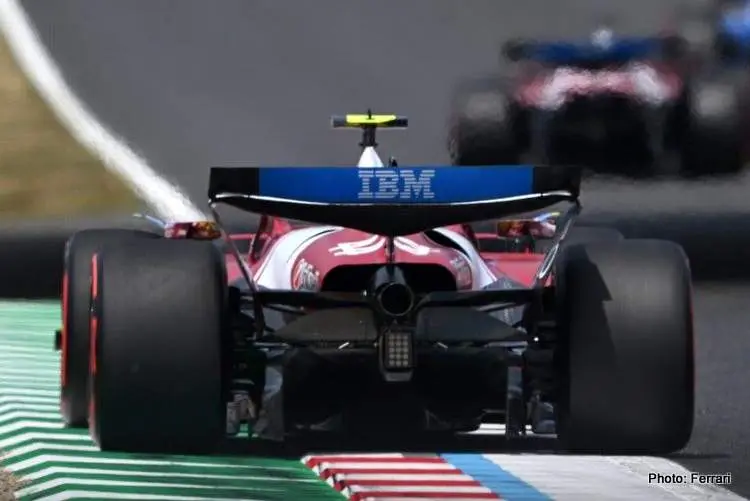
Ferrari has quietly tested a new rear suspension configuration ahead of the Belgian Grand Prix. While updates to a Formula 1 car always attract attention, especially from a team like Ferrari, not all changes suggest a radical shift in direction.
This one, observed and critiqued by Formukla 1 engineering guru Gary Anderson, fits that category. The new Ferrari SF-25 layout centres on subtle reworkings of the upper rear wishbones, damper adjustments, and increased anti-lift geometry.
According to Anderson, these tweaks appear intended to help Ferrari manage braking stability and improve rear-end consistency. That doesn’t automatically translate to a big step in lap time, but it could provide a more stable platform for race weekends with unpredictable grip levels, such as Spa.
They’ve adjusted the pitch and geometry to extract a slightly different behaviour. A small shift in philosophy, maybe, but not a pivot. However big or small, it will have an impact on Ferrari's positioning, results, and performance, which is what fans, analysts, and bettors will surely notice, besides the drivers.
Betting sites that offer both traditional payments and crypto, with the latter offering the best promos around, are already adjusting their predictions, allowing fans who keep an ear to the ground for such events to benefit from their knowledge (source: https://esportsinsider.com/us/gambling/betting-apps).
Ferrari SF-25 suspension raising eyebrows

Ferrari trialled this update in a private filming day at Mugello. That raised eyebrows. Testing in such a setting suggests quiet optimism, but also some caution. This isn’t the sort of upgrade you unveil mid-season unless you’re hoping it fills a specific performance gap.
Anderson, a former technical director, wasn’t bowled over. His view leaned toward restrained approval. He noted that while the change is clever, it doesn’t scream revolution. It’s more like fine-tuning. Ferrari hasn’t overhauled the entire suspension layout, nor have they introduced anything radically out of step with the SF-25’s core design philosophy.
There’s a natural tendency in Formula 1 coverage to overstate the impact of updates. A new winglet becomes a headline; a subtle geometry tweak is heralded as transformative. Anderson offers a check against that tendency.
His take reminds us that engineering changes don’t always deliver fireworks. Sometimes they’re just attempts to smooth rough edges. And Ferrari's drivers know now what to expect, which is not what could be said about Max Verstappen and Mercedes in 2026.
It’s worth remembering that Ferrari has been chasing more than raw speed this year. Their car has pace in bursts but tends to be uneven. Sudden changes in grip level have caught both drivers out at various tracks. That’s where this upgrade might pay off.
If it helps Charles Leclerc or Lewis Hamilton trust the rear of the car under braking, even marginally, it could save tenths over a race distance. That sort of gain doesn’t show up in dramatic charts, but it adds up over time.
Making Hamilton comfortable in the car is an ongoiung theme

Mercedes went far more aggressive with their rear suspension revisions earlier this season. Anderson made that comparison bluntly. Ferrari’s update looks like a response, but not an attempt to match that level of ambition. That might reflect confidence in their baseline concept or maybe a reluctance to disrupt what’s already a reasonably quick package.
What’s interesting is that Ferrari chose Spa to debut it. That circuit puts extreme demands on chassis stability through long, fast corners and rapid changes in elevation. It’s also a track where inconsistent suspension behavior gets exposed fast. The update’s timing might indicate Ferrari feels they need help there more than anywhere else, especially since Hamilton needs to adapt.
This isn’t a bold move. It’s careful. But careful doesn’t mean ineffective. F1 cars often find performance not through sweeping changes, but through a collection of marginal improvements that add up behind the scenes.
We’ll know more after Spa. If the car runs flat through Blanchimont or feels more secure at the end of the Kemmel Straight, we’ll have some clues. If not, then it was likely just another quiet evolution in the ongoing push for consistency.
Anderson’s insight doesn’t dismiss the update, but he keeps it in perspective. It’s one more line in the story, Ferrari’s writing this season. Not the turning point, but perhaps an important footnote.
Latest News
Loading