How to place a bet during a Formula 1 race: features and how to understand what is happening
F1 NewsSunday, 14 December 2025 at 08:05
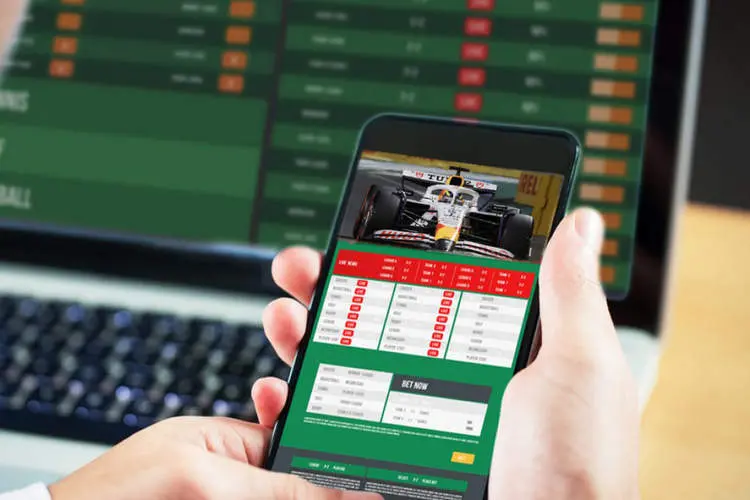
Sports betting has long ceased to be a surprise. Many fans and spectators try to predict the outcome of events in advance.
But what can be said about Formula 1 fans? The races attract a lot of attention, but many bettors find them exotic. Most likely, car racing remains an incomprehensible sport. It can be compared to esport betting: even the smallest details influence the results.
Fans watch the race with bated breath. Each subsequent lap brings a lot of emotions and a chance to use knowledge about the drivers in future predictions. To get really interested in racing, you need to understand what is really happening on the track.
Advantages of live betting in Formula 1

The opportunity to place a bet on favorable terms most often arises during the race. Many factors influence the current odds: overtaking an opponent, driver errors, and team strategy are sure to affect the bets. However, real-time betting offers an advantage. None of the bettors are limited in their predictions.
As soon as the signal is given, a dynamic process begins. The behavior of the car changes, and team strategies help in this. To get more advantages, it is worth considering:
- One event triggers a chain reaction. The actions of the drivers are reinforced by the team's strategy or the technical features of the car. Sometimes the outcome of the event depends on this, so every detail is important.
- Odds change very quickly. You need to react to changes in odds instantly. This is the only way to take advantage of a lucky moment and not miss it. For this reason, tracking odds requires special attention.
- The context of events is extremely important. You may see a rival overtaking a car, and you may understand what this will lead to. You need to quickly assess what is behind the actions of the driver and the team as a whole.
A race is a stream of information that needs to be constantly monitored. This is especially important when events need to be assessed here and now.
How to predict race results?

Studying the entire race as a whole, without focusing on the leaders and those lagging behind, is a useful exercise that is often overlooked. Some of the information is immediately available on the screen. This helps to assess the chances of each participant. The second part of the data raises many questions, but it is precisely this part that needs to be given the most attention.
Try to make predictions by analyzing the following indicators:
- Overall pace and gaps. The screen shows the current positions of the drivers. In addition, you will find the time difference. If it is decreasing, there are two possible scenarios for the race. First: the lagging driver increases speed and tries to catch up with the opponent. Second: the leader of the pair is preparing for a pit stop, “saving” tires, or passing a difficult part of the track. You can find out which scenario is most likely by analyzing the situation as a whole.
- Wheel condition. Approximate tire wear is shown in the information block. The data does not always accurately reflect the situation, but it allows you to compare the drivers' chances. For example, racing on old tires can lead to a loss of position if other competitors make a pit stop earlier.
- Overall strategy. Teams prepare for the race with particular care. Every step is calculated to achieve a specific result. For example, an early pit stop allows you to clear the track in the future and make a winning move. Other teams are counting on the appearance of a safety car and are waiting for the right moment. Actions always trigger a chain of unpredictable consequences.
Watching the race can also indicate changes. The odds change if the driver is unsure when cornering. Listen to the radio. Overheated tires, poor traction, and difficult sections of the track all affect the outcome and the bookmakers' odds.
What factors influence the odds?

The results of the race are assessed as it progresses. To do this, beginners pay attention to the breaks. A pit stop is not just a necessity, but also a reason for the odds to increase. Drivers who temporarily drop out of the race fall slightly behind the others. However, the correct balance of power in the team's strategy is also implied.
The safety car usually appears on the track abruptly and even suddenly. The task of the drivers is to leave the race before the safety car's influence becomes significant. Those who were able to take advantage of the “free pit stop” have a high chance of winning. The odds for the time of the safety car's appearance increase sharply. This can be a lucky moment for the driver. For example, if he managed to take advantage of the chaos on the track and turn it to his advantage.
The weather, namely rain, affects the drivers. Some of them have excellent grip, paying no attention to the slush. Others lose confidence in their actions and fall behind their rivals. The most important thing is to understand which option the selected driver belongs to. The pace of the race changes, and the odds rise again.
Everyone can make mistakes, and drivers are no exception. Slowing down, exiting a turn, or overheating tires are sure signs of a jump in odds. If the team stays on the track, the pace drops. To emerge victorious, you need to make new important decisions. Rivals usually take advantage of such moments and try to get as close as possible for a sprint.
Beginner's mistakes: how to avoid difficulties during the race

Staying well informed is much better than reacting quickly to changes. The fact is that in the first case, you are prepared in advance for an unexpected turn, and in the second, you are adapting to someone else's rules. To stay informed, look at the timings and analyze what is happening.
Instead of emotional decisions, give preference to statistical data. Monitoring indicators and keeping track of time brings more benefits. When studying timings, it is important to pay attention to pace and intervals. They show trends that can be used to your advantage.
The team may seem slow. But the outcome of the race depends on other factors. For example, if a team uses a one-stop strategy, the driver will suddenly be higher than expected at the end of the race. Conversely, planning two stops brings nothing, and the driver's temporary acceleration turns out to be an illusion.
Some tracks are easy to overtake on, while others are almost impassable. Where it is almost impossible to overtake an opponent, even a clear advantage in speed does not guarantee a change in position.
It is also useful to identify moments when it is better to refrain from making predictions. Sometimes the race becomes chaotic, events follow one after another, and the odds jump so quickly that any decision turns into a guess. At such moments, it is better to observe and wait for stabilization.
Betting during a Formula 1 race is the ability to read the dynamics, notice the little things, and understand how events on the track turn into numbers on the bookmaker's screen. And the most interesting thing is that the more races you watch, the better the logic of what is happening begins to emerge. Each track and each team adds its own touches to the overall picture. This is where the real pleasure of betting during a race lies.
Latest News

Loading