Formula 1 is presented as the pinnacle of engineering achievement, yet the machinery alone does not explain its intensity.
At its core, the sport is an environment where decisions must be made at a pace far quicker than analytical thought can follow. Every lap exposes Formula 1 drivers to new unknowns: variations in grip, subtle tyre shifts, unpredictable airflow, and evolving strategies shaped by rival teams. Each element alters the balance of risk in real time.
Unlike traditional competitive fields where choices can be weighed carefully, decision-making in Formula One relies on instinct refined through years of training. Drivers respond to rapidly changing situations by drawing on sensory cues that are nearly imperceptible to anyone outside the cockpit.
The process resembles lightning-fast probability assessment, where potential outcomes transform from moment to moment. It is a form of high-stakes judgement that mirrors the logic of controlled yet unpredictable environments seen in places like Prestige Casino, where variables shift constantly and outcomes reflect a mixture of intuition and rapid calculation.
The Mental Demands Behind Millisecond Choices
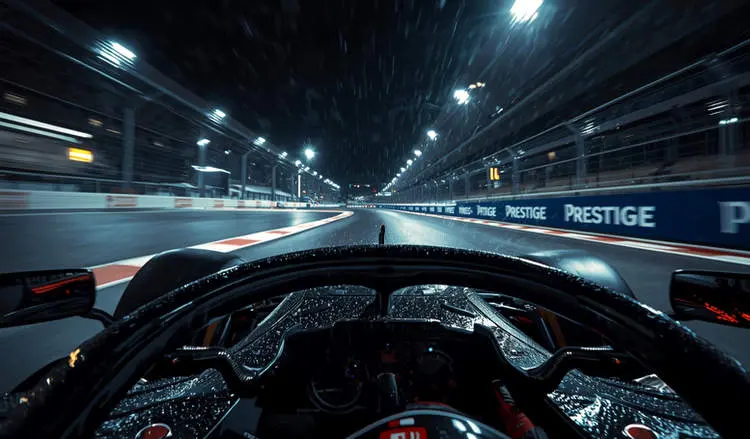
Behind every precise movement on track lies a cognitive workload most observers never see. Drivers confront a continuous stream of information: evolving tyre temperatures, altered braking response, wind variation, battery management settings, and strategic messages from the pit wall. All of this must be processed while steering a car through corners at speeds that leave no time for hesitation.
Elite drivers develop an ability to filter signals automatically. Years of repetition enable them to distinguish between sensory noise and valuable data with remarkable efficiency. This capacity transforms instinct into a practical decision-making tool. Actions that appear effortless are shaped by mental conditioning that allows drivers to operate beyond conscious thought.
In many ways, the psychological rhythm resembles how users navigate dynamic digital systems, including environments associated with Prestige Casino, where rapid reactions to shifting states determine success. In Formula One, however, the cost of a delayed response is far greater than a lost opportunity — it may determine the outcome of a race or the safety of the driver.
Risk as a Constant Companion at Full Speed
Risk is woven into every aspect of Formula One. Rather than avoiding danger, drivers learn to work within its limits. They must judge how far they can push the car while maintaining control, adjusting their approach through subtle changes in temperature, fuel weight, track rubber and shifting weather. The threshold of acceptable risk never remains still.
A bold move early in a race can be sensible, yet the same manoeuvre later may be disastrously misjudged. Grip levels decline, tyres lose consistency, and traffic patterns shift. Drivers must sense these transitions intuitively. Strategy teams provide advice, but the ultimate decision happens behind the wheel, guided by information that cannot be fully communicated through radio messages.
This form of real-time risk assessment echoes decision frameworks seen in online environments like https://casino-prestige.com, where conditions shift rapidly and users must react fluidly. Yet on the track, the consequences play out at nearly 200 miles per hour.
A Race That Never Truly Settles
Even during long middle stints, a Formula One race is never static. Conditions are in continuous flux. A small drop in temperature can alter tyre performance dramatically. A gust of wind can destabilise the car in a high-speed corner. Marbles build up off the racing line, narrowing the usable track surface. Drivers must adapt not only to these changes but to how each new variable interacts with the others.
Sensory awareness becomes a core skill. Drivers feel micro-vibrations through the steering wheel, detect shifts in car balance and sense when the rear tyres begin to lose stability. These tiny physical cues provide information long before telemetry confirms it. Such awareness allows drivers to modify their technique while racing at full speed.
Champions are often distinguished by their ability to adapt faster and more reliably than their competitors. Flexibility becomes a tactical asset — a skill that operates similarly to fast-paced decision environments found in Prestige Casino, where adaptable responses become the basis of sustained performance.
The Psychological Weight of High-Pressure Decision-Making
Beyond physical and technical challenges, Formula One places enormous psychological strain on its drivers. Each decision is made under scrutiny from teams, media and global audiences. A single misjudged braking point can lead to an incident, penalty or loss of vital championship points. Yet over-caution can be equally damaging.
Drivers must maintain clarity during moments when instinct pushes them toward aggression while logic urges restraint. Managing this balance requires emotional control, confidence and cognitive resilience. The ability to dismiss a mistake quickly and maintain pace is one of the most underrated skills in the sport.
Some drivers thrive on uncertainty, finding focus in the chaos of constantly shifting variables. Others rely on structured mental routines to maintain stability. Regardless of the individual style, psychological management is integral to performance.
Strategy Departments and the Boundaries of Data-Driven Insight
Teams rely heavily on data analysis, but their influence on immediate racecraft is limited. Strategy models can calculate ideal pit windows, project tyre life and simulate hundreds of race scenarios. Yet they cannot replicate the sensations a driver feels in the car: diminishing grip, a slight pull in the steering column, or the onset of tyre overheating.
This creates a dynamic partnership between the pit wall and the cockpit. Recommendations from strategists are balanced against the driver’s lived experience. Drivers may overrule a pit call when they sense a hidden advantage, or they may request adjustments that contradict initial calculations.
This interplay between analytical insight and human intuition mirrors hybrid decision systems, including what is seen in Prestige Casino, where programmed probabilities meet real-time user judgement.
The Accumulation of Small Decisions That Shape a Season
Formula One championships are rarely determined by a single race. Instead, standings reflect hundreds of micro-decisions made under pressure — each overtake defended, each braking point chosen, each adjustment to changing conditions. Drivers who excel at these small choices build momentum across the season, creating advantages too subtle to perceive in individual moments but decisive over time.
This cumulative effect is why Formula One remains one of the highest-stakes environments in sport. Every action carries significance. Every moment demands precision. The sport’s uncertainty does not diminish its sophistication; it defines it.
At its core, Formula One is a space where the boundaries between instinct and calculation blur. Drivers navigate risk not as a threat but as a constant variable to be measured and mastered. The outcome of each race — and often the entire season — depends on their ability to make brilliant decisions in the smallest possible sliver of time.
Latest News
Loading