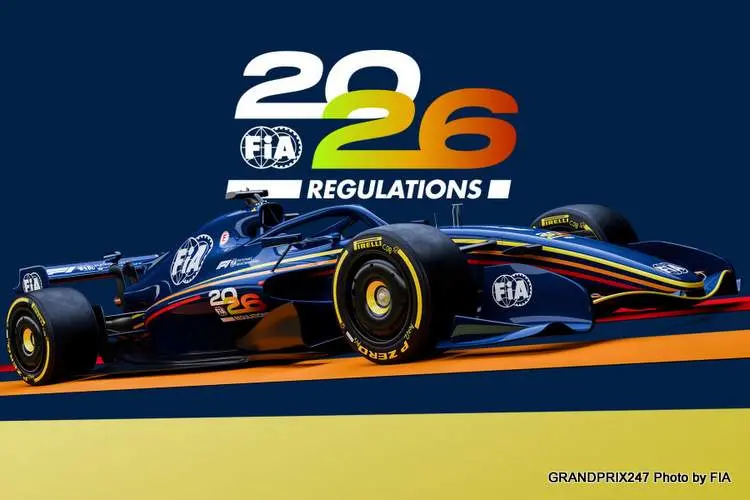
Formula 1 is entering a bold new era in 2026. The FIA has unveiled sweeping technical regulations designed to make cars more agile, efficient, and environmentally responsible.
The new era promises not only faster racing innovation but also a major shift in how teams compete. The new regulations will help make Formula 1 more sustainable and competitive, but will the spectacle be as exciting as this year? Indeed, Verstappen's comeback seems to be undermining Lando Norris's dominance.
In this sense, betting on the Dutchman's final success could be a good idea, taking advantage of the Paddy Power betting offer on the page just linked. Below, we’ll examine the key rule changes and introduce the new manufacturers arriving on the grid.
One of the most noticeable alterations on 2026 F1 cars will be in their wheels and tyres. While the wheel diameter remains at 18 inches, as used since 2022, the tyre widths are being reduced: front tyres will be 25 mm narrower, and the rears 30 mm narrower than before.
The slimmer tyres, combined with lighter and more streamlined chassis, are intended to preserve grip while helping the car feel more nimble and responsive.
Perhaps one of the most radical changes is the abolition of the drag-reduction system (DRS) as we know it. From 2026, there will be no traditional DRS flap deployed manually for overtaking. Instead, F1 introduces active aerodynamics, with two separate modes: “X-Mode” for straights and “Z-Mode” for corners.
Reducing the weight and sustainable fuel

In X-Mode, wings flatten to reduce drag and maximize straight-line speed, while Z-Mode increases downforce for cornering. Additionally, a manual-override “boost” function allows drivers to temporarily deploy extra electrical power under certain conditions, replacing DRS with a more energy-focused, strategic tool.
Another major shift is the lighter overall car design. The minimum weight of F1 cars will be cut by approximately 30 kg, dropping to 768 kg. This is part of a broader slimming of the chassis: cars will be narrower (reduced by 100 mm to 1,900 mm) and slightly shorter, helping deliver greater agility and improved handling.
By reducing mass, the FIA aims to make the cars more responsive and easier to manoeuvre, while also improving the efficiency of the hybrid system.
Sustainability is at the core of the 2026 regulations. All F1 cars will use 100% sustainable fuels, derived from non-food biomass, waste, or captured carbon, eliminating the need for new fossil carbon sources. This change aligns with Formula 1’s push toward a net-zero carbon future.
Beyond fuel, the hybrid power units themselves are being redesigned. The battery component receives a massive power boost, while energy recuperation under braking will nearly double, allowing for more strategic energy deployment.
New entrants: Audi and Cadillac

On top of the technical revolution, 2026 will also bring new players to the F1 grid. Audi is making its debut, having acquired the Sauber team and developed its own power unit. The new Audi works outfit will be based between Switzerland and Germany, combining Sauber’s chassis know-how with Audi’s engine development facility.
Meanwhile, Cadillac, backed by General Motors and TWG Motorsports, is entering as the 11th team. For its first years, Cadillac will use Ferrari-supplied engines while GM readies its own power unit for the future. This marks a significant expansion of F1’s manufacturer base and underlines the attraction of the new, greener regulations.
These rule changes represent a major reset for Formula 1: lighter and smaller cars, active aerodynamics replacing DRS, sustainable fuel only, and fresh manufacturer blood in the form of Audi and Cadillac. The aim is clear: more exciting racing, greater sustainability, and a more level playing field as F1 races into a new era.
Latest News









Loading