In a significant move toward greater transparency, the FIA has released two key documents guiding Formula 1 stewarding decisions: the Penalty Guidelines and the Driving Standards Guidelines.
FIA President Mohammed Ben Sulayem, who has long championed a more open governance structure within the sport, authorised the publication to give F1 drivers, fans, teams, and media deeper insight into how regulatory decisions are made at the top level of motorsport.
Ben Sulayem said: “FIA Stewards perform a hugely complex task, not just in Formula 1 but across all of our championships, and they do this voluntarily, with great passion and commitment. That dedication is all too often met with extreme and wholly unwarranted criticism.
"To demonstrate the rigour with which they pursue their role, we are today publishing the Penalty and Driving Standards Guidelines that assist them with their decisions," added Ben Sulayem.
He stressed that while these documents carry no direct regulatory authority, they are instrumental in ensuring consistent and fair decision-making, working in conjunction with the F1 Sporting and Technical Regulations, steward input, video analysis, and team-driver testimonies. The FIA is Formula 1's governing body.
What’s in the documents?

The Penalty Guidelines, developed over the past decade, outline around 100 typical race weekend infractions with corresponding recommended penalties and penalty points. These guidelines are regularly updated based on input from stewards, teams, and drivers, and offer a range of discretionary options rather than fixed sanctions.
The Driving Standards Guidelines, introduced in 2022 and refined in 2024 after discussions during the Qatar Grand Prix, offer direction on on-track conduct. Topics include overtaking, impeding, rejoining the circuit, safety car behaviour, and track limit enforcement. Developed with direct input from the FIA Drivers’ Commission, F1 drivers, and teams, they are intended to offer consistency and clarity around racing incidents.
Mercedes driver and GPDA director, George Russell supported the publication, saying: “Greater transparency within the governance of our sport is an important issue and this is a useful step in that direction. Hopefully it will be beneficial for the sport to give the media and fans a clearer understanding of the rules of engagement when we're racing on track, and to help them understand how the stewards reach their decisions.”
The FIA confirmed that parallel guideline documents will be released for its six other World Championships in the near future, each adapted to the specific regulations and competitive formats of those series.
FIA 2025 Formula 1 Driving Standards Guidelines Overview

In a move aimed at improving clarity and fairness in on-track decision-making, the FIA has released Version 4.1 of the Formula 1 Driving Standards Guidelines. The document, updated as of February 20, 2025, offers detailed insights into how stewards assess common racing scenarios, from overtaking and impeding to track limits and safety car procedures.
While the guidelines carry no regulatory value, they serve as an interpretive framework to help stewarding panels, alongside the FIA Sporting Regulations and video or telemetry evidence, make more consistent rulings during F1 race weekends.
Overtaking Rules Clarified
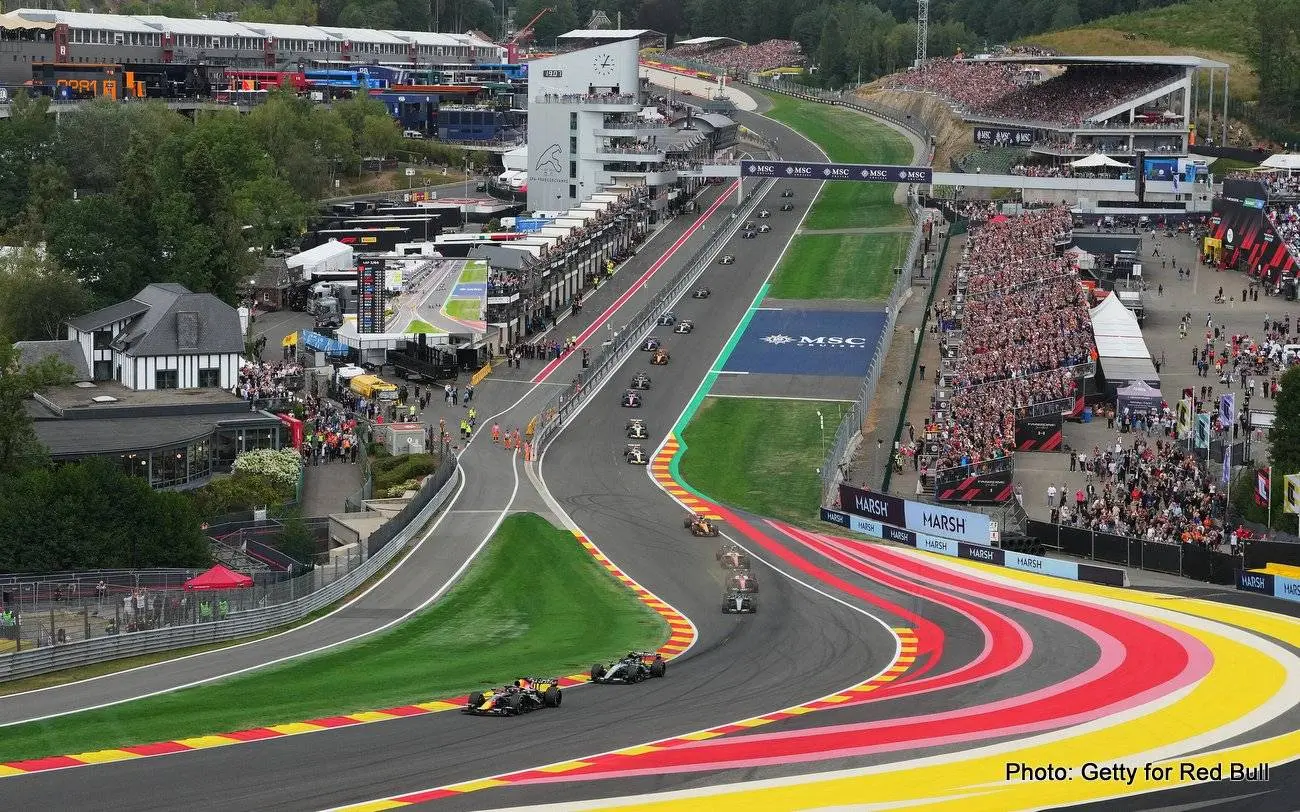
The guidelines begin by establishing criteria for overtaking manoeuvres. When passing on the inside of a corner, the overtaking driver must have their front axle at least alongside the defender’s mirror at the apex, maintain control throughout, and complete the move within track limits. For outside overtakes, the attacker must be ahead at the apex, make the corner cleanly, and not rely on the defending driver to concede excessively.
Special provisions also apply to chicanes and S-bends, where precedence is typically given to the first corner element in determining racing priority.
Track Limits and Penalty Escalation
Track limits continue to be a focal point. Drivers are judged to have left the track if no part of the car remains within the white lines, with kerbs explicitly not part of the track. A “three strikes” system governs enforcement during races and sprint sessions, with exceptions allowed in cases such as avoiding collisions or being forced off.
In qualifying formats, drivers may lose their lap time and even their subsequent lap if a breach is deemed advantageous. However, in unclear cases, drivers will generally be given the benefit of the doubt.
Impeding, Moving Under Braking, and Safety Car Conduct
The document reinforces that impeding will be penalised under Articles 33.4 and 37.5 of the F1 Sporting Regulations, which prohibit erratic or dangerously slow driving. Stewards will also be strict on rejoining the track. Drivers must not force others to take avoiding action or maintain racing speed through escape roads.
In straight-line battles, only one change of direction is allowed. Moving back toward the racing line must leave space for another car. Moving under braking is also restricted. Once deceleration begins, no further directional change is permitted unless following the racing line.
Under the Safety Car, erratic acceleration or sudden braking is forbidden after the car’s lights are turned off. The lead driver retains control of the restart but must avoid creating dangerous conditions.
Developed with Driver Input
The origins of these guidelines date back to 2022 after calls from F1 drivers for more transparency and consistency. A major update followed a 2024 Qatar Grand Prix meeting involving the FIA, the F1 stewards, and drivers. The FIA Drivers’ Commission also began integrating these principles across all circuit-racing categories.
The FIA emphasised that applying the same standards in junior categories, with less tolerance for breaches due to inexperience, is essential for developing safe, competitive future F1 drivers.
Ultimately, the 2025 Driving Standards Guidelines aim to foster safe, hard, and fair racing across all FIA championships. Full Report Here>>>
FIA Publishes 2025 F1 Penalty and Points Guidelines Summary

The FIA has released the 2025 Formula 1 Penalty and Points Guidelines, a detailed framework aimed at improving consistency, clarity and transparency in the application of sporting regulations throughout the championship.
Dated 14 May 2025, the document outlines recommended sanctions for over 100 types of infringements, including those occurring during free practice, qualifying and races. While not legally binding, the guidelines serve as a reference for stewards to apply fair and proportionate penalties and allocate penalty points in line with established norms.
Standardised Penalties Across Racing Sessions
The guidelines assign specific outcomes for a wide range of offences. These range from procedural breaches and driving misconduct to technical infractions and behavioural violations. Stewards still retain the authority to adjust penalties depending on the unique circumstances of each incident, including aggravating or mitigating factors.
Leaving the track and gaining a lasting advantage typically results in a five or ten-second time penalty. However, more serious situations can warrant a drive-through penalty. Unsafe re-entry, deliberate impeding or forcing another driver off-track may result in grid penalties, time penalties, or stop-and-go penalties. These can also carry one to three penalty points on the driver’s Super Licence.
When it comes to collisions, the guidelines offer a tiered approach. Standard contact is usually met with a ten-second penalty and three points. If the collision is deemed reckless or intentional, penalties increase to include grid drops, longer time penalties and four points. In the most serious cases, disqualification may apply.
Clarity on Safety Car and VSC Infractions
Protocols for the Safety Car and Virtual Safety Car periods have been formalised. Failing to maintain the required ten-car gap, overtaking improperly, or exceeding the VSC minimum time now carry scaled penalties based on the number of red sector violations. These range from five-second penalties to drive-throughs and stop-and-go penalties, with corresponding penalty points.
Repeated track limits violations trigger progressive consequences. These include lap time deletion, black-and-white warning flags, and escalating time penalties from the fourth offence onward. Other situations addressed include erratic driving, moving under braking, and unsafe re-entry onto the circuit.
Procedural and Technical Violations Defined
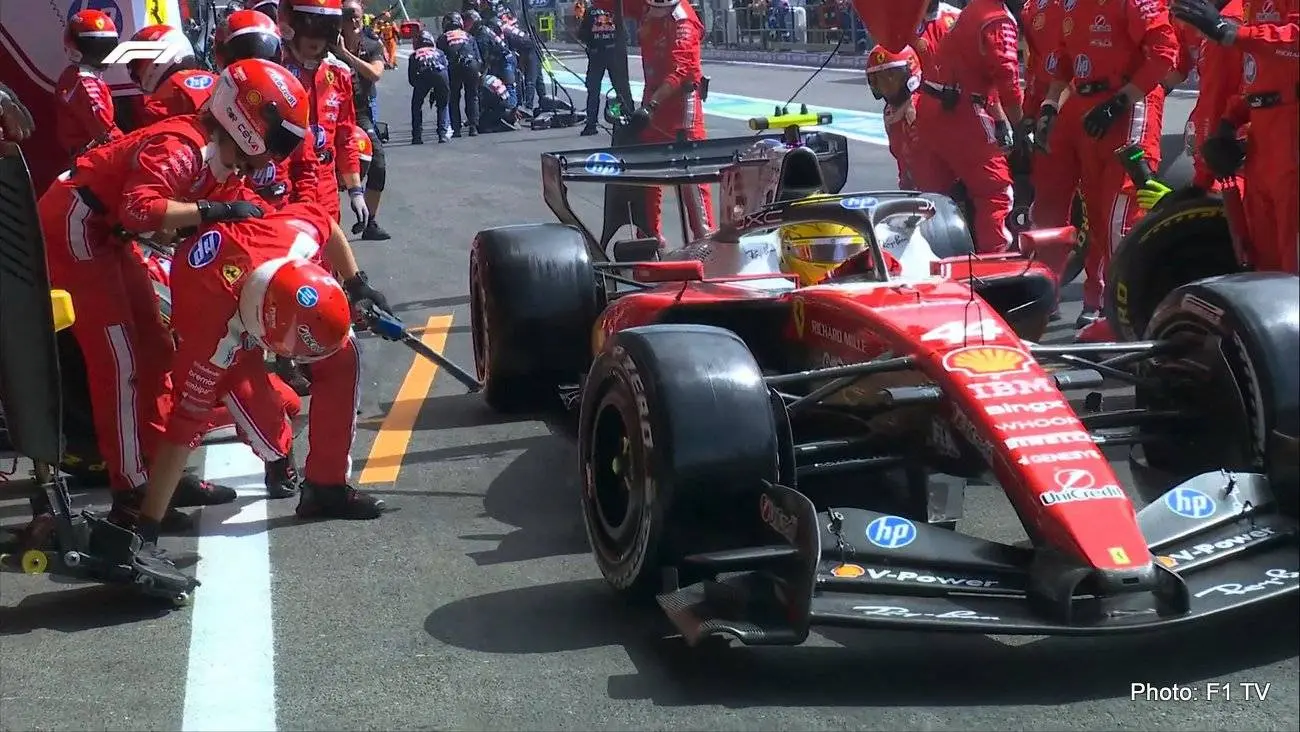
The document outlines clear penalties for procedural errors such as unsafe pit releases, entering a closed pit lane, or not respecting tyre usage rules. Sanctions include time penalties, grid drops, disqualification, or mandatory pit lane starts. Teams and drivers are also held accountable for safety breaches such as failing to fit tyres at the five-minute signal or interfering with the car after the 15-second signal.
Fines for equipment and apparel violations can reach up to €60,000, depending on whether it is a first, second or third offence. Any team or driver found guilty of submitting false declarations during scrutineering may be fined up to €100,000.
Super Licence Penalty Point System Explained
Each offence is assigned a default number of penalty points, typically between one and five. These points are added to the driver’s Super Licence and expire after 12 months. Reaching 12 points results in an automatic one-race suspension. After the suspension, all points are cleared.
Points cannot be applied for reprimands or fines alone. If a driver retires with a five-second penalty unserved, stewards will not carry it forward unless it is part of multiple unresolved penalties, in which case it may be converted into a grid penalty for a future event.
The 2025 Penalty and Points Guidelines are intended to improve consistency across all Formula 1 events while providing teams, drivers and fans with a transparent view of the disciplinary process. Full Report Here>>>
Latest News






Loading