Fisichella: Horner and Briatore a good compromise for Alpine
F1 NewsMonday, 29 September 2025 at 15:06
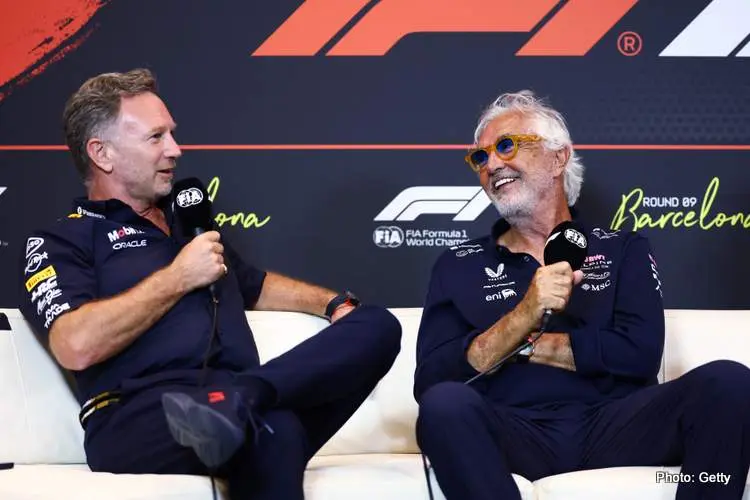
Alpine’s future in Formula 1 has dominated headlines this season, as the French team has struggled on track but made big moves behind the scenes.
From a revolving door of senior staff and ditching their engine programme to become a customer for the first time in the once great Formula 1 team's history. The return of Flavio Briatore as executive advisor to Alpine marked a dramatic shift in direction for the operation, changes met with both scepticism and fear for what the future may hold for the beleaguered team.
At the same time, Christian Horner’s abrupt departure from Red Bull after 20 years of unprecedented success has left the paddock speculating about his next move. Linking the two storylines together, Giancarlos Fisichella believes both figures still have much to offer Formula 1.
The Italian, who raced at Renault under Briatore’s management during Renault’s championship-winning years, said: “I think Horner can come back to F1. He was a driver first of all and then he was Red Bull’s team principal for 20 years and he won everything. For sure, one of the best team principals in the sport. Maybe a mix of Horner and Briatore could be a good compromise!”
Briatore is the right man for Alpine

Fisichella worked with Briatore during Renault’s golden era, delivering two Constructors’ and two Drivers’ titles with Fernando Alonso. He has no doubts about Briatore’s credentials.
“Flavio is the man. I worked with him for many years and we were able to win two Constructors’ and two Drivers’ Championships. Flavio is the right man. I’m quite positive for him and Alpine. It’s nice to have different personalities on the grid. Toto Wolff is a fantastic team principal. Also Zak Brown. For Alpine, I feel Briatore is the right man.”
Looking ahead, Fisichella sees the Mercedes engine supply deal as a decisive moment. “I’m not surprised about Gasly’s [situation] because despite struggling this year, Alpine can have a comeback next year with new regulations, especially with the new engine. They moved from Renault to Mercedes.
"That was one of the options given by Flavio Briatore to the team. Because they know at the moment, the Renault engine isn’t as powerful as the others. The car, it’s about right and a good engine can help them get to the top ten," added Fisichella.
Mercedes switch is bittersweet

Fisichella admits that Alpine’s move to Mercedes power units makes sense for competitiveness, but carries an emotional sting: “For me personally, it doesn’t make sense. Mercedes race with their own engines. Ferrari race with Ferrari engines. Alpine is Renault, Renault is Alpine.
"Personally it’s a little bit sad to see this. But if you want to win and you are two, three years behind in development, you cannot catch up to the other teams and then it’s stupid to be in F1. If they want to be competitive in F1, they need to have the best engines. That’s why this decision was made.”
Beyond Alpine’s management and engine shake-up, Fisichella also reflected on the driver market. Jack Doohan’s mid-season replacement was, for him, another reminder of how unforgiving F1 can be.
“Getting in F1, starting the season and then getting replaced. It’s never nice to be in that situation. It’s a difficult situation and it will be difficult for Doohan to come back again. This is not good but this is F1. Unfortunately, it has always been like this.
"There are just 20 seats in the world and you cannot make mistakes. You cannot be slower than your teammate. There are a lot of reasons for it," explained Fisichella.
Sad end to a proud era for Renault in Formula 1

Renault’s time in Formula 1 stretched across four decades, from its debut in 1977 to its final race under the name in 2020. Over 400 Grands Prix, the French manufacturer delivered 35 victories, 51 pole positions and more than 100 podiums, a record that places it among the sport’s historic teams.
The standout years came in 2005 and 2006, when Fernando Alonso powered Renault to consecutive Drivers’ and Constructors’ titles. Those back-to-back championships remain the high point of the marque’s F1 story.
The path was rarely straightforward. Renault’s early turbo cars set new technical benchmarks but often struggled for reliability. A withdrawal in the late 1980s was followed by a return through the acquisition of Benetton in 2000, which set up the championship glory of the mid-2000s.
Since 2021, the team has raced as Alpine, closing the Renault chapter but keeping the Enstone operation on the grid. But with Briatore at the helm no one but he is sure to know the end game of this sorry saga, namely the demise of one of Formula 1's greatest legacies.
(Sources: Aceodds)
Latest News
Loading